






Pillars of Society
When Christian Democrats Elect the Far Right
Thirteen men and two women make up the Christian Democratic Union’s group in the newly constituted state parliament of Saxony-Anhalt. On Tuesday, four of them helped elect a right-wing extremist as President of the Landtag. In protocol, and in politics too, this office carries exceptional weight. Who exactly they were, and what exactly their motives were, I do not know. Nor do I care. I am equally uninterested in what the episode reveals about the divisions within the new group and the authority of its leader. What interests me is the fact (and what else could it be, crackpot conspiracy theories aside) that in a state governed by CDU Minister-Presidents for a quarter of a century, one in four Christian Democratic MPs gives their vote to a right-wing extremist.
Right-wing extremist: what could be more Christian Democratic than this term of demarcation? Not the ‘right-wing’ part. The CDU is on the right itself. It is the ‘extremist’. The insistence that there is a difference between the centre and the extreme. And that this difference is constitutive. Of the political system of the Federal Republic. Of the protection of its constitution. Of their own identity.
Through the distinction between centre and extreme, the Union recognises itself as something that remains identical with itself over time. When it looks in the mirror, it sees a bundle of opposites: it unites Catholics and Protestants, workers and entrepreneurs, farmers and financial investors – that is why it is called a Union, after all. People who have little in common beyond the conviction that the distribution of power and property in this country is, by and large, fine as it is, and that government is best left in the hands of their own kind: sensible, respectable pillars of society. The centre, in short.
Its boundaries also mark out the space within which the Union remains capable of alliances, compromise and coalition. Anyone who wants to govern with it – which usually means anyone who wants to govern at all – has to enter that space. They have to become as sensible, respectable and moderate as the Union itself, so that the programme of government can be assembled from practical solutions to real problems on whose description one can always reach agreement in the end, across whatever differences of interest and habitus remain. Because and as long as this works, Liberals, Greens and Social Democrats identify and integrate themselves as parties of the centre, and so does the Union: Look, we told you so. Organising majorities, staying sensible, being fit to govern. That’s us!
++++++++++Advertisement++++++++++++

2500 Jahre Demokratie
Das diesjährige Symposion des Dimitris-Tsatsos-Instituts greift ein Projekt wieder auf, das der Gründer Dimitris Tsatsos zu seinen Lebzeiten nicht mehr verwirklichen konnte, eine Besinnung auf eine Spanne von 2500 Jahren politischer Theorie und Praxis, die im Diskurs über Demokratie ihren Niederschlag findet. Diese Besinnung dient nicht einem theoretischen Ziel, etwa den über 200 Varianten einer Begriffsbestimmung eine weitere hinzuzufügen oder gar eine Bestimmung mit Anspruch auf Verbindlichkeit herauszuarbeiten. Ihre Absicht ist vielmehr, einen Evolutionsprozess der politischen und der Verfassungskultur nachzuzeichnen, der sich über lange Dauer und verschiedene Epochen erstreckt hat.
6. & 7. November 2026, FernUniversität in Hagen und online über Zoom. Näheres unter www.fernuni-hagen.de/dtiev/veranstaltungen/symposion-2026.shtml.
++++++++++++++++++++++++++++++++
‘The End of the Centre’ was the title of the editorial Florian Meinel and I wrote in February last year, when the CDU/CSU group in the Bundestag, led by Friedrich Merz, suddenly set about forming a new majority on migration together with the AfD. For me, our text was above all an expression of disbelief: Why are they doing this? Why are they destroying the very thing that defines them? And if that thing really is destroyed, what follows?
The response to our text was, shall we say, interesting. A few days after it appeared, I sat on a panel at Bucerius Law School with a former judge of the Federal Constitutional Court whom I had known and respected for many years. Afterwards in the foyer, over canapés and wine, he suddenly laid into me coram publico. With our editorial, he charged, we had insinuated that the CDU was making common cause with Nazis. He took this as a personal insult to himself as a CDU member. He wanted nothing more to do with me. We practically shouted at each other. Earlier this week I was back at Bucerius Law School to discuss academic freedom – the subject of a project we are starting together with Bucerius Law School and the University of Oxford, to be officially launched in Berlin in early November. Several people brought up that encounter with the former constitutional judge. It had been completely mad, they said. Nobody had ever seen anything like it. Nor had I, to be honest.
Back then, Florian Meinel and I considered two possible conclusions from the Union’s abandonment of the centre. One: the Social Democratic and Green remnant of the centre, together with the dense institutional network of the pre-political sphere, forces the Union to reverse course. The other: give up the destroyed centre as lost and integrate towards the left – a German Nouveau Front Populaire that takes on the right and organises majorities against it.
It soon became clear that nothing would come of the first. The second, however, is now emerging as a possibility at state level, in the federal capital, Berlin. There, Die Linke was the only party that had managed to describe a reality its voters could relate to. Take the explosion in rents. One can argue about the costs and benefits of socialising housing and thereby removing it permanently from the market as a tradeable commodity and an object of investment and speculation. But at least it is an idea! And this idea had already convinced a clear majority of Berlin voters once before. Developing a description of real problems that can command a majority, along with concrete ideas for solving them, sometimes daring but never unreasonable: that used to be the hallmark of the centre.
Its remnants, however, seem to have settled on a third option long ago. The centre is neither restored nor abandoned but transformed into something else. It is being rebuilt as a kind of identitarian assembly hall, where people gather to feel themselves as a community of fate. The centre no longer defines itself by keeping its distance from subversives, firebrands and radicals, but by excluding everyone who disputes this community of fate and/or does not belong to it and/or poses a threat to it. It no longer finds its identity in successfully processing and reconciling opposites, in the robust, sensible purr of its well-oiled engine of compromise, but in the opposite: it wants to feel at one with itself. Its identity is a matter of feeling. Wallowing in its own emotion, it stands together in this space, cocooned by red lines, and woe betide anyone who challenges it. The CDU takes it personally when hundreds of thousands suddenly take to the streets, merely because it and the AfD see eye to eye on migration. The former constitutional judge sees his personal honour tainted by the notion that he should suddenly find himself in the same room with Nazis. He is very much offended indeed.
++++++++++Advertisement++++++++++++
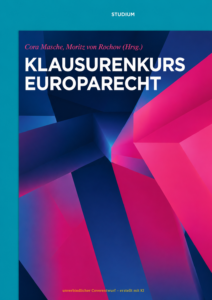
Call for Klausuren
Für den ersten Open-Access-Klausurenkurs zum Europarecht suchen wir fertige Klausuren und Abstracts. Die in Kürze erscheinenden zwei Lehrbücher zum Europarecht aus der OpenRewi-Reihe werden um ein Fallbuch Europarecht, herausgegeben von Cora Masche und Moritz von Rochow, ergänzt. Der Call läuft bis zum 10.11.2026. Das Buch soll im März 2027 gedruckt und online erscheinen.
Zum Call und Upload: https://openrewi.org/calls-for-participation/fallbuch-europarecht/
++++++++++++++++++++++++++++
This is a space that patrols its margins instead of integrating them. It compels those it finds there not to compromise but to profess. Die Linke won the Berlin election partly because, in the city with Europe’s largest Palestinian diaspora, it alone had dared to describe the genocide in Gaza as a real problem. The clear winner of the election, just to get a seat at the negotiation table, first had to profess the Staatsräson orthodoxy by which the identitarian centre recognises its own.
Meanwhile in Magdeburg, the newly minted President of the Landtag, who apparently intends to stay on as general secretary of the AfD in Saxony-Anhalt, only needs to look suitably guileless in his cream-coloured suit and read out a meek little speech full of Steinmeier-style democratic set phrases, and everyone says: Oh, he’s quite moderate really. Not a nasty one like his deputy, Hans-Thomas Tillschneider, who likewise received more votes than the AfD group has members. Unlike the President, though, the deputy will have little say by virtue of his office beyond chairing sittings (until he becomes Minister of Culture and Science, that is. Then he will).
And speaking of antisemitism, and speaking of Tillschneider: today in Halle he was kept out of the synagogue courtyard at the commemoration of the attempted massacre of Jews in Germany by a Nazi seven years ago. Protesters at the gate. He could not get through and had to leave again, the right-wing extremist Dr Tillschneider. That is how you protect Jewish life in Germany!
In Berlin, coalition talks are now getting under way. In Magdeburg, the AfD is three votes short of an absolute majority. My suggestion: let’s talk about real problems.
With thanks to Hanna Pfeifer and Florian Meinel for their valuable comments.
*
Editor’s Pick
by MAXIM BÖNNEMANN
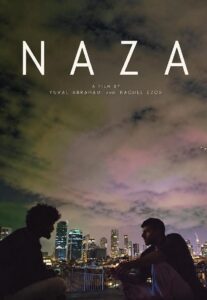
Copyright: NAZA
Yuval Abraham and Rachel Szor have spent much of the past few years on the rooftops of Tel Aviv. Between the glittering skyline and flickering television screens, the two award-winning Israeli filmmakers have spoken with numerous members of Israel’s security establishment. At the heart of these conversations is the word “NAZA”, a euphemism for civilian casualties in military strikes against Hamas. “We say 15 NAZA,” says one of their interlocutors. “We don’t say 15 people will be killed, and certainly not that 15 children and women will be killed.” Calmly and with detachment, the interviewees recount atrocities and death zones, brutalisation and indifference, and a thoroughly automated process of mass killings. It is difficult to listen to these accounts, so harrowing are the testimonies documented in the film. Those who want to see for themselves can watch NAZA for free on The Guardian’s website from late November.
*
The Week on Verfassungsblog
summarised by JAKOB GAŠPERIN WISCHHOFF
“Reality is a sound; you have to tune in to it not just keep yelling.” (Anne Carson). Indeed, it seems that we have lost the capacity and patience to listen. Or perhaps one can no longer be heard unless one takes to the streets and demands justice, loudly.
This week, images of French school students flooding the streets and gathering around the Bastille made headlines around the world. Protesting for better school facilities, many have instead faced mass arrests and serious injuries from police weapons. CARINA BURY (ENG) argues that France strips young people of their right to protest on account of their age, yet offers them no protection from batons, tear gas, and stun grenades.
The streets are full not only in France, but also in Spain, where the cruel eviction of 87-year-old resident María del Carmen Abascal shocked the public. The cries of solidarity with the elderly woman, who passed away just a few days ago, reflected growing public frustration over the worsening housing crisis in Spain. Within ten days, Spain has moved from public outrage over a highly publicised eviction to the calling of a general election. MIRYAM RODRÍGUEZ-IZQUIERDO SERRANO (ENG) explains how the concept of vulnerability became part of constitutional language, shaping the relationship between property and housing rights.
Elections are also approaching in Brazil, Serbia, and Israel. ITAMAR MANN (ENG) turns to Israel’s Supreme Court proceedings over the disqualification of two Arab party lists and individual candidates from the 27 October elections and argues that the Court’s informal indication that it would disqualify Balad leader Sami Abu Shehadeh coerced his withdrawal while avoiding the legal reasoning a formal judgment would require.
Another debate currently occupying Israel concerns the film NAZA, which we recommended in our Editor’s Pick. After the Israeli military rejected all the allegations before the film’s release, a group of Israeli international lawyers called for an independent investigation in an open letter. KAI AMBOS (ENG) has added the letter to his curated documentation of Israeli international lawyers’ interventions on the war in Gaza, along with a brief introduction. The collection brings together numerous statements on different aspects of the war, many of which were published in English for the first time on Verfassungsblog.
Meanwhile, antisemitism – and the question of who gets to define it – continues to preoccupy German politics. On the ZDF talk show “Maybrit Illner” on 24 September 2026, the Federal Minister of the Interior Alexander Dobrindt (CSU) took the opportunity to land a punchline and accused Berlin’s Left Party lead candidate Elif Eralp of being an antisemite. OLIVER HARRY GERSON (GER) shows that name-calling misses the point of having a serious debate about how widespread and entrenched antisemitism is in society.
In the EU, the Commission has introduced new accession conditions which would enable the EU, for the first 15 years, to strip new member states of their rights should they act against the principle of loyal cooperation or violate the values of Article 2 TEU. LUKE DIMITRIOS SPIEKER (ENG) argues that this approach treats member states unequally and points out that a better, reformed mechanism to uphold EU values should apply to all, even if one can easily understand that rules written for others are easier to agree on than rules written for ourselves.
As is his way, Donald Trump once again shocked the world by approving the execution by firing squad of Nidal Hasan. If Hasan is put to death by that method, it would be the first such execution by the American military since 1945. That announcement came on the heels of a deeply embarrassing moment for death penalty supporters, when Christa Pike survived an execution attempt in Tennessee on 30 September. And as if that were not enough, today the US Government announced that the execution will be livestreamed. AUSTIN SARAT (ENG) optimistically argues that even Trump cannot reverse America’s overall turn away from the death penalty over the last decades.
++++++++++Advertisement++++++++++++

Whether it is intelligence service reform, dynamic tech like Palantir or counter-terrorism policy, criminal and security law is facing rapid shifts. Once a month, the VB Security & Crime Dossier breaks down the key developments for you: expert commentary bridging constitutional, criminal and security law, an overview of the current debates, and our quick-hit ‘Aktenvermerk‘ as a concise insight. Everything you need to know, straight to your inbox.
Subscribe now for free: verfassungsblog.de/newsletter-mpi/ (available in German only)
++++++++++++++++++++++++++++
CHRIS HILSON (ENG) examines the Australian High Court’s landmark MACH Energy v Denman decision, which requires planning authorities to consider conditions to minimise a coal mine’s scope 3 emissions – those generated across its value chain, including when exported coal is burned abroad. The ruling moves beyond requiring emissions to be assessed, addressing what authorities must do to reduce them. Hilson argues that the decision opens a new frontier for project-based climate litigation, challenging claims that companies cannot control downstream emissions and offering a framework for climate governance beyond national emissions accounting.
Finally, as the editorial above shows, the political fall has become rather cold and chilly overnight. Not only has a radical right-wing party attained an official position of power for the first time in German post-war history; the AfD is also a mere three seats short of a majority in the state parliament of Saxony-Anhalt. Yet the election itself seems to be disputed, as the AfD is now accused of unlawfully using parliamentary group funds to finance its campaign. WINFRIED KLUTH (GER) examines the distinction between legitimate constituency work by sitting MPs and the impermissible use of public resources for party-political purposes – and explains what a successful challenge of the election would mean for government formation.
Additionally, this week we launched a new symposium, “Thinking Machines and Thinking Lawyers”. The editors AKRITI GAUR and ANMOL JAIN (ENG) opened the symposium by asking how emerging AI-based capabilities are shaping the way we lawyers think, research, and act. JEANNIE MARIE PATERSON (ENG) investigates the influx of AI into scholarly writing and argues that law schools should develop flexible, principles-based ethical frameworks rather than prescriptive rules attempting to cover every possible use.
That is all for this week. But remember, as the wet and rainy days are signalling the change of season and the days are getting shorter, do not forget to listen, listen and listen. When the Swedish Academy broke the news of the Nobel Prize to Anne Carson on the phone, she was “in Iceland, where she was listening to the wind.”
Take care and all the best!
Yours,
the Verfassungsblog Team
If you would like to receive the weekly editorial as an e-mail, you can subscribe here.