





Law and Climate
Law is central terrain on which the climate crisis is being fought. Whether in the halls of international diplomacy, courtrooms, or the corridors of government ministries: much of the debate over the instruments and goals of climate policy is conducted in the language of law. Yet which laws and policies actually work, how far courts can legitimately push governments, and how legal institutions must change to meet the scale of the challenge remains deeply contested.
This spotlight brings together leading climate scholars and practitioners to address these questions. The contributions analyse landmark rulings by constitutional and human rights courts, examine developments in domestic and international climate law, and reflect on the role law and courts can play in an era of growing climate obstruction.
Articles from this spotlight have been cited in United Nations publications, leading academic journals, newspapers and court submissions in climate litigation.

“The ICJ opinion is the most definitive statement ever made about international law and climate change. However, it is lengthy and complex. In this volume, the editors have assembled some of the world‘s leading scholars in the field to unravel the opinion and probe the subtleties of what it did and didn‘t say.”
– Michael Gerrard, Columbia Law School
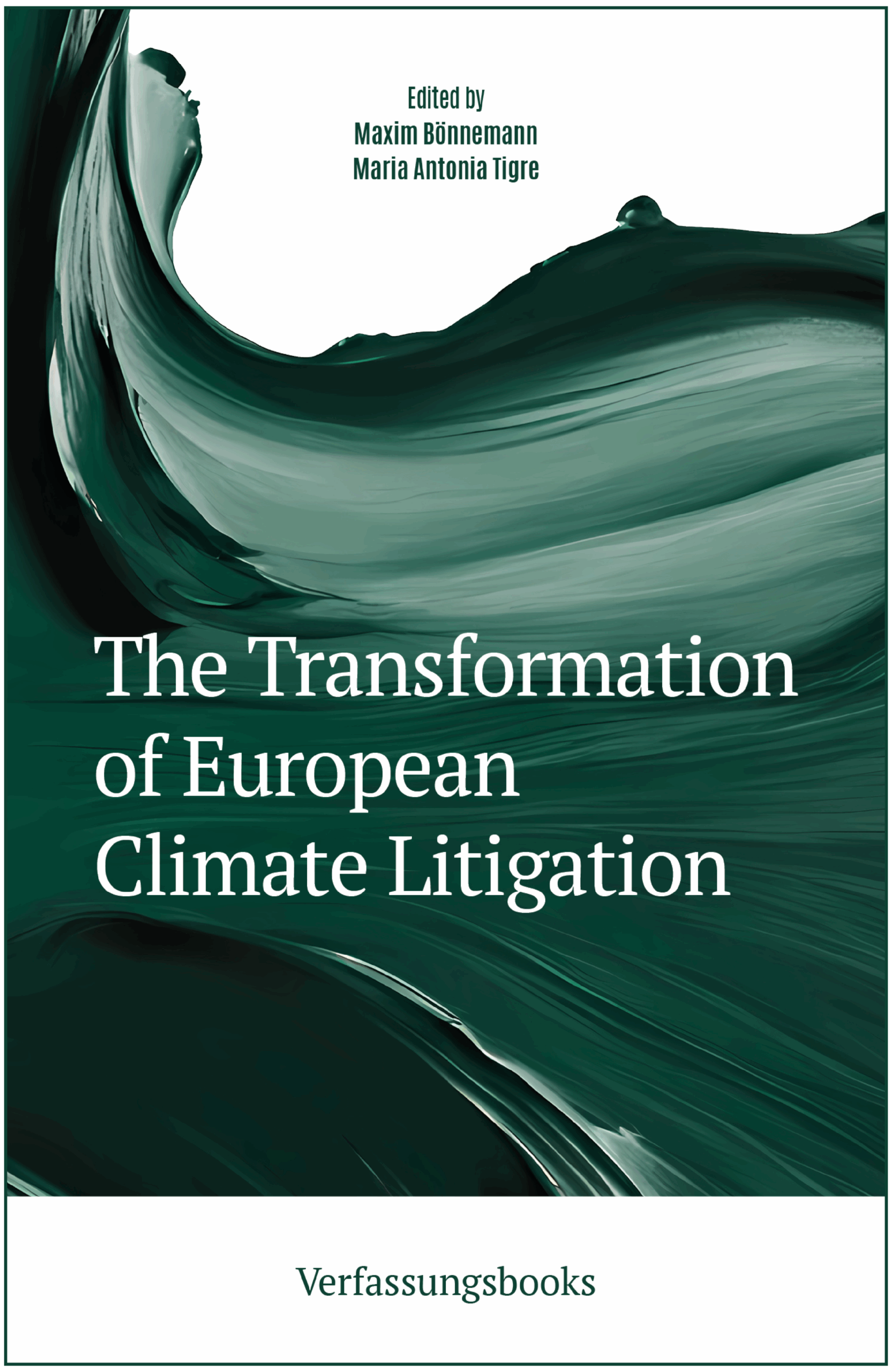
“A must-read analysis for anyone interested in these milestone human rights rulings and their broader implications for global climate litigation, climate policy and governance.“
– Jacqueline Peel, Melbourne Law School
RECENTLY PUBLISHED
A New Frontier for Project-Based Climate Litigation
On 7 October 2026, the High Court of Australia held, by three judges to two, that a New South Wales (NSW) planning authority must consider conditions to limit a coal mine’s scope 3 emissions. This meant the authority could not simply say they had considered those emissions, representing 98% of the project's greenhouse gas (GHG) emissions – they had to show they had considered planning conditions that would minimise them. Although much of the Australian apex High Court ruling turns on the interpretation of very specific NSW statutory language, it nevertheless has important implications for climate litigation elsewhere in the world, including in Europe. Continue reading >>
Who Can Demand Justification for the EU’s Climate Ambition?
On 2 September 2026, the General Court handed down its judgment in Global Legal Action Network (GLAN) and CAN-Europe v Commission (T-120/24). Its central conclusion was to be expected. The EU’s Aarhus Regulation cannot be used to challenge indirectly a level of climate ambition fixed by the EU legislature. An implementing power does not allow the Commission to rewrite legislation, even indirectly. However, we see the constitutional significance of the judgment elsewhere Continue reading >>
The Constitution Meets the Climate
The climate crisis has reached South Africa’s Constitutional Court. A dispute over offshore oil and gas exploration along South Africa’s Wild Coast developed into a much wider constitutional inquiry. The Court brought questions of participation, dignity, culture and environmental protection into conversation with the growing demands of climate responsibility. The judgment illustrates how climate change can acquire constitutional significance without the recognition of a freestanding constitutional right to a stable climate. Continue reading >>
New Zealand’s Shameful Climate Tort Law – And What Climate Lawyers Can Learn from It
New Zealand’s Climate Change Response (Tort Liability) Amendment Act became law on 24 August 2026. The Act is the first national law to comprehensively rule out civil liability for activities that cause harm by contributing to climate change. The stagnating political salience of climate change presents significant challenges for climate lawyers, who must consider the viability of their claims in both courts and the political process. Continue reading >>Die halbe Gemeinschaftsaufgabe
Ein historischer Sommer geht zur Neige. Historisch deshalb, weil er mehr denn je durch Hitze, Niedrigwasser und Brände gekennzeichnet war. Diese Extremereignisse sollten die Politik längst wachrütteln. Bisher bleiben weitreichende Reaktionen jedoch aus. Zumindest den Bundesumweltminister Carsten Schneider haben die Geschehnisse zuletzt dazu bewegt, einen Vorschlag zur Grundgesetzänderung in Form der Klimaanpassung als Gemeinschaftsaufgabe von Bund und Ländern vorzulegen. Den Vorstoß hat er bereits im Kabinett thematisiert, noch im zweiten Halbjahr will er dafür Mehrheiten suchen. Continue reading >>Privilegierte Klimaschädiger
Die Klimakrise und ihre verheerenden Auswirkungen auf Menschen und Umwelt sind im historischen Hitzesommer 2026 in Europa so spürbar wie selten. Trotzdem wird Klimaschutz derzeit nicht großgeschrieben – insbesondere nicht bei der Bayerischen Landesregierung, die kürzlich einen nicht nur rechtspolitisch unsinnigen, sondern auch rechtlich fragwürdigen Gesetzesvorschlag in den Bundesrat eingebracht hat: Zivilrechtliche Klimaklagen sollen pauschal ausgeschlossen werden. Continue reading >>
A Cyclical, Foreseeable, Worsening Threat
During the first two decades of the twenty-first century, approximately 489,000 heat-related deaths occurred yearly. Europe is no exception. Under the premise that heatwaves can no longer be distinguished from any foreseeable, cyclical event beyond their control, states are required to adopt all reasonable measures to keep the catastrophic impacts to a minimum, as mandated by the ECtHR. This blogpost explores the extent to which Article 2 of the ECHR provides legal protection against heatwaves and examines the level of due diligence required from state parties. Continue reading >>
Towards a Biodiversity Advisory Opinion
Biodiversity loss is one of the central challenges of the “triple planetary crisis” alongside climate change and pollution. Scientific assessments suggest that humanity has already transgressed the planetary boundary relating to biosphere integrity and researchers discuss whether we are already within a sixth mass extinction event. This post seeks to initiate a broader discussion on the promises and pitfalls of replicating successful climate advisory opinion initiatives for the integrity of the biosphere and biodiversity. Continue reading >>
Ein trojanisches Pferd zulasten der Umwelt
In Deutschland sollen mehr Wohnungen gebaut werden. Der Gesetzentwurf „zur Modernisierung des Städtebau- und Raumordnungsrechts“ sieht zu diesem Zweck vor, dass das Bauen von Wohnungen bei der Festsetzung von bestimmten Baugebieten in einem Bebauungsplan als im überragenden öffentlichen Interesse berücksichtigt wird. Diese Regelung begegnet grundsätzlichen Bedenken: Sie betrifft nicht mehr nur einzelne Vorhaben, sondern ganze Baugebiete. Damit priorisiert der Gesetzgeber mittelbar auch den Bau von Gewerbe- oder Bürogebäuden. Sie führt dazu, dass alle anderen Belange zurückgestellt werden, wie etwa der Klima- und Naturschutz. Continue reading >>A Human Right to be Fossil Fuel Free?
Australia is a country highly vulnerable to the impacts of climate change, with the weathered, arid continent frequently buffeted by fires, floods, heatwaves and storms. It is also one of the largest exporters globally of fossil fuels, coal and gas. Situated close to Pacific Islands existentially threatened by climate-fuelled rising seas, Australia is a constitutional democracy with an active civil society, an abiding commitment to the rule of international law and this year holds the role of “President of the Negotiations” for the UN climate summit, COP31. These contradictory forces play out in Australia’s domestic climate policy and are at the heart of a new international complaint – labelled the “Hard Truths” case. Continue reading >>
Heatwaves and Legal Remedies
Europe suffered an unprecedented heatwave this June, with debilitating effects felt across various walks of life: thousands of deaths, particularly among the elderly, individuals and families suffering in “heat-trap” apartments, hospitals full and caught unprepared, school closures, and productivity losses. Adaptation measures are indispensable for coping with these soaring temperatures, which have cost lives and severely affected people’s well-being. However, rights-based litigation involving adaptation in Europe has until recently been notable by its absence. Continue reading >>
Anticipating a Climate Moment in Arusha
The forthcoming climate advisory opinion presents a historic opportunity for the AfCHPR to articulate a coherent and comprehensive African rights-based framework for climate governance. Given Africa’s particular vulnerability to climate change, the need for such guidance is especially pressing. By clarifying States’ obligations under the African Charter, the Arusha judges can strengthen climate accountability across the region and provide guidance to policymakers and domestic courts. Continue reading >>
Between and Beyond Regional Perspectives on Climate Change and Human Rights
Climate change has reached the dockets of (international) courts. The intersecting nature of this existential threat has led to a flurry of judicial action – somewhat paradoxically in the absence of meaningful political action. Yet, as case law is proliferating, the discussion about climate change in international adjudication has become highly specialized. Against this background, this contribution shares observations on the emergence of regional climate change law and calls for taking this regional perspective seriously by extending it beyond what is traditionally understood as inter-judicial dialogue. Continue reading >>
Learning from Each Other
The relationship between the world's regional human rights courts has undergone a quiet but consequential transformation over the past decade. What began as occasional, informal exchanges among judges and registries — encounters at conferences, the mutual citation of landmark judgments, coordinated submissions to United Nations human rights bodies — has matured into something more deliberate and structurally significant. This blog post examines that transformation from the perspective of the Inter-American Court by attending closely to the three dimensions in which cooperation actually operates. Continue reading >>
Corporate Duty of Vigilance in Climate Litigation
On 25 June 2026, the Paris Judicial Court ruled on the adequacy of TotalEnergies’ vigilance plan. Among other things, the Court ruled that the company's Vigilance Plan must address the greenhouse gases generated through the downstream use of its products (Scope 3 emissions). The judgment simultaneously strengthens the normative content of the Duty of Vigilance while revealing the judiciary’s reluctance to fully articulate a unified framework of corporate climate responsibility. Continue reading >>
Looking Sideways
What are the major interpretative principles which assist the European Court of Human Rights in its decision-making? What role do they play in climate change judgments? Subsidiarity, the living instrument doctrine and a harmonious interpretation of international law all enable the Court to incorporate relevant comparative law into its reasoning. Climate change case-law is particularly well-suited to the comparative law approach and I argue that the role of comparative law can potentially have more impact in this emerging area of the law than in others. Continue reading >>
Mapping the Future
On 25 June 2026, the Paris Judicial Court became the first court to rule on the merits of Notre Affaire à Tous and others v. TotalEnergies SE. At its core, the case concerns whether TotalEnergies violated the French Commercial Code by failing to adequately report the climate risks associated with its activities and take action to mitigate those risks in line with the goals of the Paris Agreement. The decision demonstrates that a domestic due diligence statute can reach the full climate footprint of a global energy major. Continue reading >>
Climate Justice Unlocked
The Inter-American Court of Human Rights has just handed climate litigators in Latin America the most powerful tool they have ever had. Advisory Opinion OC-32/25 restructures the procedural architecture of climate litigation: inverting burdens of proof, authorising the presumption of causal links between state emissions and climate harm, and recognising satellite imagery as evidence that states must make accessible to victims. For organisations that have spent years fighting for communities on the front lines of the climate emergency, this is a transformative moment. Continue reading >>
Procedural Rights in Climate Cases Before the ECtHR
This blog post takes the landmark ruling KlimaSeniorinnen as a starting point to examine the role of procedural rights in climate litigation before the European Court of Human Rights. Procedural rights, as we argue, can be understood in a twofold manner: on the one hand, as admissibility criteria structuring access to the Court, and on the other, as substantive guarantees flowing from the Convention itself. Read in this light, KlimaSeniorinnen – alongside Greenpeace Nordic – reveals key developments in the Court’s emerging climate jurisprudence across both dimensions. Continue reading >>
From Awas Tingni to Advisory Opinion 32/25
In July 2025, the Inter-American Court of Human Rights issued Advisory Opinion 32/25 on the Climate Emergency and Human Rights: it recognized the right to a healthy climate as a standalone human right, declared a jus cogens norm prohibiting irreversible environmental harm, and affirmed the legal personhood of nature. These are not incremental developments. They are structural shifts in international environmental law, and they are the culmination of more than two decades of jurisprudential construction. This post traces that arc. Continue reading >>
Climate Change and the Environment at the Inter-American Court of Human Rights
The relationship between climate change and human rights has occupied international legal scholarship for more than two decades. Yet for much of that period, the relationship remained largely aspirational — acknowledged in soft-law instruments and scholarly commentary, but only partially operationalized by binding international adjudication. Advisory Opinion OC-32/25, adopted by the Inter-American Court of Human Rights (IACtHR or the Court) on May 29, 2025, marks a decisive shift in that landscape. Continue reading >>
Key Implications of the Next ECHR Climate Case, Müllner v. Austria
Müllner v Austria is more than just a sequel to KlimaSeniorinnen. It has the potential to become a pivotal case for the Court’s developing climate jurisprudence, particularly as regards individual victim status, the scope of States’ positive obligations, and the position of EU climate law within the Convention framework. Continue reading >>
KlimaSeniorinnen and its Progeny
On 9 April 2024, the Grand Chamber of the European Court of Human Rights delivered rulings in three climate-change cases, thus becoming the first international court to establish a right to be protected from the effects of climate change. The leading judgment was Verein KlimaSeniorinnen Schweiz and Others v. Switzerland. Now, two years after the KlimaSeniorinnen precedent, we can perhaps begin to take stock of its implications and its progeny. Continue reading >>
Inter-Judicial Dialogue on Climate Change and Human Rights
Climate change is not only an environmental or scientific issue – it is fundamentally a human rights challenge. Across jurisdictions and legal traditions, courts are increasingly being called upon to respond to their complex and far-reaching impacts on our human rights. This symposium brings together reflections from judges, practitioners, and scholars from the three regional human rights systems, based on presentations delivered at a conference held at Central European University in cooperation with the University of Vienna on 17 April 2026. Continue reading >>
Decorative by Design
FIFA’s climate criteria for World Cup hosts borrow the authority of international climate law without any enforcement consequence. The 2026 host country’s withdrawal from the parent treaty regime exposes the borrowing as decorative. On 11 June 2026, the US opens the tournament that promised environmental leadership and an emissions trajectory aligned with the Paris Agreement. FIFA treats this contradiction as a non-event. What exactly do FIFA climate criteria oblige, and through what mechanism? The answer, on close reading, is that they oblige very little. Continue reading >>
Nach dem Overshoot
Die verfassungsrechtliche Beurteilung der Klimapolitik hat sich bisher an Obergrenzen der atmosphärischen Erwärmung orientiert. Sie wird neu herausgefordert, wenn diese Grenzen überschritten werden. Die Frage, wie mit dieser Herausforderung umzugehen ist, stellt sich derzeit in mehreren anhängigen Verfahren. Dieser Beitrag macht einen Vorschlag, der in diesen Verfahren vielleicht gehört werden kann. Er lenkt die Aufmerksamkeit vom Kalkulieren und Zuteilen von Emissionsbudgets auf die Suche nach dem, was an Emissionsvermeidung technisch, ökonomisch und sozial machbar ist. Continue reading >>
Das Heizungsgesetz, die Demokratie und der Rechtsstaat
Die deutsche Wirtschaft steckt in der Krise. Um „Überregulierung“ und „Bürokratisierung“ abzubauen, rückt zunehmend das Umwelt- und Klimaschutzrecht in den Fokus. Vor diesem Hintergrund ist eine Debatte entbrannt, ob die geplante Änderung des Heizungsgesetzes gegen (verfassungs-)rechtliche Vorgaben verstößt. Zugleich wird diskutiert, ob im Umwelt- und Klimaschutz eine mit Blick auf das Demokratieprinzip problematische „Überkonstitutionalisierung“ besteht. Continue reading >>“Once the Lawyers Move In, You Know the Problem Is Serious”
Last July, the International Court of Justice delivered its unanimous advisory opinion on climate change – and it was unambiguous. Climate obligations are legal, substantive, and enforceable. Eighteen months after we first spoke with Marie-Claire Cordonier Segger, Tejas Rao and Markus Gehring from the University of Cambridge about the then-upcoming opinion, we asked them to take stock of what has actually changed: in courts, in multilateral diplomacy, and in the growing coalition of states willing to move ahead without waiting for the holdouts. Continue reading >>
„Wenn die Juristen kommen, wird es ernst“
Letzten Juli hat der Internationale Gerichtshof sein Gutachten zum Klimawandel vorgelegt – und es war eindeutig: Klimaschutzverpflichtungen sind rechtlich verbindlich und durchsetzbar. Anderthalb Jahre nachdem wir erstmals mit Marie-Claire Cordonier Segger, Tejas Rao und Markus Gehring von der Universität Cambridge über das damals bevorstehende Gutachten gesprochen hatten, haben wir nachgefragt: Was hat das Gutachten tatsächlich verändert? Und wie steht es um die globale Klimagovernance? Continue reading >>The BMW and Mercedes Climate Cases
The Bundesgerichtshof – Germany's highest court of civil jurisdiction – has handed down its first ruling on private climate liability and dismissed the widely discussed lawsuits against BMW and Mercedes. These strategic lawsuits were based on a very specific claim that is hard to replicate in other legal systems. Nevertheless, the rulings contain general considerations that, from a comparative law perspective, reveal a remarkable degree of judicial restraint. Continue reading >>
Wärmewende zwischen Bund und Ländern
Die Pläne von Bundeswirtschaftsministerin Reiche zur weitgehenden Rücknahme des sogenannten „Heizungsgesetzes“ gefährden die rechtzeitige Dekarbonisierung der Wärmeversorgung, wie sie zum Klimaschutz unerlässlich und nicht zuletzt durch EU-Sekundärrecht zwingend geboten ist. Doch andere politische Mehrheiten auf Landesebene könnten in gewissen Grenzen gegensteuern und müssten dies jedenfalls dann tun, wenn das jeweilige Bundesland sich gesetzlich sogar zu einer früheren Klimaneutralität als die Bundesebene verpflichtet hat. Continue reading >>
The Fuel Price Blockades in Ireland
April 2026 has been the most politically charged month in Ireland in recent memory. Irish roads, ports and refineries across the country were blocked with tractors and heavy agricultural and haulage vehicles over the course of the week starting April 7. Essential services were compromised, and several parts of the country came to a halt. Contrary to media commentary, the blockade enabled a union of fossil capital and racial capital. Continue reading >>An Off-Ramp for the Plaumann Paradox
On 16 April 2026, AG Ćapeta delivered an Opinion in the Medel case (C-555/24) on the standing of NGOs to bring actions for annulment under conditions that they are directly and individually concerned. Instead of copying the ECtHR’s approach in KlimaSeniorinnen, she gives an elegant and simple spin to the Plaumann formula. At its core, AG Ćapeta recognises that associations protecting collective interests have a separate identity of their own with a distinct interest. The Opinion gives the Court an argumentative avenue to finally amend its self-inflicted access to justice paradox. Continue reading >>A Jus Cogens Right to Climate Action
Phasing out fossil fuels is indispensable to meaningful climate action. Yet, significant legal barriers persist. Among the most formidable is the system of international investment law, particularly the mechanism of investor–state dispute settlement. One way to counter this type of legally entrenched climate obstruction is for States to clarify that their right to climate action is a new peremptory norm of international law, as per Article 64 of the Vienna Convention on the Law of Treaties. Continue reading >>
Peoples Across Time
A pending advisory opinion before the African Court on Human and Peoples’ Rights raises a question that is novel within the African regional human rights system: can human rights law protect future generations against climate harm? The open-ended notion of “peoples” in the African Charter offers a doctrinal basis for embedding intergenerational justice. Read in light of Article 24 and the Charter’s collective architecture, it could give concrete legal meaning to obligations owed across time. Continue reading >>On the Way to the Industrial Accelerator Act
After months of delays, internal frictions, leaks, and sensational claims that EU industrial policy is going “full China”, the long-anticipated proposal for an Industrial Accelerator Act (IAA) is expected in early March. The IAA represents a continuation and deepening of the Commission’s new industrial policy, distancing itself from a deeply entrenched constitutional imaginary in which the economy was governed primarily through rules designed to enable and protect competitive coordination. Continue reading >>
High Thresholds and Wide Margins
The European Court of Human Rights (ECtHR) issued an inadmissibility declaration in the climate case of Fliegenschnee and Others v. Austria. While an unsuccessful outcome was expected, the decision nevertheless clarifies three aspects of the Court’s climate jurisprudence. Taken together, the case shows that the Court neither demanded more than in previous cases nor reneged on its requirements as laid down in Verein KlimaSeniorinnen Schweiz and Others v. Switzerland. Continue reading >>
The Bonaire Climate Case
Once again, all eyes were on The Hague. After groundbreaking rulings in the Urgenda and Shell cases, the District Court in The Hague on 28 January delivered another important climate change decision in the case of Greenpeace Netherlands v. The Netherlands (Bonaire). The court, acknowledging the contested political context in which the ruling was made, sought to square the circle of state mitigation obligations by balancing potentially far-reaching considerations about the mitigation efforts required from states like the Netherlands with an innovative procedural and dialogue-oriented remedy. Continue reading >>
The State Duty Not to Approve New Fossil Fuels
A growing number of cases worldwide are challenging State approval of new fossil fuel projects: from Ireland to Guyana, Greece to South Africa. UN Secretary General, António Guterres, describes such projects as “moral and economic madness”. But since 2021, over 2,300 new extraction projects and 119 new LNG Terminals have been approved for development worldwide. States’ approval of new fossil fuel projects is fundamentally incompatible with their international law duties. Continue reading >>Bremer Türöffner zur klimaresilienten Finanzverfassung
Die Klimakrise stellt den Staat vor langfristige Aufgaben, deren Bewältigung erhebliche finanzielle Mittel erfordert. Ob die bestehende Finanzverfassung mitsamt der Schuldenbremse eine klimakrisenbedingte Kreditaufnahme ermöglicht, ist seit einiger Zeit umstritten. Der Staatsgerichtshof Bremen beantwortet diese Frage mit dem Urteil vom 23. Oktober 2025, indem er die Klimakrise als „außergewöhnliche Notsituation“ anerkennt. Dies ist bemerkenswert: Während das Bundesverfassungsgericht im KTF-Urteil die explizite Einordnung der Klimakrise offengelassen hatte, schließt Bremen diese Lücke nun ausdrücklich. Continue reading >>Europe’s Climate Crisis Is a Rule-of-Law Crisis
After watering down the 2040 emission reduction target, running the Corporate Sustainability Reporting Directive and the Corporate Sustainability Due Diligence Directive over by the Omnibus, and now attempting to kill the combustion engine ban, European climate governance has entered the territory of lawlessness. European climate governance is no longer only about the climate. It has become a rule of law issue and should be treated as such. Continue reading >>
The European Approach to Human Rights-Based Climate Litigation in Global Context
Human rights-based climate protection does not stem from a single, coherent regime but from a plurality of intersecting normative orders. This contribution examines how divergent approaches to climate-related obligations unfold across regional systems, UN bodies, and the ICJ, with particular attention to the contours of the European approach. Continue reading >>
Lost in Translation?
Judicial conversations and interactions take place in different settings – sometimes behind closed doors, sometimes out in the open. One open form of conversation is the use of comparative analysis in legal arguments. Focusing on comparative arguments in policy discussions on the right to a healthy environment within the Council of Europe, I will argue that comparative arguments are too often cursory and superficial and that calls for the transferral of elements from one human rights system to another tend to underestimate the complexities involved in such legal transplants. Continue reading >>
Shaping the EU’s 2040 Climate Target
The EU appears close to enshrining its 2040 climate target in the European Climate Law, an important milestone in the EU’s journey toward the Law’s overarching goal of climate neutrality by 2050. However, the 2040 target will be less ambitious than recommended and not living up to standards of international fairness. Furthermore, important review and implementing provisions of the amended Climate Law will be weakened, along with existing substantive climate legislation. Continue reading >>
One Step Back and Two Steps Forward
In May, after years of litigation, the Higher Regional Court of Hamm rendered its final decision in Lliuya v. RWE AG – a landmark case in which a Peruvian farmer sought to hold the German energy giant RWE financially responsible for measures protecting his property from a potential glacier flood. Although the Court rejected the claim in the end, the judgment has been celebrated as a “success without victory” due to the potential precedent effect in terms of corporate liability. The true significance of the Lliuya v. RWE decision lies not in its dismissal of the plaintiff’s claim, but in the court’s reasoning on extraterritoriality, causality, and preventive protection. Continue reading >>
Visualisation of the Advisory Opinion on Climate by the International Court of Justice
While many commentators continue to add valuable words, this blogpost communicates through pictures. A collaboration between a lawyer and two designers, our data story considers the Court’s reasoning and links its consequences to interrelated information. Continue reading >>
Cooperation Without Justice?
The ICJ’s advisory opinion insists heavily on the duty to cooperate to protect the climate system. I show that this duty of cooperation is grounded in an acknowledgment of differentiated obligations among states but falls short in specifying how those differentiated obligations should be quantified, whether in relation to mitigation or to adaptation finance. I argue this reflects a general reluctance to engage with the distributive issues central to climate justice claims which, in turn, serves to preserve the ICJ legitimacy. Continue reading >>
Looking for an African Perspective on the ICJ’s Climate Advisory Opinion
Despite the fact that Africa, as a continent, has contributed the least to climate change and is already suffering some of the worst of its impacts, with almost no financial support or relief from historical polluters, African concerns, arguments, and solutions got little attention in the ICJ advisory opinion. While Tadi and Sebutinde called on African idioms to articulate their response to the opinion, they fell short of articulating an African perspective on the obligations of States in relation to climate change. Continue reading >>
Rethinking Highest Possible Ambition
States classify a large portion of agricultural emissions as “hard to abate”, framing them as residual emissions which must be compensated through removals. As other sectors decarbonise more rapidly, persistent agricultural emissions pose a significant obstacle to achieving the Paris Agreement’s 1.5°C target, underscoring the growing importance of reducing emissions in this sector to restoring a pathway consistent with returning to 1.5°C as quickly as possible. Continue reading >>
The Case for a Global Ban on Industrial Animal Agriculture by 2050
We propose a global ban on industrial animal agriculture by 2050 because this food system causes massive, unnecessary, and transboundary harm to humans, animals, and the environment. Addressing these harms requires international coordination, inspired by successful efforts to regulate or ban other harmful products or processes, ranging from mercury and tobacco to child labor and torture of enemy combatants. This contribution summarizes the key legal rationale, precedents, and instruments for our proposed ban. Continue reading >>
Towards the True Price of Meat
Despite mounting scientific and ethical consensus about the multiple harms of meat production for animals, humans and the environment, current regulatory frameworks largely fail to internalise these costs. On the one hand, animal agriculture is resource-intensive, contributing significantly to climate change, deforestation, water pollution, and biodiversity loss. On the other, it entails systemic ethical issues with regard to the breeding, keeping and killing of animals. This contribution explores the legal feasibility of a cap-and-trade system for meat designed to address the multifaceted harms of animal agriculture and to push meat products closer to their true price. Continue reading >>
Meat Consumption Corridors as Transformative Meat Governance
Meat consumption corridors are a tool for transforming the current meat system. In a fair and just manner, they are intended – both conceptually and in practice – to help bring high meat consumption down to levels that can be considered ecologically sustainable and socially acceptable. Accordingly, this tool also supports scaling down and moving away from industrial animal agriculture. Continue reading >>
Transforming the Meat and Dairy Industry through Environmental Litigation
In light of prevalent nationalist populism, what type of strategic litigation against the meat and dairy industry is likely to be most transformative? Activists formulating their strategy need to consider the interrelated questions of what interests to highlight, whom to sue, and what legal norms to invoke, whilst being aware that nationalist populists will try to use any judgement to their advantage. Continue reading >>
Transforming the Livestock Sector through Climate Change Mitigation Law
Increasingly, the climate impact of our diet is being recognised. The uncomfortable knowledge that the contents of our dinners can affect planetary health makes the issue of mitigating these emissions contentious, particularly with regard to our consumption of animal products. The role law has historically played and is still playing in creating the current levels of livestock production is often displaced in this debate – instead, we often focus on individual consumer choice or the perceived responsibility of farmers to consider sustainability in their farming practices. Continue reading >>
The Shape of Things to Come
While global meat governance currently faces significant political obstacles to transformative change, early signs point toward a shift toward a more sustainable and responsible global food system. The extension of legal principles such as the no-harm rule to climate change, the emergence of a global governance complex, normative frameworks like One Health, and the recent proliferation of policy initiatives may even signal the early formation of a new global food system architecture. Driven by bottom-up forces, these developments have the potential to reshape current practices and advance sustainable meat governance. Continue reading >>
Is Meat the New Oil?
For decades, the global community has grappled with the increasingly urgent need for an equitable transition away from fossil fuels – achieving some, but inadequate, progress. Today, there is growing recognition that meat and other animal products, particularly from the industrial systems that enable high levels of meat consumption, also have far-reaching environmental, public health, and social impacts. This industry will need to transform on a similar time frame in order to achieve climate and broader sustainable development goals. Continue reading >>
Exxon Knew. Did Big Beef, too?
Just like the fossil fuel industry, the meat industry teamed up with trade associations, public relations, and “merchants of doubt” to distribute disinformation, downplay their role in global warming, and influence climate policy. Our research showed that all of the 10 largest U.S. meat and dairy companies had directly contributed to efforts that minimized the link between animal agriculture and climate change. For eight of the 10 companies, we found evidence of lobbying on climate issues between 2000 and 2019.Just like the fossil fuel industry, the meat industry teamed up with trade associations, public relations, and “merchants of doubt” to distribute disinformation, downplay their role in global warming, and influence climate policy. Continue reading >>
Avian Flu Shows the Need for Transformative Meat Governance
Serious zoonotic risks are inherent in intensive animal production and also in non-intensive animal production. Production scale does not make one type more or less dangerous or immune. Zoonotic disease risk is one compelling justification, among many other reasons discussed in the other contributions to this debate, for transformative meat governance. The issues are urgent, and the time is now. We cannot wait for the next major crisis, the next pandemic, or the next headline news of another animal cruelty exposé in the animal agriculture industry. Continue reading >>
The Environmental and Health Impacts of Animal Source Foods
It is now well-established that our diets and the food systems underpinning them have substantial impacts on both our health and the environment. What is also clear is that without dietary changes towards more balanced and predominantly plant-based diets, there is little chance of limiting global warming, biodiversity loss, and environmental resource use and pollution more generally. This contribution summarises research on the environmental, health, and social aspects related to changes in diets and food systems with a particular focus on the role of animal source foods. Continue reading >>
Defund Meat: A Call for Transformative Meat Governance
“Defund Meat” may be an unusual and perhaps provocative title for a critical interdisciplinary discussion around meat in the Anthropocene. At first blush, it may sound like a crude activist slogan, or a hopelessly idealistic call for abolishing the meat system. Upon closer examination, however, it turns out to be a sheep in wolf’s clothing. As I shall argue, defunding meat is a much more commonsensical, pragmatic, and mainstream(able) proposition than its radical overtone might initially suggest. Continue reading >>The ECJ’s Opportunity to Address the EU’s Climate Mitigation Obligations
The pending EU-Mercosur Trade Agreement raises fundamental questions regarding the Union’s climate mitigation obligations under both EU and international law. Members of the European Parliament are considering a request for an opinion from the European Court of Justice (ECJ) on the agreement’s compatibility with EU law. Such a review is warranted, as the agreement appears incompatible with the EU’s mitigation duties. Continue reading >>
Two Courts, Two Approaches
The Inter-American Court of Human Rights’ Advisory Opinion AO-32/25 marks a major advance in climate jurisprudence. Comparing it with the ECtHR’s 2024 climate rulings, this contribution shows how much further the Inter-American Court goes in recognising the climate crisis as a global emergency, foregrounding equity and climate justice, affirming extraterritorial jurisdiction, broad standing, and ultimately recognising an autonomous human right to a healthy climate. Continue reading >>
A Right to Defend the Environment
In a remarkable yet underexplored section, the IACtHR establishes a right to defend the environment, along with corresponding duties of States to protect environmental defenders. By recognizing environmental defenders as essential actors in democratic climate governance, the IACtHR’s advisory opinion advances a bold vision of environmental democracy that positions civic engagement as a vital precondition for legitimate and effective climate action. Continue reading >>
From Sidelines to Center Stage
The trilogy of climate advisory opinions from the International Tribunal for the Law of the Sea, Inter-American Court of Human Rights, and the International Court of Justice marks a watershed moment not only for climate litigation but also for understanding the evolving role of Conferences of the Parties (COPs) in international law. This post analyses the courts' engagement with COPs and argues that it represents another step in clarifying their institutional role in global governance – one that elevates these treaty bodies from largely diplomatic forums to authoritative interpreters and potentially norm-creators within treaty regimes. Continue reading >>
International Law’s Administrative Law Turn and the Paris Agreement
In the recent Advisory Opinion on States’ Obligations in respect of Climate Change, various remarks by the International Court of Justice (ICJ) lean into an increasingly “administrative” law turn in international law. In this blog post, we investigate this phenomenon by looking at the ways in which States’ preparation, communication, and maintenance of their Nationally Determined Contributions (NDCs) under the Paris Agreement are coming to be characterised by requirements or standards with a domestic administrative law tone. Continue reading >>
A Step Forward in Italian Climate Litigation
Climate litigation achieved an important milestone in Italy. In a landmark order on 18 July 2025, the Supreme Court of Cassation confirmed that Italian courts may assert jurisdiction over climate-related damages for the first time. The ruling opens the door to holding both public and private actors liable for climate inaction. Continue reading >>
Epistemic Authority and the Right to Science in AO-32/25
Traditionally, the right to science as occupied a marginal place within the contentious and advisory architecture of the Inter-American system. However, in its Advisory Opinion–AO-32/25, the Inter-American Court of Human Rights changes this framework by shifting the right to science from a peripheral tool of knowledge dissemination to a central axis of disputes over epistemic authority in public policy formation. This repositioning is not merely about expanding the scope of an undervalued right but about redefining its legal status based on the structural transformations imposed by the climate crisis on the normative production forms and institutional recognition of knowledge. Continue reading >>
The Evasion of Historical Responsibility?
The International Court Advisory’s advisory opinion on Obligations of States in Respect of Climate Change has been celebrated as marking the start of a “new era of climate reparations.” In my contribution, I want to draw attention to how, even as the ICJ opened the door to climate reparations, it was evasive on the key temporal questions that are central to any future claims about reparations owed by individual countries for their historical greenhouse gas emissions. Additionally, the advisory opinion avoided addressing how colonial histories continue to shape present day climate injustices and the need to decolonize international law. Continue reading >>
“Doing the Utmost”
The ICJ found that some norms, previously thought not binding and falling under the unfettered discretion of States (e.g. the content of NDCs) are in fact binding obligations of conduct based on a due diligence standard, and their breach gives rise to state responsibility. In this blog post, I address some pertinent issues regarding due diligence as addressed by the ICJ, as well as ITLOS and the IACtHR. In particular, I focus on the relationship between obligations of result and obligations of conduct, the nature of due diligence, factors to determine its content, and the legal consequences of not acting with the required diligence. Continue reading >>
Can Africa Still Drill?
While the ICJ found that any State suffering from climate change can bring charges against others for their contribution to climate change, the opinion does not distinguish between the obligations of developed and developing States (except where treaty law already imposes different obligations). African States and the African Union have continued to support fossil fuel development on the continent. In light of this advisory opinion, what obligations are imposed on developing States, like African States, to protect the climate, particularly regarding the further development of fossil fuel industries? Continue reading >>Closing the Silences
At COP 30 in Belém, ministers will wrangle over how “sufficient” the new climate-finance goal must be, and whether “phase-down” of coal is a slogan or a legal trigger. In Brussels, the 2040 climate target faces the same test, while in Geneva, the WTO’s fossil-subsidy reform stalls over which tax breaks to cut. Read through a strict consent-only lens, and these are political choices. Read through the ICJ’s frame – science, equity, no-harm, precaution – they become legal ones: finance must be capable of delivering 1.5°C and repairing loss and damage, coal and subsidy policies must be plausibly 1.5°C-compatible, and the burden falls on governments to prove it. Continue reading >>
Klimaschutz in Karlsruhe 5.0
Vor kurzem ließen mehrere Pressemitteilungen deutscher Umweltverbände Verfassungsrechtler:innen aufhorchen. Die vom Bund für Umwelt und Naturschutz Deutschland (BUND), Greenpeace, Germanwatch, dem Solarenergie-Förderverein Deutschland und der Deutschen Umwelthilfe (DUH) im Sommer/Herbst 2023 eingereichten „Zukunftsklagen“ werden in Karlsruhe offenbar ernst genommen. Im weiteren Verfahren könnte auch das kürzlich ergangene Gutachten des Internationalen Gerichtshofs (IGH) zu völkerrechtlichen Verpflichtungen der Staaten mit Bezug zum Klimawandel eine wichtige Rolle spielen. Continue reading >>Is Montevideo Sinking?
Following the ICJ’s opinion, only time will tell whether the Montevideo criteria are themselves “sinking,” and what might replace them. It remains doubtful whether sunken States could be sovereign equals to States with territory, as they would necessarily rely on the goodwill of their host State to cede jurisdiction to some degree. Even though the ICJ’s opinion is a big step forward (especially) for small island States, it cannot, by itself, preserve a State’s full sovereignty once its territory is submerged. Small island States have contributed the least to climate change, yet now face an existential threat. This unfair fate must be prevented. I Continue reading >>
Statehood in the Climate Crisis
In this blog post, we zero in on the part of the ICJ's climate advisory opinion that concerns statehood. Specifically, we analyze the ICJ’s restatement of the presumption of state continuity, examining both what the Court says and doesn’t say, and what the implications could be. We also consider the individual opinions that discuss statehood and add some brief reflections on the applicability of Article 1 of the Montevideo Convention on the Rights and Duties of States (Montevideo Convention) and on State extinction. Our analysis is preliminary, and certainly much ink will be spilled on the ICJ’s remarks going forward. Continue reading >>
When Custom Binds All States
The ICJ affirmed that States have binding customary obligations to prevent significant harm to the climate system and to cooperate in addressing the crisis. Rejecting arguments that climate treaties override these duties, the Court clarified that non-parties remain bound. While acknowledging law’s limits, the ICJ’s opinion provides a powerful legal foundation to guide climate negotiations, litigation, and collective action worldwide. Continue reading >>
A Panoply of Consequences?
Among the most significant – but underexplored – aspects of the ICJ’s climate advisory opinion is its treatment of reparations and remedies. This blog post unpacks the legal consequences outlined by the ICJ, examining what the opinion says – and does not say – about how climate-related harm should be remedied. At the heart of this analysis lies a central question: can the affirmation of legal responsibility, without clear guidance on the design of reparations, meaningfully advance climate justice? Continue reading >>
Harmonizing Sources, Hardening Duties
The ICJ’s advisory opinion on climate change may come to be remembered as the moment international law explicitly rose to the climate challenge. Yet, what the opinion offers is not a new edifice but a sturdier legal architecture. By advancing an “all of the above” approach to international law’s sources; by treating these sources as interlocking parts of a living legal system; and by recognizing erga omnes and erga omnes partes duties with concrete consequences for responsibility, the Court has given States, courts and litigants a legally rigorous, source‑sensitive map. Continue reading >>
Klarheit aus Den Haag
Am 23. Juli 2025 verkündete der Internationale Gerichtshof (IGH) sein lange erwartetes Gutachten zu den „Pflichten der Staaten in Bezug auf den Klimawandel“. Darin bestätigte das Gericht, dass Staaten nach geltendem Völkerrecht verpflichtet sind, erhebliche Schäden am Klimasystem zu verhindern. Kommen sie dieser Pflicht nicht nach, können sie haftbar gemacht werden. Das Gutachten hat tiefgreifende Konsequenzen für Produzenten fossiler Energieträger und zieht zudem erhebliche Auswirkungen auf das internationale Investitionsrecht nach sich. Continue reading >>
Of Warming and Warzones
Despite mounting attention to the impacts of military activities and conflicts on climate mitigation and adaptation in recent years, the issue remains largely absent from international legal scrutiny. Therefore, the very fact that several States and organizations raised it during the advisory proceedings held last December left the few scholars and practitioners working on this issue hopeful. This post reviews how the issue of armed conflicts and military emissions was addressed during the ICJ advisory proceedings. Despite the ICJ’s silence, the post highlights a few interpretative openings that may have legal implications for the regulation of wartime climate harms and explores what the ICJ’s ruling means for the legal visibility and accountability of military emissions. Continue reading >>
State Responsibility and the ICJ’s Advisory Opinion on Climate Change
After the International Court of Justice (ICJ) issued its advisory opinion on Obligations of States in Respect of Climate Change, many observers were quick to conclude that it “[opens] the door to a cascade of lawsuits” (Politico). The opinion is indeed an important confirmation that the rules of State responsibility apply in the climate change context. In this post, I assess the ICJ’s treatment of State responsibility in light of the particularities of climate change, especially the plurality of States that contribute to, and suffer from, climate harm. The advisory opinion places trust in the capabilities and flexibility of the applicable rules, yet defers complex decisions on questions like causation to a case-by-case assessment. Continue reading >>
The Struggle Against Fossil Sovereignty
Over the course of decades, law has primarily functioned to enable and support the extraction, production, and consumption of fossil energy. As a result, planetary destruction remains not only awfully lucrative but also, in many cases, legally protected. The substantive impact of the ICJ’s advisory opinion on climate change will depend largely on how effectively it contributes to dismantling the stronghold of fossil sovereignty. That tangled web of fossil-friendly laws has often obstructed or blunted progressive climate politics or any other interference with unsustainable, fossil-driven profit-making. Continue reading >>
New Standards in Government Framework Litigation
The ICJ advisory opinion articulates very clearly States’ international obligations with respect to climate change. Its findings that States’ mitigation efforts must reflect their highest possible ambition, be capable of achieving the 1.5oC goal, and be fair and ambitious, determined through the application of CBDR-RC are momentous, as are its conclusions on remedies. Government framework litigation can serve to hold States to these obligations – just as plaintiffs have done for the past 10 years. Given the multitude of lawsuits pending against governments around the world. Continue reading >>
Sea-Level Rise Reaches The Hague
The advisory opinion rendered by the International Court of Justice (ICJ) on 23 July 2025 marks a pivotal moment in the articulation of States’ obligations concerning climate change. While based on broader rules and principles of international law, the opinion foregrounded the United Nations Convention on the Law of the Sea (UNCLOS) as a key legal framework relevant to defining States’ climate obligations. As the ICJ itself stated, UNCLOS ‘forms part of the most directly relevant applicable law’ (para. 124). Thus, far from peripheral, the law of the sea emerged as a primary site for interpreting and enforcing States’ climate obligations under international law. Continue reading >>
Human Rights in the ICJ’s Climate Opinion
This summer has seen two major climate advisory opinions published – first from the Inter-American Court of Human Rights, and then from the International Court of Justice (ICJ). Both opinions address human rights law, embedding human rights in a broader overarching framework of international law that also includes international climate treaties and customary international law. But how do these opinions compare, and what room does the ICJ leave for continuing development of human rights standards by other relevant courts and treaty bodies? Continue reading >>
The Ruling and the Mirror
Much of the commentary that has emerged so far, in this symposium and in seemingly every other corner of the internet, focuses on the legal content of the opinion: the articulation of States’ obligations under international law, the rejection of the lex specialis argument, and the recognition of the right to a healthy environment, inter many alia. Yet beyond the legal reasoning and doctrinal outcomes lies something else. The opinion is also an act of identity performance: a way for the ICJ to speak about itself. Continue reading >>
What the Court Didn’t Say
The aim of this blog post is not to summarise the ICJ’s opinion or assess its overall relevance for international law. Instead, it draws attention to some of the issues that the ICJ did not address, or where it might have gone further, by providing more depth, precision, and guidance. By focusing on what the ICJ did not say, we can gain a better understanding of how it navigates its institutional constraints, political sensitivities, and the evolving terrain of international climate litigation. Continue reading >>
A Right Foundational to Humanity’s Existence
For the second time in a month, one of the world’s highest judicial authorities has issued an advisory opinion on the climate crisis that highlights the importance of the human right to a clean, healthy and sustainable environment. Echoing the Inter-American Court of Human Rights in its Advisory Opinion 32/25, on July 23, the International Court of Justice (ICJ) unanimously held that this right constitutes a binding norm of international law. Continue reading >>
Enhanced Due Diligence
The IACtHR establishes that States have a series of obligations to ensure a healthy environment and climate, and prevent violations of human rights. To this end, the IACtHR develops the standard of enhanced due diligence as a binding framework for State action. This standard includes elements aimed at ensuring that the response to climate change is effective, fair, transparent, and evidence-based (para. 224). This blog post discusses the heightened due diligence standard, as clarified by the IACtHR, and outlines nine key elements of this standard. Continue reading >>
Corporations, Climate, and the Court
Corporations, especially those engaged in fossil fuel production, agriculture, construction, and transportation, play a significant role in the climate crisis and in its human rights impacts. It is thus of critical importance that the Inter-American Court of Human Rights (IACtHR)’s Advisory Opinion 32/25 (AO-32/25) not only directly addresses corporate climate and human rights impacts, but also provides some pathways forward on these persistent barriers to accountability. This blog discusses AO-32/25’s holdings and innovations as related to business and human rights and reflects on their broader legal implications. Continue reading >>
The ICJ’s Advisory Opinion on Climate Change
“An existential threat” – this is how the International Court of Justice (ICJ) characterized climate change in its long-awaited advisory opinion on the obligations of States with respect to climate change. In the most significant development in international climate law since the adoption of the Paris Agreement, the ICJ outlined numerous obligations that could significantly shape the contours of international environmental law and global climate governance. Continue reading >>
Protecting Rights in the Anthropocene
On July 3, 2025, the Inter-American Court of Human Rights (IACtHR) issued its long-awaited Advisory Opinion No. 32 (AO-32/25) on the “Climate Emergency and Human Rights”. With its opinion, the IACtHR became the first human rights monitoring body to recognize that a healthy climate is an autonomous and justiciable human right. This blog post traces the emergence of this new right within the Inter-American Human Rights System (IAHRS) and highlights its most transformative elements for theory and practice. Continue reading >>
The EU’s New Climate Targets and the Return of Flexibility
Early in July, the European Commission then released its proposal for a new climate target. The Commission hails the new targets as “ambitious”. But the proposal clearly bows to concerns about geopolitical competition. Greater flexibilities shall square the circle between climate ambition and competitiveness concerns. The idea has a telling history. Continue reading >>
Addressing Accountability in the IACtHR’s Advisory Opinion
With AO-32/25, the IACtHR has delivered a historic and bold affirmation that climate change is not only an environmental emergency but also a profound human rights crisis, one that requires both prevention and reparation. By articulating States’ duties to provide remedies, the IACtHR has moved the conversation to one of legal accountability and remediation. Continue reading >>
Reproductive Rights and the Climate Crisis
On July 3, 2025, the Inter-American Court of Human Rights (IACtHR) published its long-awaited Advisory Opinion 32/25 (AO-32/25). The Opinion responds to a 2023 request from Colombia and Chile, asking the IACtHR to clarify the scope of States’ obligations to address the climate emergency under international human rights law. While the decision marks a significant step toward recognizing the climate crisis as a human rights issue, this blog post aims to shed light on a critical omission in the IACtHR’s reasoning: the impact of environmental degradation and the climate emergency on sexual and reproductive health and rights. Continue reading >>
The Bloom of Nature’s Rights
The Inter-American Court of Human Rights’ (IACtHR) advisory opinion on human rights and the climate emergency (AO-32/25) addresses numerous dimensions of the climate crisis, setting an important precedent for the protection of our planet. This post focuses on one particularly significant development: the IACtHR’s recognition of Nature as a subject of rights. We argue that the IACtHR’s pronouncements on this subject mark the advent of an ecocentric paradigm whose implications are likely to be far-reaching and transformative. Continue reading >>
A Nod, Not a Leap
This post focuses on one notable aspect of AO-32/25 that has not received attention in other commentary–the IACtHR’s engagement with gender issues. We find that the IACtHR has taken an important step forward, both in recognizing gender as a key determinant of climate vulnerability and in identifying gender-responsive obligations on States. However, the IACtHR’s comments in this regard remain general and often gestural. The obligations identified are limited, narrow, and many relate to data gathering rather than substantial action. Continue reading >>
Jus Cogens and the Climate Crisis
While there are many aspects of the Inter-American Court of Human Rights (IACtHR)’s Advisory Opinion 32/25 (AO-32/25) that are new and groundbreaking, the inclusion of a reflection on jus cogens might have surprised some observers. The legal consequences of the recognition as jus cogens of the obligation not to create irreversible damage to the climate and the global environment are profound. Treaties violating the norm are void, customary international law rules cannot exist, nor does the persistent objector rule apply. Continue reading >>The Right to a Healthy Environment as a Catalyst for Urgent and Ambitious Climate Action at the IACtHR
The right to a healthy environment is at the heart of the landmark Advisory Opinion 32/25 (AO-32/25) on the climate emergency from the Inter-American Court of Human Rights (IACtHR). AO-32/25 marks the clearest ruling to date from an international court on the urgency of transformative changes to address the existential threat of the planetary environmental emergency caused by human activities. Continue reading >>
A Differentiated Path Forward
The Inter-American Court of Human Rights’ (IACtHR) Advisory Opinion OC-32/25 on the “Climate Emergency and Human Rights” represents a transformative moment in international legal doctrine on climate-induced displacement and shows why the IACtHR’s conclusions constitute not merely an incremental development, but a fundamental reorientation of the human rights law approach to one of the most pressing challenges of our time. Continue reading >>
A Blueprint for Rights-Based Climate Action
On July 3, 2025, the Inter-American Court of Human Rights (IACtHR) issued Advisory Opinion No. 32—the most important and progressive document yet released by an international court on the climate crisis. The IACtHR’s findings are as comprehensive as they are groundbreaking, spanning areas from procedural requirements for mitigation measures to the protection of environmental defenders. This post launches a blog symposium on the advisory opinion and discusses ten key takeaways, chosen to illustrate the opinion’s legal and practical significance. Continue reading >>
Defining Climate Justice in the African Human Rights System
On 2 May 2025, the Pan African Lawyers Union – in collaboration with the African Climate Platform, the Environmental Lawyers Collective for Africa, Natural Justice, and resilient40 – submitted a request to the African Court on Human and Peoples’ Rights for an advisory opinion on States’ obligations in relation to climate change. As the climate crisis intensifies across the continent, exacerbating inequality, displacing communities, and threatening ecological systems, the need for principled, coherent, and rights-based legal guidance has never been greater. In addressing this request, the Court has the chance not only to align with emerging global jurisprudence but to contribute a distinctly African vision of climate justice. Continue reading >>Kein Problem des Zivilrechts
139 Seiten Gerichtsurteil, ein peruanischer David gegen einen Goliath der deutschen Energiewirtschaft und eine Gletscherkatastrophe. Das hätte zur juristischen Großerzählung an einer schwierigen Schnittstelle zwischen Privat- und Verwaltungsrecht getaugt. Man hätte das Eigentumsrecht in einer globalisierten Welt vermessen und hinterfragen können, ob das BGB so einem Fall gerecht werden kann. Aber das Oberlandesgericht Hamm will in seinem Klimaurteil vom 28. Mai 2025 in die Beweiswürdigung und löst den Fall, als spiele er in Wanne-Eickel: Gutachten, kein Beweis für die Gefahr, Klage abgewiesen. Continue reading >>Success Without Victory
One of the most striking climate cases has come to a striking end. The Higher Regional Court of Hamm dismissed the lawsuit against RWE on minor factual grounds – yet at the same time confirmed that major emitters can, in principle, be held liable under German private law for climate-related harms. The ruling may ultimately represent a success without victory: A short-term loss for the plaintiff, but one that provides important insights and strategic lessons for future climate liability cases. Continue reading >>Netto, neutral, egal?
Seit Ende März berechtigt ein neuer Art. 143h GG den Bund dazu, Sondervermögen u.a. „für zusätzliche Investitionen zur Erreichung der Klimaneutralität bis zum Jahr 2045“ zu errichten. Wir wollen die „Klimaneutralität“ im neuen Art. 143h GG zum Anlass nehmen, um zu reflektieren, ob zentrale klimapolitische Konzepte vom Gesetzgeber und von der Rechtsprechung wissenschaftlich sinnvoll zur Anwendung gebracht wurden. Damit geht es uns letztlich um die Frage, welche Bedeutung dem Konzept der Klimaneutralität im Recht zugewiesen wird und werden sollte – also um das Verhältnis von Klimawissenschaft und Klimapolitik im Recht. Continue reading >>The Human Right to a Healthy Environment from an EU Charter Perspective
Over the last five years, there has been a noticeable turn towards human rights in climate litigation. In the same period, European climate legislation has evolved into a considerable legal framework. This warrants the question of whether there has been a similar turn to human rights before the Court of Justice of the EU – especially as Article 37 of the EU Charter of Fundamental Rights consecrates the “principle” of environmental protection. Continue reading >>
The Heidelberg Declaration on Transforming Global Meat Governance
Meat is at the center of interrelated environmental and public health crises: climate change, biodiversity loss, deforestation, pandemics, food insecurity, unhealthy and unsustainable diets, and institutionalized animal suffering. While eating or not eating meat has traditionally been seen as a private choice, it is increasingly becoming a public and political issue, as the social, ecological, and ethical costs of industrialized meat production are becoming more visible and prominent. Scientific evidence is piling indicating the need for a sustainable food system and dietary transitions away from animal-based foods. Continue reading >>
From Objectives to Obligations
On December 13, 2024, the International Court of Justice (ICJ) concluded the hearings of the advisory proceedings on State obligations in respect of Climate Change. On the last day of the hearings, judges posed four questions to participants to be answered within a one-week timeframe. The Judges enquired about State obligations in relation to fossil fuels; the interpretation of Article 4 of the Paris Agreement; the content of the right to a clean, healthy, and sustainable environment; and the significance of declarations made by some States on becoming parties to the UN climate treaties. This blog post will provide a brief exploration of the first two questions and issues raised. Continue reading >>
Handelsabkommen für das Klima?
Alle Blicke waren auf Baku und die Klimakonferenz COP 29 gerichtet, als die Regierungen von Costa Rica, Island, Neuseeland und der Schweiz im November die Unterzeichnung ihres Abkommens bekanntgaben. Der Zeitpunkt wirkt dennoch nicht wie ein Zufall, denn das „Agreement on Climate Change, Trade and Sustainability“ (ACCTS) ist nicht bloß ein weiteres Freihandelsabkommen. Vielmehr könnte es einen ganz neuen Typus von Abkommen begründen. Das Abkommen leistet Pionierarbeit und zeigt Mechanismen auf, die das Handelsrecht in eine neue Ära des Nachhaltigkeitsrechts überführen könnten. Continue reading >>„Das IGH-Gutachten könnte die globale Klimagovernance grundlegend ändern.“
Fünf Fragen an Tejas Rao, Marie-Claire Cordonier Segger and Markus Gehring Continue reading >>
“The Advisory Opinion Could Reshape Global Climate Governance.”
Five Questions to Tejas Rao, Marie-Claire Cordonier Segger and Markus Gehring Continue reading >>
The Return of Not-Quite “Phantom Experts”?
On Monday, 2 December 2024, the much anticipated hearing began in the Obligations of States in respect of Climate Change advisory proceedings before the International Court of Justice. Less than a week before the start of the hearing, the Court issued a brief and unusual press release about a meeting that it held with scientists from the Intergovernmental Panel on Climate Change (IPCC). The Court’s decision to meet privately with the scientists raises questions about the Court’s procedures and its approach to evidence. Above all, it is unclear why the Court decided to consult with the IPCC scientists in a closed meeting rather than eliciting testimony from these individuals as part of the formal, public hearing. Continue reading >>Into Reverse Gear
The recent Hague Court of Appeal judgment, in the appeal brought by Shell against the first instance decision in favour of the NGO Milieudefensie, held that Shell is legally obliged to reduce its scope 3 emissions, but did not order Shell to reduce them by 45%, or indeed any percentage. The judgment is likely to have a significant impact on climate change litigation against corporations beyond just the Netherlands. That impact will be all the greater if the losing parties, Milieudefensie and others, do not appeal. Continue reading >>
Towards a Bundle of Duties
This week’s decision in Shell v Milieudefensie from the Hague Court of Appeals seemed like a blow to climate litigation: Milieudefensie was ultimately unsuccessful in convincing the Court that it could transpose a global requirement for 45% emissions reductions by 2030 into an obligation for a particular actor. Yet, the Court of Appeals decision marks considerable progress in how we understand the civil liability of large Dutch economic actors for their contributions to climate change. Continue reading >>
Lessons of a Landmark Lost
On 12 November 2024, the Hague Court of Appeal in Shell v Milieudefensie set aside the preceding 2021 judgment which held Shell responsible for its contribution to climate change. The 2021 judgment was widely heralded (though also critiqued) as groundbreaking and a precedent that could be followed elsewhere. While the Appeal judgment is unlikely to receive similar praise from climate activists, it contains important lessons regarding the responsibility of multinational companies for their contributions to climate change. Continue reading >>A Leap Forward for Biodiversity Litigation
On 23 October, 2024, BUND (Friends of the Earth Germany) and several individuals filed a constitutional complaint mirroring the Neubauer case, but directed at the biodiversity crisis. The claimants seek a declaration from the Federal Constitutional Court (FCC) that the lack of a coherent scheme for the protection of biodiversity infringes fundamental rights and seek an order from the court for the legislature to take the necessary measures to adopt an appropriate, legally binding protection scheme within a clear timeline. This case presents a significant development in the field of strategic biodiversity litigation as the first systemic government framework case. It can be seen as the Urgenda of biodiversity litigation. Continue reading >>Admissibility Revisited
In an effort to force the European Union to adopt more ambitious climate targets, two environmental NGOs initiated a proceeding before the EU General Court, invoking the rarely used mechanism of “internal review” under the EU’s Aarhus Regulation. The reason for this unusual approach lies within a reoccurring issue of climate litigation: overcoming restrictive admissibility requirements. This new approach follows a path that had not yet been considered by legal scholarship or practice. While the line of argument is rather innovative, it goes beyond the boundaries of the Aarhus Regulation and is therefore likely to fail. Continue reading >>And, of course, Climate Change
Scholarly debates on climate change law in general and climate change litigation more specifically and the recent LPE debates mutually enrich each other. Surprisingly, the interaction of those two fields of study – while evoked frequently – remains underdeveloped. Continue reading >>
The Future of the European Green Deal
With the European Green Deal, the Commission has successfully presented a concept for improving climate, biodiversity, and environmental protection in line with Art. 11 TFEU. Most measures proposed by the Commission since 2019 have been adopted by the European Parliament (EP) and Council. However, the focus now shifts to implementation and application, where member states bear primary responsibility. "Law in the books" must become "law in action". Continue reading >>Juristische Ausbildung in Zeiten der Klimakrise
Während die Fragestellungen der sozial-ökologische Transformation wohl in die meisten unserer Lebensbereiche vorgedrungen sind, bleibt ein Bereich bisher noch überraschend unberührt: die juristische Ausbildung. Dabei ist weder die Rechtswissenschaft noch die juristische Ausbildung ganz unbeteiligt. Gerade in den Details der Transformation und ihrer Hintergründe wird deutlich, warum auch die Rechtswissenschaft am Thema der sozial-ökologischen Transformation nicht vorbeikommt. Continue reading >>
“Displacement due to environmental factors is one of the great tragedies of our time”
In a recent judgment, the Colombian Constitutional Court has ruled that displacement due to environmental factors can be legally considered as forced displacement triggering specific obligations of the State. The judgment (T-123 of 2024) highlights the deficit of constitutional protection for victims of environmental displacement, urging the state to develop specific strategies to address this issue. In this interview, Natalia Ángel-Cabo, a Judge at the Colombian Constitutional Court, explains the implications of the ruling and the concept of displacement due to environmental factors. Continue reading >>Elektroautos, „Strafzölle“ und Klimaschutz
Internationale Wirtschaftsbeziehungen stehen selten im Zentrum öffentlicher Berichterstattung. Zwei Entscheidungen in den USA und der EU innerhalb von wenigen Wochen haben indes weitreichende Aufmerksamkeit gefunden. Es geht um die Erhebung von Zusatzzöllen auf Elektroautos aus China. Die Maßnahmen der USA verstoßen gegen das Recht der Welthandelsorganisation (WTO) und sind völkerrechtswidrig; bei den Maßnahmen der EU ist fraglich, ob Klimaschutz durch Verfügbarkeit günstiger Elektroautos hinreichend berücksichtigt wird. Continue reading >>
A Global South Perspective on Loss and Damage Litigation
In June 2024, delegates undertook two-week-long negotiations at the UNFCCC Bonn Climate Change Conference. These meetings concerned the modalities of the newly instituted Loss and Damage (L&D) Fund and the provision of financial assistance to developing countries. In this piece, we reflect on the future interactions between the L&D Fund and litigations regarding L&D. We argue that these two phenomena must be seen as having a synergistic relation, effectively benefitting the Global South. Continue reading >>
Warum das KlimaSeniorinnen-Urteil nicht undemokratisch ist
Der Europäische Gerichtshof für Menschenrechte (EGMR) hat im Fall „KlimaSeniorinnen" ein bemerkenswertes Urteil zugunsten einer lebenswerten Zukunft für alle gefällt. Vor allem in der Schweiz stieß das Urteil jedoch auf scharfe Kritik. Die Schweizer Volkspartei bezeichnete den Entscheid als „dreiste Einmischung fremder Richter", der Aargauer Zeitung spricht von einer „Aushebelung der Demokratie". Der Entscheid des EGMR – zumindest nach Schweizer Verständnis – wirft also zentrale Fragen der Gewaltenteilung und der Rolle der Justiz bei der Beurteilung von Menschenrechten auf. Continue reading >>
Downstream Emissions as Climate Impacts
In a 3-2 majority, the UK Supreme Court delivered a landmark ruling today, significantly impacting the consideration of climate impacts in the oil and gas licensing process. While the Government’s approach so far has been to only consider exploration and production emissions, the Court’s decision establishes that emissions resulting from burning the produced oil and gas (regardless of where it occurs) have to also be considered. The ruling is significant as it is the first highest court decision to adopt this interpretation on climate impacts of fossil fuel production. It will no doubt have a knock-on effect on at least three other cases pending before lower courts in the UK, and potentially affect cases both within and outside the European Union. Continue reading >>
‘Relevant Rules’ as Normative Environment
On 21 May 2024, the International Tribunal for the Law of the Sea (ITLOS) delivered its much anticipated Advisory Opinion on Climate Change. This post zeroes in on one particular interpretative issue, and its wider ramifications for the development of international law, namely the Tribunal’s approach to Article 31(3)(c) of the Vienna Convention on the Law of Treaties (VCLT) (which enshrines the principle of systemic integration) in connection with the interpretation of UNCLOS. Although ITLOS did not elaborate in detail on its approach, as can be seen from its entire analysis, the Tribunal has demonstrated a clear and principled choice with respect to the content and application of Article 31(3)(c) VCLT and its customary counterpart. Continue reading >>
More than a Sink
The difference between treating the oceans as a mere sink versus protecting them as a vital part of the environment has important implications under international law. These implications come to the fore when considering the relationship between the UNCLOS on the one hand and the UNFCCC and its Paris Agreement on the other. While the latter treaties in no way legitimize pollution of the marine environment, their focus on oceans as sinks could be misinterpreted to deprive UNCLOS and the customary rules it codifies of a meaningful role in addressing climate change. Continue reading >>
Why Climate Science Matters for International Law
The International Tribunal for the Law of the Sea (ITLOS) issued an advisory opinion on May 21, 2024 in response to a request submitted by the Commission of Small Island States on Climate Change and International Law (COSIS). While various aspects of the advisory opinion have already been discussed in this joint blog symposium, this post focuses on a feature of the opinion that has so far received little emphasis: the strong role of science. The scientific evidence presented by the tribunal provides a solid basis for its conclusions on State obligations to prevent, reduce, and control climate pollution. Continue reading >>
From Strasbourg to Luxembourg?
KlimaSeniorinnen has established a remedy which, in EU law, is not easy to locate and may actually be unavailable in light of restrictive CJEU case law. Whatever one’s views on this restrictive case law, it is a fact that the EU Charter of Fundamental Rights now obliges the CJEU to do as much as it can to accommodate the KlimaSeniorinnen remedy and to interpret the relevant TFEU provisions flexibly. One may assume that, sooner or later, the CJEU will be confronted with a KlimaSeniorinnen claim. If the CJEU were to declare such a claim inadmissible, it will put itself in the corner of courts refusing to engage with climate change policies. That would be unfortunate for a court that has long been at the forefront of legal progress.
Continue reading >>
Finding Light in Dark Places
Can the new advisory opinion interpreting the United Nations Convention on the Law of the Sea (UNCLOS) move us beyond the lethargy of unmet climate change policy needs? The International Tribunal for the Law of the Sea established the gravity of this question by stating that “climate change represents an existential threat and raises human rights concerns”. The Tribunal acted both boldly and conservatively by interpreting UNCLOS as an independent source of international legally binding obligations to address climate change and ocean acidification. Continue reading >>
ITLOS and the importance of (getting) external rules (right) in interpreting UNCLOS
The Advisory Opinion handed down by the International Tribunal for the Law of the Sea (ITLOS) on 21 May 2024 is truly remarkable. However, while ITLOS succeeded in noting the relevance of many other treaties and customary norms in international law, it fell short of a comprehensive and consistent approach to determining which other treaty norms would be relevant to the interpretation of UNCLOS and how. Establishing coherence by “taking into account external rules” means more than a general reference or a pick-and-choose approach to some relevant norms in an external treaty, while not to others. Continue reading >>
A Small But Important Step
While no advisory opinion can solve the climate crisis, the ITLOS decision does provide an important push for action, both globally and at the national level. It cleared the way for the ICJ’s forthcoming opinion on climate change, demonstrating how a clear and solid line of arguments can be developed. Although the ICJ may decide differently due to variations in the questions posed and treaties interpreted, it is unlikely to diverge significantly from the ITLOS narrative or reject its findings on related topics. Continue reading >>
The ITLOS Advisory Opinion and Marine Geoengineering
The ITLOS advisory opinion does little to resolve the long-standing uncertainty regarding the legal status of marine geoengineering activities. On the contrary, the opinion raises more questions than it answers. ITLOS seems content to leave those questions to others. Indeed, in the advisory opinion, ITLOS noted that “marine geoengineering has been the subject of discussions and regulations in various fora,” including the London Convention and Protocol. But after nearly twenty years, the regulatory framework for marine geoengineering adopted by the parties to the London Convention and Protocol is still not, strictly speaking, legally binding. Perhaps the advisory opinion will spur the parties into action. Continue reading >>
After Switzerland Comes Austria
The KlimaSeniorinnen judgment of the European Court of Human Rights (ECtHR) has been the subject of intense debate for several weeks. One focus was on the question of standing, i.e., who can bring a lawsuit connected to climate change and human rights before the ECtHR. However, less attention has been paid to the question of the impact of the judgment on currently pending climate change cases before the ECtHR. This blog post sheds light on “climate change case number four”, a case against Austria primarily challenging the shortcomings of the Austrian Climate Protection Act.
Continue reading >>Unlocking UNCLOS
By advancing a more holistic vision of climate-relevant international law—one that seeks to harmonise but also allow for complementary interaction amongst the obligations set under different regimes—the ITLOS advisory opinion offers hope. It holds out the promise of a synergistic international legal response to climate change that better maps to the integrated and interconnected nature the ecosystems at stake and to the multi-pronged regulatory effort that will be needed to safeguard our climate system. Continue reading >>
The ITLOS Advisory Opinion on Climate Change
On May 21, 2024, the International Tribunal for the Law of the Sea (ITLOS) delivered a long-awaited Advisory Opinion on climate change and international law. This marks the first time that an international tribunal has issued an advisory opinion on State obligations regarding climate change mitigation. The Advisory Opinion addresses several key questions regarding application of the United Nations Convention on the Law of the Sea (UNCLOS) in the context of climate change. There is much to explore in terms of both the content of the ITLOS advisory opinion and its potential implications for global, regional, and local efforts to combat climate change. To facilitate discussion and the exchange of ideas, the Sabin Center's Climate Law Blog and Verfassungsblog are partnering on a blog symposium on the ITLOS opinion. In this first, introductory blog, we outline the background to the advisory opinion and highlight some of the key takeaways from it. Continue reading >>
Upgrading Environmental Rights
In Community of La Oroya v. Peru the IACtHR for the first time found a violation of the autonomous right to a healthy environment in a non-indigenous context related to the long-lasting environmental contamination of a community by toxic substances. La Oroya lays foundational principles that will likely shape the content and direction of environmental and climate change litigation and jurisprudence in the Americas. This historic judgment provides a robust basis for anticipating how the Court will handle the specification of environmental rights within the climate emergency and how it may accordingly inform States’ human rights obligations. Continue reading >>
What Does the European Court of Human Rights’ First Climate Change Decision Mean for Climate Policy?
On 9 April the European Court of Human Rights issued its first ever comprehensive decision in a climate litigation case. The ECtHR has set out clear directions for member states to follow to align their climate policies with human rights obligations. Domestic legislators across Europe must give these requirements serious consideration to ensure their climate laws not only meet these minimum standards but also effectively contribute to global climate goals. This is imperative for both environmental sustainability and the protection of fundamental human rights that climate change is affecting. Continue reading >>
Climate, Constitution and Party Politics
Recent developments in Scotland in relation to climate targets have presented interesting questions for both constitutional and climate law. After proudly announcing itself as a nation with world-leading targets for reducing greenhouse gas emissions and giving these legally binding status, now that it has been realised that the 2030 target will not be reached, that target has been abandoned. In turn, this has been the catalyst for the break-up of the two-party arrangement that supported the government and the resignation of the First Minister who faced losing a vote of confidence. Continue reading >>
Reparation for Climate Change at the ECtHR
The recent rulings on climate change by the European Court of Human Rights (ECtHR) are—as others have pointed out in this blog symposium—both “historic and unprecedented” for various reasons, not least regarding the question of reparation for climate change-related harm. While redress is a pivotal question to think through in relation to climate change, it has, somewhat surprisingly, received less attention from scholars and has not yet been directly addressed by international courts and tribunals. In this regard, Verein KlimaSeniorinnen Schweiz and Others v. Switzerland might be considered a missed opportunity on the part of the ECtHR. Continue reading >>
Not a Disaster, but a Missed Opportunity
Following lengthy negotiations within Germany’s coalition government, on 26 April 2024, the Bundestag passed an amendment to the Federal Climate Protection Act. One part of the amendment in particular has drawn sharp criticism from environmental NGOs, experts, and commentators: the abolition of annual, sector-based targets for greenhouse gas emissions reduction, which form the basis of the obligation for ministries to submit ‘immediate action programmes’ (Sofortprogramme). We argue that many critics overestimated the effectiveness of the Sofortprogramm mechanism, as enshrined in the original version of the KSG, in enforcing Germany's ambitious climate targets. Instead, we must realistically assess the potential, and limits, of institutional design to deliver ambitious climate policy. Continue reading >>
KlimaSeniorinnen and Gender
This blog post discusses the relevance of the KlimaSeniorinnen case to the discussion of vulnerability and intersectional gender in climate litigation. To date, very few climate cases have addressed the gendered dimensions of climate change and there was some hope that this case would. However, as this post argues, despite the fact that KlimaSeniorinnen is a case about the impacts of climate change on elderly women, the Court fails to meaningfully engage with gender as a determinant of the harms suffered by individuals. Gender remains an overlooked issue in climate litigation.
Continue reading >>The Genre-Bending of Climate Litigation in India
In a widely acclaimed judgment, India recently saw its first climate ruling issued by the Supreme Court. The Court derived the right to be free from the adverse effects of climate change from Article 21 and Article 14 of the Constitution. The ruling of the Supreme Court has been classified in this blog as an important step in connecting human rights and climate change. In this blog post, I offer another overarching route that cases connected to climate change in India have taken, which is genre-bending in that they use environmental litigation as the pathway to also address climate change. Continue reading >>KlimaSeniorinnen and the Question(s) of Causation
In Verein Klimaseniorinnen Schweiz and Others v Switzerland, the European Court of Human Rights makes many general statements about the nature of climate change and different actors’ roles in addressing it. Many points have been addressed in this blog symposium. In my blog post, I turn to a more technical aspect of the judgment, namely the question of causation. I will untangle the analytical gymnastics that the Court performs regarding this question. I will argue that the reasoning regarding causation is confusing and that it is not clear how specifically the ‘real prospect’ test is applied for finding a breach. Continue reading >>
Eine vertane Chance, aber keine Katastrophe
Nach langen Verhandlungen innerhalb der Ampel-Koalition hat der Bundestag am 26. April 2024 eine Novelle des Bundes-Klimaschutzgesetzes (KSG) beschlossen. Teils harte Kritik von Umweltverbänden, Expert*innen und Kommentator*innen hat sich insbesondere an der Abschaffung der jahressscharfen Sektorziele als Grundlage für die gesetzliche Pflicht zur Vorlage von Sofortprogrammen entzündet. Wir argumentieren, dass viele Kritiker*innen die Wirksamkeit des alten KSG-Mechanismus für die Durchsetzung der ambitionierten deutschen Klimaziele überschätzen. Eine realistische Einschätzung der Möglichkeiten und Grenzen institutioneller Regelungen zur Durchsetzung ambitionierter Klimapolitik legt stattdessen nahe, dass mit der Novelle einerseits eine Reihe von graduellen und potentiell wirksamen Reformen eingeführt wurden, andererseits aber auch Chancen zur Verbesserung ungenutzt bleiben. Continue reading >>A Human Right to Climate Protection as “Life-Saving Treatment”?
Manuela Niehaus defends the human rights-based climate jurisprudence - especially of the ECtHR - against my criticism. It is not "Homeophatic Globules for Environmental Lawyers", but a potentially life-saving medicine that - in combination with other means - can make a significant contribution to climate protection. Continue reading >>
International Trade and “Embedded Emissions” after KlimaSeniorinnen
A key and underrated aspect of the recent triad of climate rulings of the European Court of Human Rights (ECtHR) is that the ECtHR has brought to the fore the role of trade-related greenhouse gas (GHG) emissions in states’ carbon footprints. While most international climate agreements focus on the reduction of domestic GHG emissions, in the Verein KlimaSeniorinnen Schweiz and Others v. Switzerland Judgment (KlimaSeniorinnen), the ECtHR found ‘attributable’ to Switzerland the GHG emissions taking place abroad, ‘embedded’ into goods (and possibly services) ‘consumed’ in Switzerland. As I will argue, the ruling appears to require Switzerland to adopt a climate-oriented trade policy. Continue reading >>The European Court of Human Rights’ April 9 Climate Rulings and the Future (Thereof)
By recognizing the responsibility they have toward future individuals who will be standing in their shoes, current decision-makers are encouraged to adopt long-term perspectives and consider the broader implications of their actions beyond the immediate. This responsibility is echoed in numerous statements by the ECtHR in its rulings about how it understands its own role in European society and the world, and about the deference it believes it owes to domestic decision-makers on the one hand, and to its own past and future work on the other hand. In this light, the ECtHR has struck a pragmatic yet slightly cynical balance between the great demands it was faced with and the great responsibilities it owes to European citizens, to other institutions, and to itself. Continue reading >>Who is afraid of actio popularis?
If, as the German experience suggests, the actio popularis exclusion serves to bar individuals from invoking objective illegality that does not concern rights, while standing of associations is a way to enforce objective legality despite the actio popularis exclusion, it is hard to see why this should have any relevance for the European Convention of Human Rights. Human rights are, after all, rights.
Continue reading >>
The Paris Effect
The judgment of the European Court of Human Rights (ECtHR) in the case Verein KlimaSeniorinnen v. Switzerland is a striking example of the Paris effect: the influence of the non-binding collective goals of the Paris Agreement (PA) on the interpretation of domestic constitutional law or international human rights law in climate litigation. The Court’s decision proves to be an essential element in triggering the necessary democratic debates on which the PA relies “from the bottom up”. Reinforcing the procedural limb of Art. 8 ECHR will be an essential step towards further strengthening democratic decision-making in the societal transition to climate neutrality. Continue reading >>
India’s New Constitutional Climate Right
The Supreme Court of India delivered a historic judgement on climate change and human rights in M.K. Ranjitsinh and Others v. Union of India and Others (hereinafter “M.K. Ranjitsinh”) on March 21, 2024. A three-judge bench of the Supreme Court, led by Chief Justice, D.Y. Chandrachud, formulated a new constitutional right to be free from the adverse effects of climate change by drawing upon Article 21 (the fundamental right to life and personal liberty) and Article 14 (the fundamental right to equality) of the Indian Constitution. The final judgement is a remarkable development for the evolution of constitutional climate litigation in India Continue reading >>
The First Italian Climate Judgement and the Separation of Powers
On 26th February 2024, in its Giudizio Universale decision, the Tribunal of Rome penned the first Italian climate judgement. Shortly after, on 9 April 2024, the ECtHR handed down its seminal trio of KlimaSeniorinnen v. Switzerland, Duarte Agostinho v. Portugal and Others and Carême v. France. In this monumental string of cases, the ECtHR set the new standard for climate litigation in Europe, also regarding separation of powers. This invites a critical assessment of Giudizio Universale’s stance. Continue reading >>Gemischte Signale für das nationale Klimarecht
Die Klima-Entscheidungen der Großen Kammer des Europäischen Gerichtshofs für Menschenrechte (EGMR) sind wegweisend. Auf den ersten Blick ist jedoch nicht vollkommen klar, wie sie sich auf das nationale Klimarecht der Vertragsstaaten der Europäischen Menschenrechtskonvention (EMRK) auswirken werden. Haben die strategischen Klimaklagen den von ihnen erwünschten Durchbruch erzielt, der das nationale Klimarecht revolutionieren wird? Continue reading >>
The European Court of Human Rights’ Kick Into Touch
On April 9, 2024, the European Court of Human Rights (ECtHR) ruled on three applications concerning the fight against climate change and the positive obligations of the signatory states of the European Convention on Human Rights (ECHR) in this respect. This blog post analyzes the Carême decision in which the Court declared inadmissible an application brought by a former mayor of a French town on the grounds of incompatibility ratione personae with the provisions of the Convention within the meaning of Article 35 § 3 (§ 88). In my view, this is an ill-developed decision, which could dangerously imply a regression in environmental matters. Continue reading >>
Menschenrecht auf Klimaschutz als „lebensrettende Behandlung“?
Manuela Niehaus verteidigt die menschenrechtsgestützte Klimarechtsprechung – insbesondere des EGMR – gegen meine Kritik. Es handele sich nicht um „Globuli für Umweltjuristen“, sondern um ein potentiell lebensrettendes Medikament, das – im Zusammenspiel mit anderen Mitteln – einen wesentlichen Beitrag zum Klimaschutz leisten könne. Das sehen sicher viele ähnlich und darum bin ich dankbar für Niehaus Argumente und für ihren sanften Spott. Ihr Spott trifft mich zu Recht, ihre Argumente aber überzeugen mich nur sehr teilweise. Continue reading >>
KlimaSeniorinnen and the Choice Between Imperfect Options
The facts of Verein KlimaSeniorinnen Schweiz and Others v. Switzerland were categorically different from the ECtHR’s previous environmental case law. The Court therefore decided to incorporate important parts of International Climate Change Law into the ECHR. From an institutional perspective, this approach, which is not without its weaknesses, amounts to the ECtHR’s attempt to maintain the relevance of the Convention in the midst of the climate crisis, while, at the same, carefully striving to respect the realm of politics. Continue reading >>
Homeopathic Globules for Environmental Lawyers
Are courts, as institutions aimed at individual justice, suitable institutions for dealing with the climate crisis? Could they guide the social and global transformation processes that are certainly necessary? Bernhard Wegener takes a clear stand against the “sweet illusion of climate justice“. Continue reading >>
On the Duarte Agostinho Decision
We may not readily describe Duarte Agostinho as a success. But it does offer an excellent opportunity to clarify what we mean by ‘success’ in this context. Arguably, this depends on our expectations – whether that’s to generate attention, trigger mobilization, seek judicial engagement with an issue, clarify the law, or pursue a given outcome, among others. Continue reading >>
States’ Extraterritorial Jurisdiction for Climate-Related Impacts
States’ extraterritorial jurisdiction was one of the hot topics decided by the European Court of Human Rights (ECtHR) in Duarte Agostinho. Strictly speaking, the “lack of it” led the ECtHR to declare the complaint inadmissible with respect to all defendant States except Portugal. This finding is in line with previous ECtHR case law but highlights a gap in human rights protection and creates a mismatch between the ECtHR’s case law and that of the Inter-American Court of Human Rights (IACtHR) and the UN Committee on the Rights of the Child (UNCRC). Continue reading >>
Climate Litigation Reaches Italian Courts
With Giudizio Universale, climate litigation has found its way to Italy. This case has many aspects in common with the general transnational phenomenon, both in terms of the structure and content of the legal arguments used. The case highlights the difficulties that courts face in view of the high social expectations connected to this kind of proceedings. Continue reading >>
The Meaning of Carbon Budget within a Wide Margin of Appreciation
Although the KlimaSeniorinnen judgment discusses a number of rights of the European Convention on Human Rights (ECHR), including Article 6 (right of access to a court), Article 2 (right to life), and Article 13 (right to an effective remedy), the focus of this blog post is on its discussion of Article 8 (right to private, home and family life). The question raised by that discussion is whether the judgment is one that will “frighten the horses” and lead to oppositional cries of judicial overreach around the separation of powers, or if it is more an unexceptional case of “move on, nothing to see here.” My argument is that the judgment is mostly the latter but that it has what, in computer gaming terms, is known as an “Easter egg” – a hidden element included by the developers to surprise and reward those who look carefully. That could turn out to be more controversial. Continue reading >>
Historic and Unprecedented
The three much-awaited judgments rendered by the European Court of Human Rights on 9 April 2024 are truly historic and unprecedented. In Verein Klimaseniorinnen Schweiz and Others v. Switzerland, the Grand Chamber established that climate change is 'one of the most pressing issues of our times' and poses a threat to human rights. With this ruling, the Court confirmed that States have a positive obligation to adopt measures to mitigate climate change under Article 8 ECHR, the right to family and private life. The judgments will undeniably set the tone for climate litigation in the years to come. It will impact both litigation and other procedures before other international courts. Continue reading >>The Transformation of European Climate Change Litigation
In a transformative moment for European and global climate litigation, the European Court of Human Rights (ECtHR) ruled today that the state has a positive duty to adopt, and effectively implement in practice, regulations and measures capable of mitigating the existing and potentially irreversible future effects of climate change. In Verein KlimaSeniorinnen Schweiz and Others v. Switzerland (“KlimaSeniorinnen”), the Court held that by failing to put in place a domestic regulatory framework for climate change mitigation, the Swiss government violated Article 8 of the European Convention on Human Rights (ECHR), the right to respect for private and family life. The judgment is a milestone for human rights protection. Continue reading >>Tort Law and New Zealand’s Corporate Greenhouse Gas Emissions
In February 2024, the New Zealand Supreme Court overturned the previous strike outs in the case of Michael John Smith in tort against seven major New Zealand companies in the dairy, energy, steel, mining and infrastructure sectors. Smith asserts that the respondents are engaging in conduct that affects him and others, and has put them into legal connection with one another in ways that enable appropriate remedy. This is heartland common law territory. Even though the climate change problems we are now grappling with may be new ones, the centuries-old practices and traditions of the common law are a part of New Zealand’s constitutional heritage and structure. Litigation is a legitimate vehicle for members of the population to engage the law in the face of harm or threats to individuals’ rights and well-being. Continue reading >>
Why Courts will not Stop Global Warming, but Climate Litigation is Still Useful
Despite the global trend of record temperatures and the increasing number of disasters caused by extreme weather events, the political impetus to combat global warming is weakening all over Europe. Not only far-right forces want to stop ambitious climate policy, but also other political parties tend to neglect this field. To counter those political forces, climate litigation tries to hold national governments accountable to their goals as enshrined in the Paris Agreement. Courts represent one of the arenas in the struggle for climate protection. However, the battle is ultimately won or lost in the legislative arena. Continue reading >>
Chasing Shadows
The Net Zero Industry Act (NZIA) was touted as the European Union’s big response to the US Inflation Reduction Act. A year ago, the Biden administration’s new green subsidy program spooked the EU into a flurry of industrial policy announcements. Now, the political dust has settled, and the EU’s main green industry initiatives will finally hit the legislative books. So, what has become of the EU’s new green industry agenda, and what can we learn from it about Europe’s role in the new global age of industrial policy? Continue reading >>
Milieudefensie v ING: Climate Breakdown and Banks’ Duty of Care
There is a trend towards climate lawsuits against companies based on their alleged duty of care not to emit more than a certain amount of greenhouse gases (GHGs). Currently, there are four such cases before courts in Germany, all of which have been unsuccessful so far. On 19 January 2024, Milieudefensie, a Dutch environmental group, initiated legal proceedings against the Dutch Bank ING, for the first time raising the issue of whether financial actors have such a duty of care. This case represents a significant milestone in the worldwide effort to transform the financial sector and curb its seemingly endless appetite for financing fossil fuels. In light of these proceedings, I argue that the German courts have adopted an imprecise understanding of what the duty of care entails and that an appropriate application of this duty can increase the accountability of financial actors. Continue reading >>Is the Norwegian Paradox Coming to an End?
A wind of change is sweeping in the last stronghold of European petrostates: Norway. The recent decision rendered on January 18, 2024, by the District Court of Oslo in the North Sea Fields Case may testify to the demise of what was once called the Norwegian paradox, referring to Norway’s dual role as a climate leader internationally while maintaining a significant reliance on fossil fuels domestically. Despite advocating for climate action on the global stage, Norway remains the largest per capita exporter of CO2 emissions, due to its substantial petroleum industry. Continue reading >>
Leading the Way
There is little doubt that climate change in all its facets is one of the most pressing global issues of our time. Increasingly, we see international and regional treaty bodies addressing it. Much has been written about ongoing procedures in front of the International Court of Justice, the International Tribunal for the Law of the Sea, and the European Court of Human Rights (ECtHR). However, other regional developments, such as the African Commission’s study on the impact of climate change or the request for an advisory opinion on the climate emergency to the Inter-American Court of Human Rights (IACtHR) have regrettably received less attention. As we have submitted an amicus curiae to the latter proceeding, we want to contribute to its prominence and present the core arguments of our intervention to the Court. In particular, we highlight the nexus between climate change and forced displacement from a complementary protection perspective. Continue reading >>
Sparen auf Kosten des Völkerrechts
Seitdem die Schuldenbremse durch das Bundesverfassungsgericht in seinem wegweisenden Urteil vom 15. November 2023 scharfgestellt worden ist, steht die Ampel vor der Herausforderung, einen Haushalt aufzustellen, der den Anforderungen des Klimaschutzes gerecht wird. Sowohl das Urteil als auch erste Reformüberlegungen wurden auf diesem Blog bereits kritisch erörtert (etwa hier und hier). Dieser Beitrag beleuchtet dagegen, inwieweit die Auslegung der Schuldenbremse durch das Bundesverfassungsrecht in einem Spannungsverhältnis mit Deutschlands Verpflichtungen aus dem internationalen Klimaschutzrecht steht. Dabei zeigen sich drei Konfliktlinien, die sich ohne eine Reform der Schuldenbremse noch vertiefen und zuspitzen werden. Continue reading >>Warum wir einen Verbotsvertrag für fossile Brennstoffe brauchen
Während der COP 28 Konferenz schlossen sich Palau, Kolumbien, Samoa und Nauru offiziell der Forderung nach einem Vertrag über die Nichtverbreitung fossiler Brennstoffe an. Die Ankündigungen erfolgten in Dubai, während viele Organisationen der Zivilgesellschaft und Regierungsdelegationen sich noch für einen COP-Beschluss zum Ausstieg aus der Förderung fossiler Brennstoffe einsetzten. Diese eigenständige Vertragsinitiative, die vom Europäischen Parlament, der WHO sowie von zahlreichen Städten und wissenschaftlichen Einrichtungen unterstützt wird, wird von 12 Staaten angeführt, von denen 11 Inselstaaten sind, die am stärksten von der Klimakrise betroffen sind. Wie ich darlegen werde, ist es in der Tat eine gute Idee, einen neuen Vertrag über das Verbot der Förderung fossiler Brennstoffe auszuhandeln, auch wenn sich einige Öl, Gas und Kohle exportierende Länder weigern, daran teilzunehmen. Continue reading >>Eine gesetzliche Pflicht zur Klimaanpassung
Verstärkte Anstrengungen, den menschengemachten Klimawandel abzubremsen, sind dringend notwendig, vielleicht dringender denn je. Aber selbst wenn sie unternommen werden, sind wir schon heute mit den (nunmehr) unabwendbaren Folgen des Klimawandels konfrontiert und werden es in Zukunft noch stärker sein. Starkregenereignisse, Dürreperioden, Hitze und damit einhergehende Gefahren für Mensch, Tier und Umwelt sind bereits spürbare Realität, weswegen kein Weg an der Klimaanpassung durch Schutz- und Vorsorgemaßnahmen vorbeiführt. Solche Anpassung ist nicht kostenlos zu haben, aber immer noch günstiger, als die klimawandelbedingten Schäden zahlen zu müssen. Es ist deshalb begrüßenswert, dass die Ampel-Koalition das bereits im Koalitionsvertrag avisierte Vorhaben eines Bundes-Klimaanpassungsgesetzes angegangen ist und ein solches am 16.11.2023 im Bundestag beschlossen hat. Continue reading >>
Gesucht: Straßenverkehrsrecht für die Zukunft
Mit der am 24. November im Bundesrat gescheiterten Novelle des Straßenverkehrsgesetzes (StVG) und der darauf aufbauenden Straßenverkehrsordnung (StVO) bleibt es beim verkehrsrechtlichen Stillstand. Das Chaos im deutschen Straßenverkehrsrecht hätte die Novelle nicht beseitigt, aber immerhin einen kleinen Reformschritt bedeutet: Sie hätte Kommunen zum Beispiel straßenverkehrsrechtliche Anordnungen aus Gesundheits-, Klima-, Umweltschutz- und städtebaulichen Gründen ermöglicht, ohne sie (jedenfalls theoretisch) weiter an eine Gefahrenlage zu binden (dazu hier). Eine systematische und zukunftsfähige Neuaufstellung des Straßenverkehrsrechts steht aus. Continue reading >>The Belgian Climate Case
On November 30, the Brussels Court of Appeal rendered a landmark decision in the climate case brought by “Klimaatzaak” (“climate case” in Dutch) against Belgian public authorities (the federal and the three regional governments). In this decision, the court found the federal authority and the Brussels and Flemish regions’ climate action to be in violation of Articles 2 and 8 of the ECHR and of their duty of care, and imposed a minimal GHG reduction target to be reached by Belgian authorities for the future. In their blogpost, Alice Briegleb and Antoine De Spiegeleir provide a clear overview of the case, exploring its previous stages and insisting on the continuing failures of the Belgian climate governance and its complex federal structure. We focus on our part on how the decision makes it clear that the climate justice movement is now confronted with the tension between the legally required and the ethically desirable parameters of climate effort distribution. Continue reading >>
From Urgenda to Klimaatzaak
On November 30, the Brussels Court of Appeal handed down its ruling in VZW Klimaatzaak v. Kingdom of Belgium & Others, commonly known as “the Belgian climate case.” The ruling is clear: Belgian authorities failed to participate adequately in the global effort to curb global warming, and they must imperatively reduce their emissions. Subscribing fully to Matthias Petel and Norman Vander Putten’s sharp analysis of how this litigation saga embodies tensions between climate justice and the separation of powers, we wish to highlight three remarkable aspects of the case. After quickly summarizing the first instance judgment and last week’s ruling, we begin by touching on the elephant in the (court)room: the articulation of the available scientific evidence with the limits of courts’ power of review and injunction. Then, we say a word about the Brussels Court of Appeal’s thorough application of European human rights law. We finish by deploring, as did the Court, Belgian federalism’s inefficiencies. Continue reading >>
Schulden- statt Notbremse
Wer – als Gericht – strenge Maßstäbe an Gesetzesbegründungen anlegt, Darlegungspflichten verschärft und einer Regierung auf dem, weiß Gott, steinigen Weg zur Transformation der Wirtschaft in die Parade fährt, muss sich an diesen – seinen eigenen – Maßstäben messen lassen und eine von Kriterien geleitete, geordnete Präzisierung des Außergewöhnlichen einer Notlage vorlegen. Daran scheitert der Zweite Senat. Das wäre unter Umständen nicht weiter aufgefallen, hätte sich der Zweite Senat darauf verstehen können, wenigstens die Nichtigkeit des Zweiten Nachtragshaushaltsgesetzes zurückzustellen und den Darlegungsangeboten der Regierung(smehrheit) zu Krisenkonnexität und Krisenbewältigung näher zu treten. Continue reading >>Rechtsbruch im Klimaschutz
Heute hat der 11. Senat des OVG Berlin-Brandenburg die Bundesregierung dazu verurteilt, ein Sofortprogramm für den Klimaschutz gem. § 8 Abs. 2 S. 1, S. 2 i.V.m. § 8 Abs. 1 Bundes-Klimaschutzgesetz (KSG) zu erlassen. Wieder braucht es ein Gericht, damit gesetzlich vorgeschriebene Klimaschutzmaßnahmen auch ergriffen werden. Und dies, obwohl eine Klage auf Erlass des Programms im Gesetz eigentlich gar nicht vorgesehen ist. Das Urteil schafft damit einen ebenso wichtigen wie überfälligen justiziablen Mechanismus für eine effektive Nachsteuerung bei Zielverfehlungen im Klimaschutz. Auch wenn im Lichte der anstehenden KSG-Novelle unklar ist, ob das Urteil tatsächliche Wirkungen entfalten wird, setzt es ein wichtiges Signal für mehr Rechtsdurchsetzung im Klimaschutzrecht. Continue reading >>Schuldenbremse und Klimawandel
Das Urteil des BVerfG vom 15.11.2023 zum Zweiten Nachtragshaushaltsgesetz 2021 stellt die Ampelkoalition vor enorme Herausforderungen. Wichtige Förderprogramme zum Übergang in eine möglichst emissionsfreie Wirtschaftsweise sind akut gefährdet. Da ist es wenig verwunderlich, dass das Urteil auch kritische Reaktionen ausgelöst hat. Ich halte es im Ergebnis ebenfalls für bedenklich, dass schuldenfinanzierte Investitionen in den klimaverträglichen Umbau der Wirtschaft kategorisch ausgeschlossen werden. Ich sehe aber nicht, dass dieses Ergebnis auf der Ebene der Verfassungsinterpretation zu vermeiden gewesen wäre. Vielmehr wird deutlich, dass die Regelung des Art. 115 Abs. 2 GG dringend auf den Prüfstand gehört. Die Verfassung sollte die politischen Akteure nicht auf eine einseitige Sicht der Wirtschaftspolitik und ein verkürztes Verständnis von Generationengerechtigkeit festlegen. Continue reading >>Eine verpasste Chance
Das Urteil des Zweiten Senats des Bundesverfassungsgerichts erweist der politischen Handlungsfähigkeit und der Generationengerechtigkeit einen Bärendienst. In enger Auslegung der Haushaltsverfassung schränkt es die Möglichkeitsräume langfristig ausgerichteter Politik ein, ohne einen Kompromissweg vorzuzeichnen. Die Richterinnen und Richter haben die Chance verpasst, die haushaltsverfassungsrechtliche Dogmatik in Anknüpfung an den Klimabeschluss – wohlgemerkt des Ersten Senats – fortzuentwickeln und Leitplanken für das Verhältnis von Klimaschutz und Haushaltsverfassung zu formulieren. Das Urteil lässt sowohl Fingerspitzengefühl als auch Weitsicht vermissen, die ein so sensibles Thema wie die Generationengerechtigkeit im Gesamtgefüge verfassungsrechtlicher Normen insbesondere in von Umbrüchen geprägten Krisenzeiten erfordert. Continue reading >>Undermining the Energy Transition
Australia is confronted with three multi-billion dollar investment treaty claims from a mining company. The basis for two of the claims is a judgment from the Queensland Land Court, in which the court recommended that no mining lease and environmental authority should be granted to a subsidiary of the claimant for its coal mine. The investment treaty arbitration serves as another illustration of how the international investment protection system poses a threat to an urgent and just energy transition. In this blog post, I explain the background of the investment treaty claim, the decision of the Queensland Land Court, and argue that the Court’s decision is an important precedent for the connection between coal, climate change, and human rights. Continue reading >>
§ 129 StGB und die Erheblichkeit der Erheblichkeit
In der Diskussion über den Vorwurf der Bildung einer kriminellen Vereinigung (§ 129 StGB) gegen die „Letzte Generation“ vertraten prominente Stimmen die Ansicht, der Straftatbestand setze seit einer Reform von 2017 keine erhebliche Gefahr für die öffentliche Sicherheit mehr voraus. Diese Behauptung lässt sich zwar eindeutig widerlegen, hat aber dennoch für Verwirrung über Gültigkeit und Inhalt des ungeschriebenen Tatbestandsmerkmals gesorgt. Eine Auseinandersetzung mit dessen Anforderungen ist dringend erforderlich. Nicht nur die jüngsten Entwicklungen in den Verfahren gegen die „Letzte Generation“ machen die praktische Bedeutung einer vermeintlichen juristischen Feinheit deutlich. Die Frage der „Erheblichkeit“ ist darüber hinaus auch für die größere Frage relevant, wie eine liberale Demokratie mit disruptiven Klimaprotesten umgeht. Continue reading >>
Der blinde Fleck
Die Debatte um den richtigen Umgang mit zivilem Klimaschutzungehorsam von Klima-Aktivistinnen und Klima-Aktivisten bleibt im Fluss. Sichtweisen, die auf Basta-Legalismus („Recht muss Recht bleiben“) hinauslaufen, verstellen den Blick auf die strafverfassungsrechtlichen Implikationen, die mit der Verfolgung organisierten Klimaprotests als organisierter Kriminalität durch Vereinigungen einhergehen. Der robusten Strafverfolgung organisierten Klimaprotests wegen Gründung oder Beteiligung an einer kriminellen Vereinigung stehen in der Demokratietheorie wurzelnde Bedenken entgegen. Sie haben auf Ebene der Verhältnismäßigkeit staatlicher Reaktionen bislang noch keine ausreichende Beachtung gefunden. Continue reading >>Act Three for Climate Litigation in Strasbourg
Yesterday, on 27 September 2023, a historic hearing took place before the Grand Chamber of the European Court of Human Rights. The Court heard the Duarte Agostinho case, brought by six Portuguese children and young people against a whopping 33 Member States of the Council of Europe. Having heard two other climate cases this past March (the KlimaSeniorinnen v. Switzerland and Carême v. France cases, respectively), this was the Court’s final hearing before it issues its first-ever findings on climate change. It was also the Court’s first youth climate case. For several reasons, yesterday’s hearing was a historic one: Duarte Agostinho is the Grand Chamber’s biggest-yet climate case, both in terms of the substantive rights invoked and the number of States involved. Continue reading >>
Schwach, aber rechtmäßig
Die Bundesregierung plant eine Änderung des Klimaschutzgesetzes (KSG), in der es vor allem auch um eine Modifikation der bisherigen Regelungen zu den Sektorenzielen geht. Die vorgesehene Änderung hat erhebliche Kritik ausgelöst. Der Aufruf „Für eine völker- und verfassungsrechtskonforme Klimaschutzpolitik“ vom 31.8.2023 fordert die gesetzgebenden Organe des Bundes auf, die Klimaziele nicht abzuschwächen, und nimmt dabei wie viele andere Stellungnahmen auch auf den Klimabeschluss des BVerfG von 2021 Bezug. Dass die politische Kritik an einer Abschwächung des Klimaschutzgesetzes verfassungsrechtlich mit dem Klimabeschluss des BVerfG abgestützt werden kann, ist allerdings keineswegs so eindeutig, wie es in zahlreichen aktuellen Stellungnahmen zu dem Thema aufscheint. Denn auch nach dem Klimabeschluss sind gewisse Modifikationen und Abschwächungen der Einzelregelungen des Klimakonzepts durchaus zulässig. Continue reading >>
Für eine völker- und verfassungsrechtskonforme Klimaschutzpolitik
"Vor diesem Hintergrund fordern wir als Wissenschaftlerinnen und Wissenschaftler des Verfassungs- und Völkerrechts die gesetzgebenden Organe des Bundes auf, das Klimaschutzgesetz nicht abzuschwächen. Wir fordern die Bundesregierung auf, ein effektives Klimaschutzprogramm mit ausreichenden Maßnahmen zur Einhaltung der Klimaschutzziele und damit der völker- und verfassungsrechtlichen Verpflichtungen zu beschließen." Continue reading >>Konkordanz und Klimaschutz
Lando Kirchmair hat auf dem Verfassungsblog kürzlich vorgeschlagen, alle klimaschädlichen Gesetze an Art. 20a GG zu messen und einer Rechtfertigungsprüfung zu unterziehen, solange Klimaziele weiterhin nicht eingehalten werden. Im Beitrag nicht explizit genannter, aber wohl gemeinter Maßstab für die Überprüfung klimaschädlicher Gesetze soll die Verhältnismäßigkeit bzw. Herstellung praktischer Konkordanz sein. Dies lädt dazu ein, über die Folgen einer solchen Rechtfertigungsprüfung nachzudenken. Dabei zeigt sich jedoch – so die hier vertretene These –, dass der Maßstab der praktischen Konkordanz auf die Verteilungsprobleme des Klimaschutzes keine befriedigende Antwort gibt. Continue reading >>
Das Ende des Dornröschenschlafs
Das Grundgesetz verlangt Klimaschutz. Das ist in den Rechtswissenschaften weitgehend unumstritten. Wie weit die grundgesetzliche Klimaschutzverpflichtung reicht, allerdings nicht. Dieser Beitrag argumentiert, dass in derartigen Zeiten jedes klimaschädliche Gesetz unter grundgesetzlichem Rechtfertigungsdruck steht. Art. 20a GG verpflichtet nicht „nur“ den Gesetzgeber dazu, einen Emissionsminderungspfad zu normieren und die Gesamtheit der zugelassenen Emissionen in einem erträglichen Ausmaß zu halten. Vielmehr ist aufgrund der angespannten Lage jedes klimaschädliche Gesetz unter Rechtfertigungsdruck. Continue reading >>(In)tolerance to Civil Disobedience in the UK
Disruptive environmental protest has become a hugely controversial issue in the UK, both politically and legally. It is likely to be a wedge issue in the upcoming General Election. Both major political parties are talking tough on the issue, and the government has instituted draconian new laws. The courts, for their part, are permitting ever more 'Mega Persons Unknown injunctions' and imposing increasingly longer prison terms for peaceful – but disruptive – protests. Part of this is an international trend, caused by the indisputable evidence of global warming and the increasingly activist environmental movement. But from a UK practitioner’s perspective, it is deeply worrying that there are now a large number of peaceful protesters in the prison system, or facing huge bills for legal costs, or both. Continue reading >>Environmental Protest and Civil Disobedience in Australia
In Germany, disruptive protest demanding climate change mitigation policies has provoked popular and constitutional discussion. Commentators have questioned whether acts of illegality committed as civil disobedience should be treated distinctly from ‘ordinary’ criminality and punished more leniently. In other parts of the world, however, legislative activity has singled out the illegality involved in civil disobedience to the opposite end. Legislatures have introduced laws that radically increase penalties for existing offences involved in disruptive protest and blockades, conferred new powers on police, and created new offences for previously legal forms of protest. In this post I explore an Australian legislative trend of the last decade that specifically targets environmental civil disobedience by imposing additional criminal penalties upon its exercise. The Australian case study is a cautionary tale of what can follow a failure to recognise democratic value in civil disobedience and treat it with constitutional nuance. Continue reading >>
Schiff mit Schlagseite
Zur Umsetzung der Ergebnisse des Koalitionsbeschlusses aus dem März hat das Bundeskabinett am 21. Juni 2023 das parlamentarische Verfahren zur Novelle des Bundes-Klimaschutzgesetzes eingeleitet. Die von der Bundesregierung vorgelegten Änderungen werden zentrale rechtliche Mechanismen zur Einhaltung der Klimaziele deutlich abschwächen. Das ist nicht nur klimapolitisch, sondern auch verfassungsrechtlich bedenklich. Denn es erhöht die Gefahr, dass die Klimaziele verfehlt und sowohl das verfassungsrechtliche Klimaschutzgebot als auch das Gebot intertemporaler Freiheitssicherung verletzt werden. Continue reading >>Im Rücktritt geeint
Die Europäische Kommission hat offiziell einen koordinierten EU-Rücktritt vom Energiecharta-Vertrag (ECT) empfohlen. Das umkämpfte Abkommen, das von Unternehmen der fossilen Energiewirtschaft regelmäßig dazu genutzt wird, staatliche Klimaschutzmaßnahmen anzufechten, kommt damit unter wachsenden Druck. Der Vorschlag der Kommission bietet der Europäischen Union und ihren Mitgliedsstaaten eine einmalige Gelegenheit, mit einer Stimme zu sprechen und eines der prinzipiellen Hindernisse für die Verwirklichung ihrer Klimaziele zu beseitigen. Darüber hinaus würde der Kommissionsvorschlag es der EU auch ermöglichen, sich mit den fortbestehenden Risiken von EU-internen Schiedsverfahren zu befassen, die sich aufgrund der so genannten Fortbestandsklausel über den Rücktritt hinaus erstrecken könnten. Continue reading >>
Schmerzgriffe als Technik in der polizeilichen Praxis
Bereits seit längerer Zeit kommen in (Teilen) der Polizei Techniken der Gewaltanwendung zum Einsatz, die als Schmerzgriffe bezeichnet werden. In der englischsprachigen Debatte werden diese Techniken unter dem Schlagwort „pain compliance“ diskutiert, was deutlich macht: Durch Schmerzen soll Gehorsam durchgesetzt werden. Rechtlich stellen sich Schmerzgriffe als problematisch dar, da sie vor allem auf eine Willensbeugung der Betroffenen durch (Angst vor) Schmerz abzielen. Die polizeiliche Praxis überformt zudem die rechtlichen Vorgaben zur Anwendung von Schmerzgriffen zugunsten einer effizienten polizeilichen Einsatzdurchführung. Sozialwissenschaftlich bzw. kriminologisch können Schmerzgriffe daher als Normalisierung und Verselbständigung polizeilicher Gewaltpraxen verstanden werden. Continue reading >>Wir können alles. Außer Versammlungsfreiheit.
Die Versammlungsfreiheit gerät unter Druck. Immer öfter versuchen staatliche Behörden in verblüffender Verkennung verfassungsrechtlicher Prinzipien dieses Grundrecht zu entkernen. Der neueste Akt dieser Entwicklung stammt aus Baden-Württemberg. Per Allgemeinverfügung vom 7.7.2023 verbietet die Stadt Stuttgart bis zum Ende des Jahres Blockadeaktionen der Klimabewegung, bei denen sich Aktivist*innen auf die Straße kleben oder anderweitig mit der Straße oder anderen Personen verbinden. Was zunächst als lokale Randnotiz erscheinen mag, erweist sich beim näheren Blick als Lehrstück eines sowohl zweck-, als auch rechtswidrigen Umgangs des Staates mit Klimaprotesten. Continue reading >>Intertemporal Freedom in the Historic Climate Protection Ruling of the German Federal Constitutional Court
The climate protection ruling of the German Federal Constitutional Court in Karlsruhe of 2021 is a historic decision. It is on a par with the Court's major landmark decisions such as Lüth, Elfes, or Brokdorf. It updates the fundamental value of equal freedom: Freedom includes future freedom and, as a right to intertemporal freedom, can demand a proportional distribution of freedom opportunities over time. Continue reading >>
Ziviler Ungehorsam als Demokratie
Spätestens seit dem Frühjahr 2022 ist ziviler Ungehorsam in Deutschland wieder in aller Munde. Die Justiz, Wissenschaft und die politische Öffentlichkeit sind durch die Protestaktionen insbesondere der „Letzten Generation“ mit dynamischen Entwicklungen konfrontiert. Immer im Raum, aber selten ausgesprochen, steht dabei die Kernfrage: Wann ist es gerechtfertigt, Gesetze zu brechen, um für ein höheres Ideal einzustehen? Ein Blick in die Geschichte sozialer Bewegungen zeigt: Dann, wenn es um existenzielle Krisen geht. Continue reading >>„Erfunden“ und „gefunden“
Der Klimaschutzbeschluss des Bundesverfassungsgerichts von 2021 ist eine historische Entscheidung. Sie kommt an Bedeutung den großen Leitentscheidungen des Gerichts gleich, etwa dem Lüth-Urteil, dem Elfes-Urteil oder dem Brokdorf-Beschluss. Sie entwickelt den Grundwert der gleichen Freiheit weiter und erkennt, auf den Klimaschutz begrenzt, ein Grundrecht auf Nachhaltigkeit an: Freiheit schließt künftige Freiheit ein. Als intertemporale Freiheit kann sie eine verhältnismäßige Verteilung von Freiheitschancen über die Zeit verlangen. Die Entscheidung zeigt einmal mehr, dass Grundrechtsgerichte Rechte zugleich „erfinden“ und „finden“ können: Sie hat die intertemporale Freiheit – im Entdeckungskontext – schöpferisch-innovativ erfunden, sie aber zugleich – im Rechtfertigungskontext – als überzeugende Verfassungsauslegung im positiv geltenden Verfassungsrecht gefunden. Continue reading >>Von der Nachhaltigkeit zur Resilienz und einem planetaren Grundgesetz
In Deutschland ist in den letzten Jahren eine lebhafte juristische Diskussion zur Begrünung des Grundgesetzes entbrannt. Die Einführung des Konzepts der planetaren Grenzen in das Grundgesetz findet sich jedoch bisher, soweit ersichtlich, nicht unter den Reformvorschlägen. Die explizite Einführung einer planetaren Dimension ins Grundgesetz hätte aber mehrere Vorteile. Continue reading >>Freiheit und Nachhaltigkeit im Verfassungswandel
Mit dem Klima wandelt sich auch notwendig die offene Gesellschaft. Und mit ihr wandelt sich wiederum auch die Verfassung(-sinterpretation). Periodisch wiederkehrende Gesundheits- und Sicherheitskrisen fordern eine dynamische Reaktion des Grundgesetzes auf mit ihnen einhergehende Probleme. In andauernden Krisen wie der Umweltkrise muss die Verfassung gleichzeitig in vielerlei Hinsicht nachhaltig sein. Dabei muss das, was wir unter Freiheit, Klima‑, Umwelt- oder Tierschutz verstehen, immer im Wandel bleiben. Continue reading >>
Rechtsfortbildung in Zeiten planetarer Krisen
Nicht nur der Klimawandel, auch der immense Verlust der Artenvielfalt und die globale Umweltverschmutzung haben sich aus ihren fachspezifischen Nischen in das Zentrum der medialen und gesellschaftlichen Aufmerksamkeit bewegt. Kaum ein Tag vergeht, an dem uns aktuelle Nachrichten nicht an die großen planetaren Krisen - oder noch treffender, wie viele meinen: Katastrophen – erinnern. Es verwundert daher nicht, dass diese globalen Herausforderungen auch im Fokus des Forums Junges Nachhaltigkeitsrechts stehen, welches vom 16. bis 17. Juni an der Martin-Luther-Universität in Halle (Saale) seine zweite Jahrestagung abhält. Welche potentiellen Lösungen das Nachhaltigkeitsrecht in Theorie und Praxis bereithält, werden wir in den folgenden Tagen nicht nur in Halle (Saale), sondern auch im Rahmen dieser Verfassungsblog-Debatte zur Diskussion stellen. Continue reading >>Die „Letzte Generation”, die EMRK und das Strafrecht
Die Aktionen der „Letzten Generation“ haben den gesellschaftlichen und juristischen Diskurs der letzten Monate geprägt. So engagiert die juristische Diskussion jedoch geführt wird, so sehr verharrt sie ganz überwiegend noch im nationalen Recht. Die zuständigen deutschen Strafrichter:innen werden sich jedoch auch dem Blick nach Straßburg nicht entziehen können – die Blockadeaktionen der „Letzten Generation“ stehen unter dem Schutz der in Artikel 11 Abs. 1 EMRK kodifizierten Versammlungs- und Vereinigungsfreiheit. Dieser Schutz steht einer strafrechtlichen Sanktionierung der Aktionen nicht grundsätzlich im Weg; eine Rückbesinnung auf die menschenrechtliche Dimension der Proteste kann und sollte aber ein Korrektiv für allzu ausgeartete Kriminalisierungs- bzw. Selbstjustizfantasien darstellen. Continue reading >>Die “Letzte Generation” in staatlichen Schulen?
Die Aufregung in Medien und Politik war ebenso groß wie schnell verflogen. Vertreter*innen der "Letzten Generation vor den Kipppunkten", so wurde berichtet, wollten an Schulen aktiv werden und Schüler*innen für Aktionen mobilisieren. Zum Glück trafen sie damit aber auf den „klaren Widerstand“ der Kultusminister*innen, die sich mutig der „Rekrutierung“ entgegenstellen. In Hamburg forderte die CDU in der Bürgerschaft, dass den Schulen verboten wird, in irgendeiner Weise mit Aktivist*innen der Letzten Generation zusammenzuarbeiten. Sich pauschal gegen die Einladung von Vertreter*innen der „Letzten Generation“ auszusprechen verkennt gleichermaßen die Aufgaben von Schulen wie auch die rechtlichen Bedingungen für die Beteiligungsmöglichkeiten externer gesellschaftlicher Kräfte in der Schule. Continue reading >>Gesetz ist Gesetz?
Seit den Hausdurchsuchungen in 15 Wohnungen von Mitgliedern der „Letzten Generation“ hat sich die öffentliche Diskussion um die Aktionen der Gruppe noch einmal intensiviert. Im Zentrum steht dabei der Begriff des „Zivilen Ungehorsams“. Obwohl das dahinterstehende Konzept auf viel, auch auf viel berechtigte, Kritik stößt, möchte ich zeigen, dass „ungehorsames“ Protestverhalten die Funktion erfüllt, Ungleichgewichte in den Möglichkeiten politischer Einflussnahme auszugleichen. Ziviler Ungehorsam kann dabei eine integrative Funktion erfüllen; er kann aber auch die diskursiven Verhältnisse aufbrechen und zu gesellschaftlichen und politischen Veränderungen anstoßen. Zudem zeichnet er sich dadurch aus, dass er Visionen einer normativen Zukunft entwickelt und insofern einen Beitrag zur Entwicklung der politischen Gemeinschaft und ihrer Verfassung leistet. Die weltweit zunehmende Kriminalisierung von Protestaktionen missachtet diese demokratische und rechtsstaatliche Bedeutung zivilen Ungehorsams. Continue reading >>Aus der Mottenkiste politischer Theorie
Die aus der Mottenkiste der politischen Theorie entliehene Figur des „zivilen Ungehorsams“ in ihrer schillernden Unbestimmtheit ist kein grundrechtsdogmatisch plausibles Argument. Es gibt keine habermaskonforme Auslegung des Grundgesetzes. Ein dysfunktionales Einsickern in das Vokabular der Verhältnismäßigkeit wäre folgenreich und hat das Potential, die Mechaniken angemessenen Interessenausgleichs auszuhebeln, auf den wir alle gerade dann angewiesen sind, wenn wir erfolgreich die Wende in die Klimaneutralität organisieren wollen. In Zeiten, in denen sich die Institutionen des liberal-demokratischen Rechtsstaats immer aggressiveren Anfechtungen ausgesetzt sehen und sich robust behaupten müssen, wird die durchsetzbare Verpflichtung aller Akteure auf die demokratische Legalität zu einem kostbaren Gut. Man sollte es keinem autoritären Illegalismus opfern. Continue reading >>Organisierte „Klimakleber“ als kriminelle Vereinigung?
Die freie öffentliche Auseinandersetzung über Ziele der Politik ist nur möglich, wenn sich diese auf kommunikative Mittel beschränkt und nicht Rechte anderer verletzt. Freiheit ist in einer Rechtsgemeinschaft immer konditioniert, auch die politische. Illegale Druckmittel und Emphasizer symbolisch einzusetzen, um dem eigenen Anliegen ersehnte schnelle Sichtbarkeit zu verschaffen, ist gerade ein Angriff auf die Kommunikationsstruktur des demokratischen Prozesses, der erst die politische Gestaltung des Miteinanders auf der Grundlage der gleichen Freiheit aller sichert. Die Selbstprivilegierung, sich kraft erfühlter höherer Einsicht oder aus narzisstischem Sendungsbewusstsein über die gleiche Freiheit der anderen zu stellen, die für ihre – zunächst einmal ebenfalls legitimen – Anliegen um Mehrheiten werben müssen, ist anti-demokratisch, anti-egalitär und letztlich autoritär. Weder Gesetzgeber noch Strafverfolgungsbehörden und Gerichte sind verfassungsrechtlich in der Pflicht, dies im Rahmen der Verhältnismäßigkeit zu honorieren. Continue reading >>The Local Case Against Climate Deception
Over the last five years, cities, counties, and states across the country have sued fossil fuel companies alleging that the companies violated state law in marketing their products as safe. Collectively, these cases are known as climate liability cases or climate deception cases. On April 24, the U.S. Supreme Court declined to hear a petition on whether the climate liability cases should be heard in state or federal court. As a result, 11 cases will be remanded to state court to move towards motions to dismiss, discovery, and trial. The Supreme Court’s decision also helps plaintiffs in more than a dozen other cases argue that their cases against fossil fuel companies should be heard in state court, rather than federal court, and it may help spur more state court filings. This is a big win for the city, county, and state plaintiffs, after they engaged in a five-year fight to keep the cases in state court. Continue reading >>
Die stille Transformation
Während sich die Republik über angebliche Heizungs- und Verbrenner-Verbote zerfleischt, fielen in Brüssel Entscheidungen: Am 25. April 2023 hat nach der finalen Abstimmung im Europäischen Parlament auch der Rat einer umfassenden Änderung der Emissionshandelsrichtlinie 2003/87/EG (EHRL) zugestimmt und Reichweite wie Ambitionsniveau des Emissionshandels noch einmal deutlich gestärkt. Die Erweiterungen des Instruments bei gleichzeitiger drastischer Verknappung der verfügbaren Emissionen werden sehr schnell tiefgreifende Verhaltensänderungen nicht nur von Unternehmen, sondern auch von Verbrauchern auslösen. Allein die jährlichen Verknappungen um mehr als 5% bei Gebäude und Verkehr führen sehr schnell zu einer Angebotsverknappung, die in drastisch steigende Preise münden muss. Continue reading >>Environmental Intelligence and the Need to Collect it
Current studies by biologists attest that Earth’s overall biodiversity is “crashing”. The most recent IPCC findings are no less dire. Multilateral deals aimed at preserving the environment are coming and going without having anything close to adequate results on the ground. States worldwide are currently missing not just a quickly receding opportunity to change things for the better, but also the rapidly growing and truly unprecedented threat which broad-scale anthropogenic ecological decline represents. But we are pragmatically and ethically obliged not to give up on the prospect of renovating and revitalizing the state so that it might become, over time, a more beneficial and truly survival-interested form of itself. One part of the inner power structure of almost all countries globally which recommends itself for a new role in this context is the national intelligence agency. Continue reading >>
Notkredite immer und überall?
Spätestens seit der Corona-Krise und den damit verbundenen Haushaltspaketen von Bazooka bis Booster scheinen großangelegte Investitionsprogramme zum (haushalts-)politischen Alltag zu gehören. Zur Bewältigung kostspieliger Aufgaben entdeckten zunächst der Bund und nunmehr die Länder neue Instrumente für sich, um sich trotz der bestehenden Schuldenbremse Zugang zu Krediten zu verschaffen. Letzte Woche ist auf diesem Blog ein Beitrag von Joachim Wieland erschienen, der die Ansicht vertritt, die Klimakrise sei eine derartige Ausnahmesituation. Auch wenn diese Auffassung vom Ergebnis her wünschenswert erscheint, ist die finanzverfassungsrechtliche Legitimität entsprechender Notkredite auf Landesebene zumindest zweifelhaft. Continue reading >>
Klimakrise und Schuldenbremse
Klimaschutz kostet Geld, viel Geld. Klimaneutralität ist ein großangelegtes Investitionsprogramm. Das können viele Länder und Kommunen aus ihren laufenden Einnahmen nicht finanzieren. Die Aufnahme von Krediten ist ihnen zwar durch die Schuldenbremse in Art. 109 Abs. 3 GG grundsätzlich verboten. Die Grundrechte und Art. 20a GG verpflichten sie aber zu sofortigem Handeln. Continue reading >>Intersectionality in Climate Litigation
The ECtHR held a hearing in the case KlimaSeniorinnen v Switzerland. It is one of the first gender-based climate cases worldwide. The case offers novel perspectives on a range of issues. Crucially, it highlights new potential avenues for standing in human rights cases and pinpoints how age, health, gender, and climate change intersect. Continue reading >>A Glimpse into More Equitable International Governance
On March 29, the United Nations General Assembly passed a landmark resolution asking the International Court of Justice for an advisory opinion on state obligations relating to climate change and the consequences of breaching them under several sources of international law, including the UN Charter, human rights treaties, and international customary law. The import of both the request and the opinion, however, is not just about Earth’s climate system and the extent of state obligations for protecting it; it is also about the potential for more equitable, just, and effective international governance. Continue reading >>
Corporate Duty of Vigilance and Environment
On February 23, 2023, French bank BNP Paribas was sued before the civil tribunal in Paris for having allegedly breached its environmental duty of vigilance. In particular, deficiencies in the vigilance plan related to the allocation fundraising activities are criticized. This climate litigation, involving a French bank for the first time, could increase the liability of financial protagonists in the fight against climate change if it succeeded. Nevertheless, one may doubt that the case against BNP Paribas will prove to be successful, as previous ones – which had been introduced under the 2017 law of vigilance (LdV) – are all either pending or unsuccessful. Continue reading >>
Viel Grau, wenig Grün
Der Koalitionsausschuss hat sich letzte Woche auf eine „Weiterentwicklung“ des Klimaschutzgesetzes sowie auf die Festschreibung eines „überragenden öffentlichen Interesses“ zur Beschleunigung zahlreicher Autobahnprojekte geeinigt. Beschleunigt werden soll aber auch im Bereich des Naturschutzes. Allerdings ist fragwürdig, ob mit den vorgeschlagenen Maßnahmen nur das Tempo bei der Umsetzung verschiedener Infrastrukturvorhaben auf Kosten der Natur erhöht wird, oder ob damit – wie auf dem Papier angestrebt – auch eine echte Effektivierung des Naturschutzes einhergehen kann. Bislang setzen die Reformvorschläge der Koalition auf möglichst wenig Konfrontation mit konkurrierenden Flächenansprüchen – damit wird sich ein effektiver Schutz der Biodiversität nicht erreichen lassen. Continue reading >>
Vorwärts in die klimapolitische Vergangenheit
Seit einiger Zeit ist bekannt, dass die FDP die Rechtsverbindlichkeit der sektorspezifischen Klimaziele im Klimaschutzgesetz gerne abschaffen würde. Mit dieser Forderung scheint sie sich auf dem Koalitionsgipfel nun durchgesetzt zu haben. Zwar wurden im Gegenzug einige konkrete Klimaschutzmaßnahmen vereinbart, doch damit wird aus Klimaschutzperspektive ein Ass im Ärmel gegen einen Spatzen in der Hand getauscht. Die Aufweichung des Klimaschutzgesetzes ist nicht nur ein fataler Fehler, sondern zudem möglicherweise verfassungswidrig. Continue reading >>Zwei Jahre Klimabeschluss des Bundesverfassungsgerichts
Der Beschluss des Bundesverfassungsgerichts vom 24. März 2021 wurde von der Deutschen Umwelthilfe als „die wohl bedeutendste Umweltschutz-Entscheidung in der Geschichte des Bundesverfassungsgerichts“ gelobt. Wenn man mit dem Abstand von zwei Jahren auf die Entscheidung und ihre (Nicht)Folgen sieht, muss die Bewertung deutlich nüchterner ausfallen. Zum einen wird meist übersehen, dass die unmittelbare Wirkung des Beschlusses denkbar gering war. Vor allem wird er aber von der Politik, von den Verwaltungsgerichten und sogar vom Bundesverfassungsgericht selbst nicht umgesetzt. Das Problem, wie effektiver Klimaschutz durchgesetzt werden kann, ist nach wie vor nicht gelöst. Continue reading >>Warming Up
In January 2023, Chile and Colombia submitted their joint request for an advisory opinion on the climate emergency and human rights, thereby paving the way for the first groundbreaking decision on the issue of climate change by the Inter-American Court of Human Rights (IACtHR) and the first advisory opinion in this regard by a regional human rights monitoring body. The Court will have the unique opportunity to cover a broad variety of areas and questions that align under the umbrella term of climate change and human rights and therefore to deal with the issue in an integral manner. Continue reading >>Demokratische Proteste als Majestätsbeleidigung des Grundgesetzes
Das „Grundgesetz 49“-Denkmal des israelischen Künstlers Dani Karavan unweit des Reichstags in Berlin zeigt die Art. 1-19 GG in ihrer Fassung von 1949 auf gläsernen Scheiben. Es mahnt zur Achtung und zum Schutz der Grundrechte. Am Samstag, den 04. März 2023 haben Klimaschutz-Aktivist:innen der „Letzten Generation“ es mit schwarzer Farbe übergossen. Auf die Glasscheiben klebten sie sodann Plakate mit den Aufschriften „Erdöl oder Grundrechte?“ und „In der Klimahölle gibt es keine Menschenwürde, keine Freiheit, kein Recht auf Leben“. Die breite und heftige Kritik, die die Aktion ausgelöst hat, hält einer juristischen Analyse nicht stand und stellt dem Zustand der freiheitlichen Demokratie in Deutschland kein gutes Zeugnis aus. Continue reading >>Niemand steht über dem (Klimaschutz-)Gesetz
Weil die Regierung trotz Zielverfehlung noch immer kein Klimaschutz-Sofortprogramm verabschiedet hat, klagt der Umweltverband Bund für Umwelt und Naturschutz Deutschland e.V. (BUND) nun vor dem OVG Berlin-Brandenburg auf Beschluss eines solchen. Die Klage gibt Anlass für eine nähere Betrachtung der rechtlichen Pflichten, die das Klimaschutzgesetz (KSG) für den Fall einer Zielverfehlung auferlegt. Continue reading >>Handeln erlaubt!
Die Grünen stehen zu ihrem Deal mit RWE und dem „Rückbau“ von Lützerath: Die sich unter dem Dorf befindliche Braunkohle sei in „einer energiepolitischen Krisensituation“ (Habeck) unerlässlich für die Stromversorgung in Deutschland. Mittlerweile sind viele auf ein anderes Narrativ ausgewichen: Angenommen wir könnten auf die Kohle unter Lützerath verzichten, der Politik wären allein aus rechtlichen Gründen die Hände gebunden. Selbst wenn wir wollten, wir dürfen nichts tun! Bestenfalls wird hier suggeriert, dass sich demokratisch legitimierte Parlamentarier und Regierende ihrer Selbstwirksamkeit unsicher sind, schlimmstenfalls zeugen solche Auffassungen von politischer Selbstentmündigung. Denn tatsächlich könnten die politischen Akteure in Land und Bund die Umwandlung der Kohle unter Lützerath zu CO₂ noch verhindern. Continue reading >>Ausgebremst
Das Bundesverfassungsgericht hat am 17. Januar 2023 einen Beschluss zur Nichtannahme einer Verfassungsbeschwerde veröffentlicht. Die Beschwerdeführenden haben sich gegen die Nichteinführung eines Tempolimits auf Bundesautobahnen gerichtet und sich dabei auf den Klimaschutz berufen. Damit hatten sie keinen Erfolg, obwohl die Klimaentscheidung von März 2021 den Klimaschutz doch scheinbar verfassungsrechtlich „beschlussfähig“ machte. Der Beschluss zeigt, dass auch ein intertemporaler Freiheitsschutz Beschwerdeführenden keine weiteren Zugänge für Rügen im Bereich von Art. 20a GG eröffnet und Klimaklagen keine einzelnen klimarelevanten Maßnahmen verfassungsrechtlich einfordern können. Um dies zu ändern, müsste die Gesetzgebung tätig werden und Art. 20a GG verfassungsprozessual handhabbar machen. Continue reading >>The Transfer of Ownership in the ‘Patagonia Case’
September 15th 2022 was a big day for the climate movement. The owner of Patagonia – a large multinational corporation producing wearables – transferred 98% of his shares (worth 3 billion dollars) to the newly established Holdfast Collective, a foundation aimed at fighting climate change. Are we at the dawn of a new type of capitalism, where profit is made to work for nature rather than against it? Continue reading >>The Road to Repression
On 2 December 2022, the UN Special Rapporteur Freedom of Association sent a remarkable Tweet. “Australia – ”, the Special Rapporteur tweeted, “I am alarmed at #NSW court’s prison term against #ClimateProtester Deanna Coco and refusal to grant bail until a March 2023 appeal hearing. Peaceful protesters should never be criminalised or imprisoned.” The Special Rapporteur was referring to the arrest of Deanna ‘Violet’ Coco to 15 months in prison with a non-parole period of eight months for blocking one of five lanes of traffic on Sydney Harbour Bridge during a climate change protest for 28 minutes. Continue reading >>
Flensburger Einhorn
Das Urteil des Amtsgerichts Flensburg zu Klimaschutz als rechtfertigendem Notstand stößt auf Begeisterung und scharfe Ablehnung. Nachdem der Freispruch eines Klimaaktivsten durch das Gericht bereits im November bekannt wurde, sind nun die Urteilsgründe veröffentlicht worden. Inmitten der zunehmend intensiver geführten Debatte um den juristisch „richtigen“ Umgang mit Klimaaktivismus schlägt das Urteil eine ebenso ungewohnte wie mutige Richtung ein. Continue reading >>
Die planetarische Bürgerrechtsbewegung vor Gericht
Strafrechtliche Verurteilungen aufgrund friedfertigen Klimaprotestes exkludieren potenziell Bürger und Bürgerinnen, die sich für grundrechtlich geschützte Ziele einsetzen, aus dem demokratischen Prozess. Eine sich mit politischen Appellen an die Mehrheit richtende Minderheit wird so kriminalisiert. Ausbildungs- und Berufsbiographien können im Einzelfall gerade bei wiederholter Teilnahme an Protestaktionen durch Vorstrafen zerstört werden. Das kann im demokratischen Rechtsstaat bei konkreter Gefährdung oder Verletzung von Leib und Leben oder Eigentum anderer natürlich gerechtfertigt werden, bei einem friedfertigen Protest für Bürgerrechte aber in der Regel nicht. Continue reading >>Den Baum vor lauter Wald nicht sehen – oder umgekehrt?
Das Amtsgericht Flensburg hatte jüngst über die Strafbarkeit eines Klimaaktivisten zu entscheiden, der ein fremdes Grundstück unbefugt betreten hatte, um dort die Rodung eines kleinen Waldstücks zu verhindern. Der Aktivist wurde vom Vorwurf des Hausfriedensbruchs freigesprochen, weil seine Tat dem Klimaschutz gedient habe und damit wegen Notstands (§ 34 StGB) gerechtfertigt sei. Dieser Beitrag wirft einen Blick auf die rechtliche Diskussion um Klimaproteste und um die diesbezüglichen Urteile und wirft dabei zwei Fragen auf: Sollten kleine Beiträge zum Klimaschutz als solche rechtlich anerkannt werden oder nicht? Und: Sind unkonventionelle Klima-Urteile illegitimer ‚richterlicher Aktivismus‘ oder ein Beitrag zur Rechtskultur? Bei beiden Fragen geht es um das Verhältnis vom Kleinen (Protestaktion, Urteil) zum Großen (Klimaschutz, Rechtskultur) und damit letztlich um das Verhältnis zwischen Baum und Wald. Continue reading >>Klimanotstand über Gewaltenteilung?
Bereits vor einigen Wochen wurde bekannt, dass das Amtsgericht Flensburg einen Klimaaktivisten freigesprochen hatte, der einen Baum auf einem Privatgrundstück besetzt hatte. Der Baum sollte auf Grundlage einer Baugenehmigung gerodet werden, gegen die auch eine verwaltungsgerichtliche Klage eingereicht worden war. Nun ist die Urteilbegründung veröffentlicht: Das Gericht sah § 123 StGB – Hausfriedensbruch – zwar tatbestandlich erfüllt, jedoch aufgrund von § 34 StGB in einer Art „Klimanotstand“ gerechtfertigt. Die vom Gericht bemühte „verfassungskonforme“ Auslegung ist jedoch weder überzeugend noch verallgemeinerungsfähig, schadet dem Ansehen der Judikative und schafft einen Anreiz für zukünftiges rechtswidriges Verhalten. Continue reading >>Ernüchternde Klimakonferenz und ihre Lehren
Die diesjährige UN-Klimakonferenz wurde mit kaum positiven Ergebnissen abgeschlossen. Es ist auf globaler Ebene nicht gelungen, sich auf ehrgeizigere Klimaschutzziele zu einigen. Zwar gab es in einigen Bereichen positive erste Schritte, komplexe Verhandlungspunkte wurden aber größtenteils auf das nächste Jahr verschoben. Dabei fand die COP27 in Sharm el Sheikh unter schwierigen Bedingungen statt. Hier ein kurzer Überblick, welche Ergebnisse – auch am Rande der offiziellen Verhandlungen – trotzdem erzielt werden konnten und was wir für das nächste Jahr lernen können. Continue reading >>
Gewahrsam als letztes Mittel gegen die „Letzte Generation“?
Die Proteste der Klimaschutzgruppe der „Letzten Generation“ sind momentan aufgrund ihrer gewählten Protestformen ein vieldiskutiertes Thema. Eine der umstrittenen Protestformen besteht darin, sich mit den Händen auf der Straße festzukleben. Nachdem Klimaaktivistinnen in München ihre Protestaktionen wiederholten, wurden sie in Gewahrsam genommen - mit einer angeordneten Gewahrsamsdauer von 30 Tagen. Die pauschale Ausschöpfung der Höchstgrenze des Gewahrsams im Fall des Vorgehens gegen Aktivistinnen der Münchener Klimaproteste ist von der – ohnehin rechtlich bedenklichen – Rechtsgrundlage im bayerischen Polizeigesetz nicht gedeckt. Continue reading >>Die umweltrechtliche Verbandsklage lernt Auto fahren
Der Europäische Gerichtshof hat in der causa Klagebefugnis von Umweltverbänden (wieder einmal) gesprochen. Anerkannten Umweltverbänden darf es demnach nicht unmöglich gemacht werden, EG-Typgenehmigungen des Kraftfahrtbundesamtes gerichtlich überprüfen zu lassen. Das Urteil lehrte der umweltrechtlichen Verbandsklage nun das Autofahren, bereitet ihr aber gleichzeitig den weiteren Weg des Erwachsenwerdens. Denn im Besonderen hat der Gerichtshof über die Justiziabilität der Genehmigung von knapp fünf Millionen Fahrzeugen entschieden. Im Allgemeinen aber über die Justiziabilität sämtlicher staatlicher Entscheidungen, die möglicherweise gegen Umweltrecht verstoßen. Continue reading >>
Intransparenz führt zu mehr Intransparenz
Als ich vor ein paar Wochen zugesagt habe, live von der COP27 in Sharm el Sheik einen Beitrag zu schreiben, waren unsere Erwartungen hoch. Ich arbeite für ein Forschungsinstitut, bei den Vereinten Nationen sind wir als Nichtregierungsorganisation registriert. Auf meinem Badge, meiner Eintrittskarte zur Konferenz, steht deshalb der große gelbe Schriftzug OBSERVER. Ich kann also die 27. Staaten-Klimakonferenz beobachten. Was heißt beobachten? Erstaunlich wenig. Continue reading >>
The Reform That Isn’t
As states are set to vote on the reform of the Energy Charter Treaty (ECT) at a Conference in Ulaanbaatar, Mongolia, on 22 November, concerns regarding the treaty's impact on states' climate policies remain significant. In our assessment, the proposed reform fails to provide the treaty’s contracting parties with the necessary regulatory freedom to implement their climate commitments. Scheduled for the week after COP27, the vote comes at a crucial time, as scientists agree that this is the decisive decade to limit global warming to 1.5°C above pre-industrial levels. Meanwhile, several EU Member States, including Germany, France, Spain, Poland, the Netherlands, and Slovenia have announced unilateral withdrawals from the treaty, stating that the proposed reform fails to meet their expectations. Continue reading >>
Die Klimaziele werden nicht dadurch erreicht, dass man sie abschafft
Das Klimaschutzgesetz (KSG) und die darin formulierten Zielvorgaben bilden den zentralen Rahmen für die Umsetzung des Verfassungsauftrages aus Art. 20a GG zu einem effektiven Klimaschutz und zur intertemporalen Freiheitssicherung (Art. 2 Abs. 1 GG). Ein wichtiges Steuerungselement ist dabei die in Anlage 2 des Klimaschutzgesetzes (KSG) festgesetzte Begrenzung der jährlichen Treibhausgasemissionsmengen für die verschiedenen Sektoren. Ausgerechnet diese verbindlichen Sektorziele will die FDP nun restlos streichen. Diese Forderung dürfte kaum mit den Vorgaben aus dem Klimabeschluss des Bundesverfassungsgerichts vereinbar sein. Continue reading >>Gewaltfantasien und Gewaltmonopol
Auf Welt.de ist vor kurzem ein Stück Service-Journalismus der besonderen Art erschienen. Der Redakteur Constantin van Lijnden hat die „Rechte der ausgebremsten Bürger“ zusammengetragen. Was kann man tun gegen die Störenfriede der Letzten Generation, die sich fortwährend auf Straßen festkleben, um auf ihre Forderungen aufmerksam zu machen? Der Staat, jedenfalls in Berlin, leider nur wenig, so der Tenor. Continue reading >>Der Energiecharta-Vertrag im Kreuzfeuer der Kritik
Kaum ein anderer völkerrechtlicher Vertrag aus dem Bereich des internationalen Wirtschaftsrechts hat in den letzten Jahren so sehr die politischen Gemüter bewegt, wie der Energiecharta-Vertrag (Energy Charter Treaty – ECT). Am 11. November 2022 hat auch die Bundesregierung erklärt, aus dem Energiecharta-Vertrag auszutreten. Zur Debatte steht jedoch, ob die Gründe dafür überzeugen können. Denn ob man es politisch will oder nicht, mit einem Rücktritt vom Energiecharta-Vertrag sind komplexe rechtliche Probleme verbunden. Continue reading >>
Klimaschutz als rechtfertigender Notstand
Mit dem Freispruch eines Klimaaktivisten vor dem Amtsgericht Flensburg hat die Diskussion um die Strafbarkeit bestimmter Formen des Klimaaktivismus einen neuen Höhepunkt erreicht. Erstmals wurde angenommen, dass ein sog. rechtfertigender Notstand vorliegt und der Hausfriedensbruch eines Baumbesetzers damit gerechtfertigt war. Die Bejahung des § 34 StGB, der bislang zur Rechtfertigung zivilen Ungehorsams teils vehement abgelehnt wurde, eröffnet eine neue strafrechtliche Perspektive auf den Klimaaktivismus – und erfordert dabei, auch neue, ungewohnte Blickwinkel zuzulassen. Continue reading >>Klagewelle im Sonnenuntergang?
Im August 2022 hat ein Investor-Staat-Schiedsgericht Italien zu einer Entschädigungszahlung von 190 Mio. Euro plus Zinsen an das britische Öl- und Gasunternehmen Rockhopper verurteilt. Rechtsgrundlage war der Energiecharta-Vertrag), aus dem Italien bereits 2016 ausgetreten ist. Aufgrund einer Klausel im ECT könnte sich Italien – ebenso wie die vielen anderen Staaten, die sich derzeit vom ECT verabschieden – jedoch noch viele Jahre lang Klagen unter dem Vertrag ausgesetzt sehen. Die Entscheidung wirft somit Schlaglichter auf die Fragen, ob Italiens eigenmächtiger Austritt aus dem ECT als Vorbild für andere Vertragsstaaten dienen sollte, und welchen Spielraum der ECT für klimafreundliche Energiepolitiken gewährt. Continue reading >>
Feindbild Klimaaktivismus
Die jüngsten Klimaproteste der Bewegung „Letzte Generation“ haben eine Diskussion über Strafverschärfungen für Klima-Aktivist*innen entfacht. Der reflexartige Ruf nach (härteren) Strafe(n) ist symptomatisch für einen Politikbetrieb, in dem gesellschaftliche Konflikte an den eigentlichen, inhaltlichen Problemen vorbei verhandelt werden. Die Kriminalisierung des zivilen Ungehorsams stellt dabei den Versuch dar, die Definitionsmacht über die Legitimationsgrenzen des Protestes dem Staat zu übertragen und auf die Kategorien strafbar/straflos zu reduzieren. Was das für ein Strafrechtsverständnis offenbart und welche Gefahren mit dem Einsatz von Strafrecht als vermeintliches Konfliktschlichtungsinstrument einhergehen, ist Gegenstand dieses Beitrags. Continue reading >>Ein „konstitutioneller Wumms“ für den Straßenbau
Ein Vorschlag aus FDP-Kreisen sorgt seit Anfang Oktober für verfassungsrechtliches Stirnrunzeln: Durch die Einführung eines neuen Staatsziels „Verkehrsinfrastruktur“ im Grundgesetz soll eine schnellere Umsetzung von Infrastrukturvorhaben ermöglicht werden. Bei näherer Betrachtung entpuppt sich die Idee bestenfalls als Symbolpolitik, tatsächlich aber wohl als Fördermaßnahme für klimaschädliche Verkehrsinfrastruktur. Continue reading >>
Klima, Kunst, Kartoffelbrei
Mitte Oktober bewarfen Klimaaktivist*innen in Potsdam einen Monet mit Kartoffelbrei. Dem Gemälde ist hinter der Glasscheibe zwar nichts passiert, die Empörung aber war groß. Was sich auf den ersten Blick als das neuste Spektakel im Klima-Aktivismus-Zirkus darstellt, verhandelt bei genauerem Hinsehen facettenreich die Verteilung von Aufmerksamkeit und Sorge im Verhältnis zwischen Mensch, Natur und Kultur. Continue reading >>
Auto fahren oder Klima retten?
Vor dem Amtsgericht Berlin-Tiergarten finden zurzeit Prozesse gegen Aktivist:innen von Letzte Generation statt. Diese hatten sich an verschiedenen Straßen in Berlin festgeklebt, um auf die unzureichenden Klimaschutzmaßnahmen aufmerksam zu machen (die BZ prägte deshalb auch den Begriff „Klima-Kleber“). Dadurch kam es teilweise zu Straßensperren und Staus. Die jüngst ergangenen Urteile werfen die Frage nach den strafrechtlichen Grenzen von zivilem Widerstand bzw. Ungehorsam auf: Kann Klimaschutz ein strafrechtlicher Rechtfertigungsgrund sein? Continue reading >>Rising Before Sinking
On 22 September 2022, just one day before global climate protests took place in around 450 locations, the UN Human Rights Committee (Committee) has published its landmark decision in the case Daniel Billy et al. v. Australia. In casu, the Committee found that Australia failed to adequately protect members of an indigenous community present in four small, low-lying islands in the Torres Strait region from adverse impacts of climate change, which resulted in the violation of the complainants’ rights to enjoy their culture (Art. 27 ICPPR) and to be free from arbitrary interferences with their private life, family and home (Art. 17 ICCPR). The Committee thereby issued the first decision at the international level to tackle substantive human rights questions in the context of climate change that relate to the current situation of small islands and their indigenous inhabitants. Continue reading >>
Right-Wing Populists and the Global Climate Agenda
The rise of right-wing populist leaders, governments and political parties around the world has impacted environmental policy in general and the climate agenda particularly. In this brief commentary, we aim to contribute to an emerging literature that studies the relation between far-right populist rhetoric and actions on climate change policy. The idea is to analyse whether Jair Bolsonaro brings new tactics to the playbook of autocratic leaders, and if so which types. While political dynamics in Hungary, Poland and the USA have all been studied to establish the links between populist politics and climate inaction, there is still room to broaden the view to countries of the Global South. Continue reading >>
Klimaschutz geht durch den Magen
Am 25. September 2022 stimmt die Schweiz über die eidgenössische Volksinitiative „Keine Massentierhaltung in der Schweiz (Massentierhaltungsinitiative)“ ab. Die Initiative fordert das Ende der industriellen Tierproduktion bzw. die Abkehr von der Massentierhaltung und den Aufbruch hin zu einer zukunftsfähigen, tierfreundlich(er)en und ressourcenschonenden Landwirtschaft. Obschon die Initiative primär ein tierschutzpolitisches Anliegen verfolgt, ist sie insbesondere für die Klimapolitik von grösster Bedeutung. Continue reading >>A Seismic Shift
On 1 September 2022, the Eastern Cape High Court handed down its eagerly anticipated judgment in the case of Sustaining the Wild Coast NPC and Others v Minister of Mineral Resources and Energy and Others (the Shell case). The judgment had the effect of setting aside an exploration right that would have enabled Shell to conduct seismic surveys off South Africa’s coastline, in its search for oil and gas reserves. The judgment has been hailed by social and environmental justice activists alike. Although the case was decided more narrowly on administrative law principles, I argue that the judgment holds greater significance in that it highlights the importance of civil society activism and the crucial role of the judiciary in upholding constitutionally protected social and environmental rights. Continue reading >>Pakistan’s Call for Climate Reparations
Torrential monsoon rains have triggered Pakistan’s worst floods this century. So far, at least 1,300 people have been killed and a third of the country is under flood waters. Entire villages have been washed away and an estimated three million children are in need of humanitarian assistance. Against this backdrop, Pakistan’s minister for climate change has called for rich nations to pay reparations to developing States suffering climate loss and damage. In this blog post, I will put the claims for climate reparations in an international law context. Continue reading >>Czechia’s First Climate Judgment
Czechia’s first climate change lawsuit ended with a small sensation. On the hot summer day of 15th June, the Municipal Court in Prague ruled that four Czech Ministries violated the plaintiffs‘ right to a favourable environment. The violation consists in the omission to set any concrete mitigation measures that would lead to reduction of greenhouse gas emissions by 55% by the year 2030 compared to the year 1990. As the Urgenda Climate Case and other landmark judgments have paved the way for climate action around the world, this first noteworthy ruling of the region blazed the trail specifically for other courts in Central and Eastern Europe. Continue reading >>
Win or Lose, Chile’s Draft Constitution Heralds a New Era of Climate Constitutionalism
On September 4, Chileans will vote on whether to adopt a new constitution. It is a deeply contested election. Polls show that the yes vote is trailing by roughly 10% points, but with over 15% of voters still undecided, as of last week. The debate over the new text has centered on questions of the balance of powers, the autonomy of indigenous people, and the participation of the private sector in the provision of social security, health, and education. But one of the most innovative features of the text is not getting enough attention domestically – its deep engagement with environmentalism, and with climate change in particular. Continue reading >>What’s wrong with good “scholactivism”?
There is a fine line between suspicion based on the nature of the motivation (seeking direct material change), and the substance of the motivation (commitment to a particular normative position). Once the “scholactivist” label gets thrown around, it may be hard to maintain that distinction. And it is to normative positions which advocate new ideas or change – including those that are reflective or well-considered – to which the label is most likely to attach.
Continue reading >>Extra-Constitutional Commitment Mechanisms
The solution to many public dilemmas requires long-term effort by successive generations. Such situation arises whenever the solution to a public dilemma cannot be implemented instantaneously but is dependent on the continuous effort of future governments (and their citizens). In this post I discuss the problem of securing intergenerational cooperation, focusing on the challenge of designing long-term commitment mechanisms. I will also reflect briefly on the tension between commitment mechanisms and the democratic ideal of citizen sovereignty (allowing each generation to make its own choices). Continue reading >>
Von der Freiheit der Zukunft auf den Boden der Tatsachen
Hitze und Dürre kennzeichnen den Sommer 2022. Waldbrände in Spanien, Portugal, Frankreich, Italien, Tschechien und auch Deutschland sind Symbol für die Folgen der Klimakrise. Hitzewellen sind bereits heute wahrscheinlicher und intensiver. Die Auswirkungen auf den Menschen sind unübersehbar. Tausende Hitzetote wurden aus Europas Süden gemeldet. Dazu kommen Ernteausfälle, die Rationierung von Trinkwasser und Einschränkungen der Industrie wegen mangelndem Kühlwasser (z.B. AKWs) und reduzierter Transportkapazitäten der Frachtschifffahrt. Continue reading >>The Future of European Climate Change Litigation
On 7 June 2022 the European Court of Human Rights (ECtHR) relinquished jurisdiction to the Grand Chamber to hear the application lodged on 28 January 2021 on behalf of Damien Carême, former mayor of the Commune of Grande Synthe in France. While the case shares some characteristics with other climate change cases pending before the Court, it differs in some key respects, making it a unique case of its kind at the moment. The Court will have to be open to a shift towards a more ecological interpretation of the Convention and demonstrate its ability and talent to rise to the historic task required. Continue reading >>
Net Zero, Full Transparency
Earlier this month, during a record-breaking heatwave and a Conservative party leadership contest that will determine the next UK Prime Minister, the High Court quietly issued a judgment that may have nearly as much impact on the course of UK climate policy over the coming decades than either of the other events. The High Court judgement in the Net Zero Strategy legal challenge can be considered a landmark victory. On the one hand, the case can be understood as a narrow administrative law challenge to the process by which a government decision was made. On the other hand, however, the judgment can be understood in the context of a growing number of cases around the world which demonstrate the critical role of the law and the courts in creating accountability for climate action – something that is increasingly vital in the face of a warming world and a lack of public trust in key institutions. Continue reading >>
Holidays with smog
The Polish energy policy is seeing further controversies. The Minister of Climate and the Environment, Anna Moskwa, allowed poor quality coal to be sold for 60 days. This means that, up to 28 August, households are able to buy bituminous coal with a higher content of sulphur and mercury, as well as harmful mining waste, e.g. mining sludge. This decision is already causing considerable controversy not only among climate activists, but also among voivodship (local) authorities that are implementing so-called anti-smog resolutions. Continue reading >>
A Reckless Decision
On Thursday, 30 June 2022, the Supreme Court of the United States issued its long-awaited ruling in West Virginia v. Environmental Protection Agency on the final day of the Court’s term. In a 6-3 decision, the conservative-majority Court held that the EPA lacks authority to require power plants to achieve the “best system of emissions reduction,” thereby hampering the United States’ ability to tackle climate change—decades after the government first learned of the crisis.
Continue reading >>
Guardian of the Amazon
On 1 July 2022, the Brazilian Federal Supreme Court (STF) issued a momentous judgment in what has been one of the most important climate litigation cases before the court. In its decision, the STF elevated international environmental law treaties, such as the Paris Agreement, to the status of international human rights treaties in the Brazilian constitutional system – with wide ranging implications at the domestic level. Continue reading >>
Travelling Courts and Strategic Visitation
It is not very often that an on-site meeting of a German higher regional court makes its way to the front pages of international news media. Yet, the reported visit of judges and court-appointed experts from the OLG Hamm, one of 24 higher regional courts in Germany, has achieved just that when the nine-person group traveled to the Andean city of Huaraz in Peru in late May 2022. This was after all no ordinary visit. They had come to see with their own eyes whether Saúl Luciano Lliuya’s house is threatened by outburst floods from Lake Palcacocha. We argue that this form of “strategic visitation”, similar to strategic litigation, might not result in a judicial breakthrough but holds important symbolic and political significance. Continue reading >>Direct Democracy or Climate Litigation?
The Klimaseniorinnen case has gained worldwide attention since the announcement of the relinquishment in favour of the Grand Chamber. The case is one of many strategic proceedings initiated around the world to sanction inaction or insufficient action by states on climate issues. While the Swiss government claims that the Swiss political system, with its democratic instruments, offers sufficient possibilities for the consideration of such claims, this blog post argues that the Swiss right to initiative alone is not sufficiently effective and therefore not an alternative to legal proceedings. Continue reading >>
Climate Change Litigation Before the ECtHR
Verein KlimaSeniorinnen Schweiz and Others v. Switzerland is the first case of climate change litigation before the ECtHR where all domestic remedies have been exhausted. The Chamber to which the case had been allocated relinquished jurisdiction in favour of the Grand Chamber. This reinforces the potential of the case to become a landmark ruling determining the Court’s approach to climate change.
Continue reading >>
RePowerEU and End War by Ending Fossil Fuels
Putin’s criminal war on Ukraine has forced the Commission to say it will ‘RePowerEU’, to end Russian fossil fuels. We must clearly end all fossil fuels, and drive as fast as technology allows to 100% clean energy. To do this we should capitalise upon the vast range of legal options in our European economic constitution: that is the ‘law of enterprise’. The geopolitical situation requires us to see our law as an organic, social whole, and for all private and public actors to be on board. Continue reading >>Ein ökologischer Verfassungswandel?
Das Bundesverfassungsgericht hat am 05. Mai 2022 einen Beschluss veröffentlicht, der einen Verfassungswandel andeutet. Das Klimaschutzziel des Art. 20a GG und der Schutz von Grundrechten vor den Gefahren des Klimawandels erscheinen als Einheit sowohl in den Leitsätzen und in der Begründung. Damit wird noch kein neues Grundrecht geschaffen, doch eine neue Auslegung von Art. 20a GG. Continue reading >>Der „Tankrabatt“ verstößt gegen Art. 20a GG
Art. 20a GG verlangt, dass der Bundesgesetzgeber zusätzliche Maßnahmen zur schnelleren Reduktion der Emissionen im Verkehrssektor erlässt und nicht das Erreichen dieses Ziels durch eigenes Handeln zusätzlich erschwert. Eine Senkung der Energiesteuer wäre allenfalls dann verfassungskonform, wenn sie gleichzeitig durch andere Maßnahmen flankiert würde, die insgesamt ausreichen, um die notwendige Verringerung der deutschen Gesamtemissionen zu bewirken. Dies ist aber offensichtlich nicht der Fall. Continue reading >>‘Don’t Look Up’, Look ‘South’
There is no doubt: climate law is about to become one of the most important issues in comparative constitutional and international law. The institutional and legal questions are tricky, the number of cases exploding, and, more importantly: the stakes are high. On the very day we kicked off this blog debate the world was hit by the news of an “impossible” and “unthinkable” temperature surge in the Arctic and Antarctic, with climate journalists stating in shock that “Antarctic climatology has been rewritten”. On the day this blog debate concluded we learned of an “unprecedented sixth mass coral bleaching event” in the Great Barrier Reef, with scientists demanding immediate action yet again. Continue reading >>
Indigenous Climate Litigation in Anglophone Settler-Colonial States
The legacy of colonialism suggests a shared affinity between climate litigation in the Global South, and climate litigation brought by Indigenous peoples in the settler-colonial states of the Global North. This blog post focuses on claims brought by Indigenous peoples in the Anglophone settler-colonial states of Australia, Canada, the United States and Aotearoa/New Zealand. I begin by setting out the disproportionate impact of climate change experienced by Indigenous peoples, as well as Indigenous movements of resistance and adaptation. In doing so, I draw on claims brought by various Indigenous groups and individuals in the course of climate litigation. Framing climate litigation as part of this response, I then survey Indigenous climate litigation across the four jurisdictions. I end with some notes of caution regarding the essentializing and exploitation of Indigenous peoples by the climate litigation movement, cautions which may be applicable to litigation in the Global South. Continue reading >>
Climate Law as a ‘Living Tree’
Last year, the Australian decision of a Federal Court judge in Sharma v Minister for the Environment made headlines around the world. In the decision, the judge found that the Federal Environment Minister owed Australian children a duty of care to prevent harm from climate change. This year, the Sharma case has once again attracted attention, albeit for the opposite reason. In March 2022, the Full Court of the Federal Court allowed the Minister’s appeal and overturned the primary judge’s finding of a novel duty of care. This decision has emphasised the limits of legal concepts and courts in addressing future climate damages. However, the unfavourable outcome does not mark the end for climate litigation in Australia. Continue reading >>
As the Lungs of the Earth Dry Out, Climate Litigation Heats Up
The Amazon Forest – el pulmón del mundo – has been at the center of four recent rights-based climate lawsuits in the region. Interestingly, the existence of solid legal grounds for environmental litigation has not stopped petitioners and courts from using some degree of creativity in shaping new rights. I argue that any evaluation of the potential benefits and impacts of (new) rights strategies must consider their limitations in setting clear legal boundaries and achieving immediate political change. Nonetheless, rights-based climate lawsuits play an important symbolic role, as they recognize the vulnerability of certain groups to climate change. Continue reading >>
No Kidding!
The strategy of challenging a plurality of states directly before international adjudicating bodies has been, so far, a youth’s distinct move in the field of climate litigation, and it is by far the largest vehicle for transnational complaints. Our contribution provides an overview of the relevant cases, many of which still pending, and tries to pinpoint the drivers and possible trajectories of a global phenomenon which could go some way towards redressing the injustice the Global South is suffering as a result of global warming. Continue reading >>
Protecting Whose Children?
One year ago, the First Senate of the German Federal Constitutional Court (GFCC) has issued a landmark decision on the rights of future generations and their (legal) entitlement to solidarity. This blog post compares this decision to the 2018 ruling of the Colombian Supreme Court (CS) that was also concerned with the rights of future generations. I argue that while the idea of solidarity with people threatened by climate change is central to both judgments, the courts have taken very different approaches to whom this solidarity extends to. Continue reading >>
A Climate Warrior for the Global South
This review of climate cases in the Global South reflects the potential of the right to a healthy environment in climate justice. Countries in the Latin American region are already leading the fight against climate change through successful judicial battles, relying on the established right to a healthy environment. Continue reading >>
Comparative Climate Litigation in North-South Perspective
If the catastrophe we face is one “for the world and humanity”, isn’t it time to rethink some of our core beliefs regarding institutional roles and the role of the judiciary? If current institutional arrangements fail when addressing the global climate catastrophe, aren’t we in dire need of alternative approaches when thinking about the role of law and courts? We as editors of the forthcoming blog debate neither can nor want to provide answers to these questions here. Instead, we argue that we should look to the Global South for lessons when reflecting on the role of law and institutions in tackling the climate crisis. Continue reading >>
Von der Bewahrung zur Bewirtschaftung natürlicher Ressourcen
Von den vielen Fragen, die nach dem Klimabeschluss vom 24. März 2021 gestellt wurden, hat das BVerfG im neuen Kammerbeschluss vom 28. Januar 2022 einige diskret aber insistierend beantwortet. Wir haben es bei einer abstrakten Betrachtung mit einem Übergang von dem Rechtsmodell der Bewahrung zum Rechtsmodell der Bewirtschaftung natürlicher Ressourcen zu tun. Insgesamt hält die Kritik allerdings noch zu sehr am Bewahrungsmodell fest und lässt sich nicht auf das Bewirtschaftungsmodell ein. Continue reading >>
Was will die „letzte Generation“?
Seit einigen Wochen sorgt die so genannte „letzte Generation“ mit spektakulären Aktionen für bundesweites Aufsehen. Neben Hauptverkehrsstraßen und Flughäfen blockierten Aktivisten auch das Landwirtschaftsministerium. Im Mittelpunkt des Protests steht dabei die Forderung, ein sog. „Essen-retten-Gesetz“ zu verabschieden. Das Gesetz möchte auf ein drängendes Problem reagieren, setzt in der jetzigen Form jedoch nicht an den erforderlichen Stellschrauben an. Selbst wenn dieser Vorschlag umgesetzt werden würde, kann die gewollte effektive Bekämpfung der Lebensmittelverschwendung in der Form nicht erreicht werden. Continue reading >>
Die Rechtfertigung von Straftaten angesichts der Klimakrise
Die Gruppe „Aufstand der letzten Generation“ hat durch ihre Aktionen an der Berliner Autobahn aktuell eine öffentliche Diskussion über die Legitimität und Legalität von Protestaktionen in Deutschland entfacht. Erfordert die voranschreitende Klimakrise eine Neubeurteilung dessen, was strafbar ist? In Deutschland hat bislang noch kein Gericht entschieden, dass Straftaten im Zusammenhang mit Klimaprotesten gerechtfertigt sind. In Großbritannien, der Schweiz und Frankreich hingegen schon. Die Argumente dafür lassen sich auch auf den deutschen Kontext übertragen, sodass es durchaus vertretbar sein könnte, Straftaten angesichts der sich verschärfenden Klimakrise für gerechtfertigt zu befinden. Continue reading >>Keine Restmenge, keine Vorwirkung
Die 1. Kammer des Ersten Senats des Bundesverfassungsgerichts hat verschiedene Verfassungsbeschwerden nicht zur Entscheidung angenommen, welche die Landesgesetzgeber stärker für den Klimaschutz in die Pflicht nehmen wollten. Dennoch ist die Entscheidung wegen der Ausführungen zum klimaschutzrechtlichen Verhältnis von Bund und Ländern im Anschluss an den historischen Klimabeschluss vom 24. März 2021 von grundsätzlicher Bedeutung. Auch wenn das Bundesverfassungsgericht nach geltendem Recht vor allem den Bund in der Pflicht sieht, entlässt es die Länder nicht aus der Verantwortung für den Klimaschutz. Continue reading >>
Mit Auto-Autos gegen die Klimakrise?
Autonome Autos gelten oft als Schlüsseltechnologie in der „Verkehrswende“, also im Umbau der Mobilitätssysteme zu einem nachhaltigen Umgang mit der Umwelt. Die Verselbständigung der Steuerungstechnik macht den Autoverkehr allerdings nicht zwangsläufig ökologischer. Ob autonome Fahrzeuge zu nachhaltigerer Mobilität und damit zum Klimaschutz beitragen, hängt vor allem von entsprechender rechtlicher Steuerung ab. Das am 27. Juli 2021 in Kraft getretene Gesetz zum autonomen Fahren und auch der nun angenommene „Ampel-Koalitionsvertrag“ enthalten jedenfalls noch keine Absicherungen, dass die Wende zum autonomen Fahren auch nachhaltig gestaltet wird. Continue reading >>
World Lawyers’ Pledge on Climate Action
The world is facing climate emergency, one of a series of overlapping and mutually reinforcing environmental crises. In 2017, more than 15,000 scientists from 184 countries signed the World Scientists’ Warning to Humanity, urging the world to take immediate action against the current trajectory of catastrophic climate change. We, as concerned lawyers, have heard the world scientists’ call, and believe it is time for the legal community at large to organize and join the global fight against climate change. Continue reading >>
Lessons from the French Citizens’ Climate Convention
On July 6, the French Prime Minister announced that the government was abandoning the bill to enshrine in the Constitution the preservation of the environment. He invoked the Senate's inertia to justify renouncing the bill, which needed to be adopted in the same terms by the two houses of parliament. The climate referendum that had been announced by the President of the Republic in December 2020 was thus abandoned. The decision was not a surprise, as many doubted the political feasibility or the actual willingness to implement it. Continue reading >>
Klimaschutz oder Sozialstaat?
Die Entscheidung des Bundesverfassungsgerichts zum Klimaschutz vom 24. März 2021 hat der Bundestag mit Gesetzesbeschluss vom 24. Juni 2021 mit dem Ziel umgesetzt, den monierten verfassungswidrigen Zustand zu beseitigen. Parallel zur Umsetzung nimmt eine Debatte über die soziale Dimension des Klimaschutzes Fahrt auf: Der soziale Ausgleich müsse beim Klimaschutz mit bedacht werden. Continue reading >>
The New EU Climate Law
On 30 June 2021, the European Parliament and the Council signed the EU Climate Law. The Law has drawn a lot of attention, stirred not least because of its head-line grabbing name. Was it merely meant to be a symbolic law to enshrine the EU’s climate objectives into law and celebrate the EU Green Deal? Or was it meant to be a new governance framework that changes the way decisions are taken on EU and Member State level? Continue reading >>
The Grande Synthe Saga Continues
France’s highest administrative court ruled that the French government had failed to take sufficient action to mitigate climate change and ordered it to take additional measures to redress that failure. The Grande Synthe II decision of 1 July 2021 follows the findings by the Conseil d’État in a previous decision that France’s greenhouse gas emissions reduction targets constitute legal obligations that are enforceable against the state. However, how, and when to redress France’s failure have been, to a broad extent, left to the discretion of the government. This all but ensures the Grande Synthe saga to continue. Continue reading >>
The Courts Strike Back
The Shell case, decided by the Hague District Court on 26 May 2021, is part of a growing body of climate cases. What the Shell case does is that it liberates the political-decision maker from the suffocating grip of investor state dispute settlement mechanisms, in particular the mechanism under the Energy Charter Treaty. Continue reading >>The Power of Open Norms
In a judgement of 26 May, the District Court of the Hague found that Royal Dutch Shell has an “individual responsibility” to limit its carbon emissions by at least 45 percent by 2030. Notable about the ruling is the unwritten standard of care functioning as an open norm, facilitating the accountability of private power. The openness of legal categories not only entails a potential to drive forward social change, but it also implicitly highlights the political role and nature of private law. Continue reading >>Shell’s Climate Obligation
On 26 May, the District Court of The Hague ruled that the fossil fuels company Royal Dutch Shell needs to reduce its emissions by 45 percent by 2030, compared to 2019. Precisely, the court held Shell responsible for its entire production and supply chain. The ruling will greatly advance the implementation of Article 2 of the Paris Agreement and climate-related human rights. Continue reading >>
Shell’s Responsibility for Climate Change
On 26 May 2021, the District Court of the Hague rendered a judgment in the case Milieudefensie v Royal Dutch Shell that can rightly be called revolutionary. This is the first judgment of its kind in which a multinational corporation is held responsible, in part based on international law, for its contribution to climate change. Continue reading >>
Separation of Powers in Climate Cases
On 29 April 2021, the Bundesverfassungsgericht published its decision that the Federal Climate Change Act of 12 December 2019, establishing national climate targets and annual emission amounts allowed until 2030, violates fundamental rights. Do the judges in such a case undermine separation of powers as a time-honoured achievement of modern constitutional democracies in order to force the political branches to take urgently necessary actions? No. By allocating different functions to the three branches, executive, legislature, and judiciary, separation of powers aims to ensure that the tension between law and majoritarian politics is perpetuated and that neither law nor politics dominates the other. Continue reading >>
Judges for Future
The judgment of 29 April 2021 quashing parts of the Climate Protection Act (CPA) has made history. Not only because the First Senate of the BVerfG put an end to deferring the reduction of greenhouse gasses to the future, or at least to the next government. But because this turn to the future came in the form of a turn to international law and institutions. It is precisely by relying on international law that the court overcomes the counter-majoritarian difficulty commonly tantalizing climate litigation and human rights law generally. The most astonishing fact is, however, that the court entirely avoids the tragic choice between supposedly undemocratic international commitments and the democratic legislature. I argue that it does so by approaching constitutional law in a decidedly postcolonial perspective. Continue reading >>The Constitution Speaks in the Future Tense
Who ought to decide on climate issues? Now, the Constitutional Court has decided. It held that the provisions of the Federal Climate Protection Act are “incompatible with fundamental rights insofar as they lack sufficient specifications for further emission reductions from 2031 onwards”. This decision is extraordinary in many ways: in its interpretation of the constitutional obligation to protect the environment (art. 20a of the Basic Law) as much as in its commitment to international cooperation and international law in climate issues. From this decision on, the German constitution will speak in the future tense. Continue reading >>Another Urgenda in the making
Last week in Commune de Grande Synthe I, the Conseil d’Etat delivered a powerful ruling on France’s obligation to reduce greenhouse gas emissions. It sets a precedent for climate litigation in France and could inspire other courts across Europe, including the European Court of Justice (ECJ), to pursue the way opened by Urgenda and accept more climate-related challenges. Continue reading >>Greening Banks in the Face of Uncertainty
To this day, banks continue to plough money into carbon-intensive sectors of the economy while making inadequate provisions for potential losses. The European Central Bank’s 2020 draft Guide on climate-related and environmental risks is a major step in supervisory efforts to address this problem, which so far has escaped critical scrutiny. It sets out how the ECB will use its supervisory powers to get banks to properly monitor, disclose and price risk. As we argue, its current approach is unlikely to work because it asks banks to quantify risks that often resist simple quantification. Instead, the ECB should provide banks with more targeted guidance. That will make banking supervision more political than it is today. Continue reading >>
In Defence of Green Civil Disobedience
Throughout history, failure of the state to address and redress pressing social problems has given rise to political acts of civil disobedience. While activists typically claim that their illegal actions are justified either legally or morally in that they are necessary to protect a higher good, such necessity defences have so far been ‘notoriously unsuccessful’ before courts. Recent judicial developments suggest that this may be about to change, and that unlawful protest can be a legitimate response to a persistent pattern of state inaction. Continue reading >>
Corona und Klima – Krise als Chance
Warum geht in der Corona-Krise, was in der Klimakrise versagt bleibt? Warum folgt die Politik in dem einen Fall ohne großes Zögern dem Rat der Wissenschaft, und streitet sich in dem anderen Fall über so banale, einfach umzusetzende Maßnahmen wie eine generelle Geschwindigkeitsbegrenzung auf Autobahnen? Warum sieht die Bevölkerung jedenfalls weit überwiegend im Kampf gegen das Virus die Notwendigkeit der Maßnahmen ein und verhält sich entsprechend, während beim Klimaschutz eine kognitive Dissonanz vorherrscht? Continue reading >>Law and the “Value” of Future Expectations: Climate Change, Stranded Assets and Capitalist Dynamics
In both direct and obvious ways, but also in ways that are often backgrounded and obscured, recent discussions that fossil fuel assets and infrastructures risk becoming “stranded assets” if legal regulations to limit global warming are imposed makes evident the critical role that law plays in (co-)constituting “value”. Continue reading >>Urgenda III: Die Niederlande als Modell richterlichen Klimaschutzes
Mit dem Klima-Urteil des Hohen Rats ist die niederländische Gerichtsbarkeit endgültig zum weltweit bestaunten und umjubelten Vorbild einer Bewegung geworden, die unter dem Schlagwort der „Climate Justice“ bemüht ist, die dritte Gewalt für die Durchsetzung einer entschiedeneren Klimaschutzpolitik zu aktivieren. Im Kern der rechtlichen Auseinandersetzung geht es um die Frage nach der Entscheidungsmacht der Gerichte in der gewaltenteiligen Demokratie. Dürfen oder müssen Richter für sich in Anspruch nehmen, zwingende Vorgaben für den Klimaschutz zu entwickeln? Continue reading >>
“An Idea Whose Time Has Come”
Human rights institutions have long grappled with the question whether established rights could be violated by environmental degradation. For most people, the short answer is, of course, yes. People have suffered for decades from health impacts of air pollution, contaminated water, odors and the like. The latest global issue to have a huge impact on the enjoyment of rights is climate change. Despite the close link between environmental degradation and the enjoyment of rights, international human rights law does not, as yet, recognize a right to a healthy environment as a human right. Continue reading >>
Klimanotstände
Am 28. Juni hat der Bundestag über einen Antrag der Fraktion der Linken mit dem Titel „Klimanotstand anerkennen – Klimaschutz-Sofortmaßnahmen verabschieden, Strukturwandel sozial gerecht umsetzen“ beraten. Das Vorhaben irritiert aus verschiedenen Gründen. Erstens aufgrund der gewählten Notstandsrhetorik, die nach Ansicht vieler doch vorderhand dem Arsenal der traditionell exekutivfreundlichen politischen Rechten zuzuordnen ist. Zweitens wegen des Widerspruchs von Sofortmaßnahmen, die keinen Aufschub dulden, und der Maßgabe der sozial gerechten Umsetzung eines „Strukturwandels“. Continue reading >>
The Dutch Climate Case Judgment: Human Rights Potential and Constitutional Unease
The Dutch climate case has reached a new high. Last week, The Hague Court of Appeal upheld the 2015 verdict which ordered the state to reduce greenhouse gas emissions by 25% by 2020. The Court did so on the ground that the current actions of the Dutch government to combat climate change are insufficient in the light of the state’s human rights obligations. Has the Court gone too far? Continue reading >>
Climate Change and Freedom of Assembly: Some Human Rights Questions for COP24
A little over a month ago, the Polish parliament passed a law on organizational issues related to the Conference of Parties (COP24) of the UN Framework Convention on Climate Change (UNFCCC), which will meet next in December in Katowice, Poland. While the law has not received much international media attention, it has caused quite a stir amongst environmental non-governmental organizations and human rights activists. It prohibits participation in any spontaneous assembly in Katowice during the entire COP24 meeting; and authorizes the Polish government to collect participants’ personal data for reasons of public safety. Continue reading >>
Climate Change protection goes local – remarks on the Vienna Airport Case
Climate Change was brought before the Austrian Federal Administrative Court in the beginning of 2017. The judgement concerning the construction and operation of a third runway acknowledges the current development in the UNFCCC process and, as such, is of special importance and without precedence: According to the Court, the fight against Climate Change and its consequences for Austria overrides the public interest in the expansion of the Vienna Airport. Continue reading >>