



“Police Violence Is Deeply Entrenched in France”
Five Questions for Carina Bury
France has been gripped by protests and violence for weeks. One of our authors witnessed last Saturday’s demonstrations firsthand. Carina Bury is a German-French legal scholar who completed her PhD in Hamburg and teaches at the Universities of Paris 1 Panthéon-Sorbonne and Paris Nanterre. We spoke with her about the ongoing protests, the response of the justice system, and the role of the police in French society.
1. You were at Place de la République on Saturday. What did you experience there?
I wanted to join the demonstration alongside school pupils and university students. I had arranged to meet a ZDF crew at midday, but I encountered tear gas as soon as I reached the metro station. The police searched me and then took away my FFP2 mask without giving any explanation. There was chaos in the square. Detonations could be heard every two to four minutes or so, and the police appeared to be throwing stun grenades into the crowd at random. The meeting with the ZDF crew never took place. Instead, I witnessed a great deal of violence by police officers against young people. Most of the young people struck me as peaceful. Later, a friend and I were among the “young people” who were kettled by the police – surrounded and prevented from leaving. No one told us when we would be allowed to move on. I had the impression that the main aim was to intimidate us. The looting that took place that day must, of course, be clearly condemned. But the violence of some does not deprive others of their right to demonstrate.
It was a traumatic experience. I had a headache until Monday and could still hear the detonations ringing in my ears. I knew about police violence in France from my work as a legal scholar, but on Saturday I experienced it myself for the first time. The day also had a certain symbolic significance: it was 17 October, the anniversary of the day in 1961 when the Paris police violently suppressed a peaceful demonstration by Algerians protesting a curfew that applied only to them. Dozens of demonstrators were killed that day. I do not want to equate the two events in any way, but this history must not be forgotten when discussing police violence and curfews in France.
2. You have been following the protest movement in France from the outset. How has it evolved over the past few weeks? Is there an overarching goal that unites the movement?
It began on 21 September with school pupils demanding more teachers, smaller classes and school buildings that don’t leak when it rains. But the movement only really gained momentum in response to the state’s reaction. By 9 October, 6,877 people had been taken into police custody, 86 per cent of them minors. In Lens, a 15-year-old lost his forearm after being hit by a stun grenade. Since then, parents and teachers have also taken to the streets.
We university lecturers have joined them too, because we see the other side of the same crisis: exhausted students in precarious circumstances, chronically underfunded and overstretched universities that are kept running only through the exploitation of staff in precarious and ultra-precarious employment. In addition, Parcoursup, the centralised online platform, decides who may enrol in which degree programme according to criteria that are far from transparent. Many young people experience this as arbitrary. Our universities are now also blockaded, and classes are taking place, if at all, over Zoom. On 17 October, trade unions, farmers and people protesting the high cost of living joined the movement, drawing on the legacy of the Yellow Vests.
The movement has no programme or leadership. What unites everyone is concern about crumbling public services and the future of an entire generation – and the feeling that no one is listening. In response to the Yellow Vests, the government introduced cahiers de doléances (grievance registers) and launched a grand national debate. This also led to the Citizens’ Convention for Climate in 2019. Its members gave the implementation of their proposals a score of 3.3 out of 10. Many people have therefore come to feel that a “Jupiterian” president – a term Macron coined himself – is primarily interested in supporting the establishment. Today, instead of being heard, they are met with tear gas, bans and detention.
++++++++++Advertisement++++++++++++

Welche Bedeutung hat offenes Wissen für Rechtsstaat und Demokratie? Wie können rechtliche Informationen, wissenschaftliche Erkenntnisse und gesellschaftliche Debatten für möglichst viele Menschen zugänglich gemacht werden?
Diese und andere Fragen wollen wir am Freitag, den 13. November 2026, mit Expert*innen und Gästen diskutieren. OpenRewi lädt alle Interessierten zur Konferenz mit anschließendem Networking-Abend in Berlin ein. Die Teilnahme ist kostenlos.
Zur Anmeldung geht es hier.
++++++++++++++++++++++++++++++++
3. You have said that you have studied demonstrations from a legal perspective. How do you assess the events at Place de la République, and elsewhere in France, from a human rights perspective?
As early as the beginning of October, I wrote on Verfassungsblog that France only recognises the rights of young people who protest once those rights have already been violated.
The legal situation is clear: the right to peaceful assembly also applies to children, and the law actually requires greater protection for children against state violence. France has turned this on its head: less freedom because of their age, and no additional protection. We can trace this through the various stages of the current protests.
First, there are the events at Place de la République. Since the Conseil d’État overturned the previous rules in 2021, kettles must be time-limited and have an exit. Those trapped inside must be told how long the measure will last and how they can get out. None of this happened. Under the UN Human Rights Guidance on Less-Lethal Weapons in Law Enforcement, tear gas must not be used where people have no means of escape. Yet that is precisely what happened inside the kettle.
The use of stun grenades was initially suspended following the events in Lens, only to be authorised again nine days later. Shortly afterwards, another 17-year-old lost a hand to a grenade in Saint-Étienne.
On the streets, too, media outlets such as StreetPress have now collected hundreds of videos showing people being beaten as they flee and simply left lying on the ground. According to the case law of the European Court of Human Rights, any recourse to physical force that has not been made strictly necessary by the person’s own conduct is in principle a violation of the prohibition of inhuman and degrading treatment.
The arrests and detention of protesters also raise human rights concerns. The Convention on the Rights of the Child and EU law permit the deprivation of liberty of children only as a measure of last resort. Yet in Bobigny, the local bar association found minors in custody without mattresses, several of them shivering from the cold.
And it is not only children and young people who are subjected to measures that are, in some cases, manifestly unlawful. By early October, Reporters Without Borders had recorded at least twelve attacks on journalists, half of them by police officers. A photographer for the Wall Street Journal was hit in the ear by a rubber bullet fired at close range.
4. Are there already any initial political and legal responses to the protests?
Yes, and they are heading in the wrong direction. Instead of protecting peaceful demonstrators, the government is restricting everyone’s freedoms: local curfews, a ban on planned student protests in Paris, and plans to block TikTok and Snapchat.
Just yesterday, President Macron announced that the “general recommendation” was now not to demonstrate in the coming days, and that rallies not organised by trade unions would be banned “wherever possible”. Lyon and Marseille have banned all demonstrations scheduled for Saturday. At the same time, soldiers from the Sentinelle counter-terrorism operation and special units such as RAID and GIGN are to be deployed.
This is highly problematic from a legal perspective. In France, demonstrations must be notified to the authorities, not authorised, and anyone can file such a notification. Only prefects or mayors can ban a demonstration, on a case-by-case basis and as a last resort. Macron, by contrast, wants to ban demonstrations notified by people “who have absolutely no legitimacy to do so”, “because now is not the time”. My colleague Paul Cassia of Paris 1 University argues that the president is thereby “completely abandoning his constitutional role”. He is neither the interior minister nor a prefect. International law, too, does not permit the identity of the person notifying the authorities to serve as a legitimate basis for such distinctions: freedom of assembly also protects demonstrations that are not organised by trade unions, or that have no organiser at all. On 22 October, the Paris Administrative Court overturned a ban on a student demonstration; the prefecture then allowed only a stationary rally. Legal scholar Stéphanie Hennette-Vauchez of Paris Nanterre University rightly pointed out that “it is illusory to try to maintain social peace through administrative bans”, especially given that distrust between society and the police has reached a troubling level. A better approach would be a greater police presence that is perceived as protective rather than threatening.
If the current dynamic of escalation continues, more drastic measures could soon follow: a state of emergency, house arrest and searches without a judicial warrant. Politician Bruno Retailleau of Les Républicains is already calling for a state of emergency. The justice system is also taking a hard line: Justice Minister Darmanin has instructed public prosecutors to classify offences committed on the fringes of the 17 October protests as organised crime, which allows for longer periods of detention.
I also find Europe’s silence striking. When demonstrators were beaten in Georgia, Paris and Berlin spoke out clearly. Regarding the situation in France, the German Federal Foreign Office offers only travel advice: “Avoid demonstrations.” The French Human Rights League (LDH) has meanwhile appealed to the UN Committee on the Rights of the Child and asked the UN High Commissioner for Human Rights to send an observation mission to France.

The lights are still on.
Somewhere, someone is reading Verfassungsblog right now. At ten in the morning, at one at night. Before an exam, in court, after the latest twist in a constitutional crisis. Around the clock, someone is reading or writing here. 716 readers already chip in every month to keep the lights on. We need 1,000 by mid-January.
Join the Verfassungsblog community: from €5 a month, cancel anytime. Keep this space open: Donate now
+++++++++++++++++++++++++++++++
5. To conclude, I would like to return to your German-French perspective. How does the role of the police in French society differ from their role in Germany?
Since the German Federal Constitutional Court’s Brokdorf ruling of 1985, the principle in Germany has been that the state must facilitate demonstrations, not fight them. This has given rise to an approach based on cooperation and de-escalation. For example, I am not familiar with stun grenades being routinely used against demonstrators in Germany. That does not mean there is no police violence in Germany. But police escalation is generally regarded as a failure, not an accepted method.
In France, by contrast, police violence is deeply entrenched, beginning in the banlieues, the suburbs of major cities. According to the Defender of Rights (Défenseur des droits), young men perceived as Black or Arab are twenty times more likely to be stopped and searched. The methods now being used against young people in Paris were first tested in the banlieues. What is new is not the violence itself, but that it is now being directed at school pupils and people like me.
In my view, however, this reflects a deeper problem with authority that France has addressed very late and only incompletely. Authoritarian continuities were also evident in the Federal Republic of Germany for a long time. But there were also the Auschwitz trials, Adorno’s call for an “education for maturity” (Erziehung zur Mündigkeit), and a degree of sensitivity to authoritarian tendencies within the police and military. In France, Maurice Papon, who had participated in deportations under the Vichy regime, was Paris police prefect in 1961; he was not convicted until 1998. Where there has never been an open debate about whom the police serve, the police are more likely to see themselves as an arm of state power than as protectors of citizens. Those who protest are seen as disrupting public order.
Young people are particularly hard hit by this. In Germany, I find that young people tend to be taken more seriously. France is more hierarchical – this is also reflected in the way the president speaks to us. Even the accusation that the movement is being politically appropriated denies young people the ability to think for themselves.
But none of this is inevitable. France, too, can choose de-escalation, and international law requires it to do so. Nor am I alone in this assessment: the government shows no willingness to acknowledge its failure to handle the protests, apologise and, where necessary, take responsibility by stepping down.
*
Editor’s Pick
by JASPER NEBEL
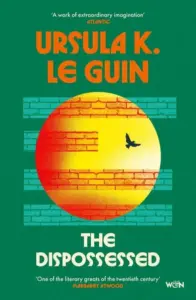
Copyright: Orion Publishing Group
I was never much of a fan of science fiction. But, I thought, there is one icon of the genre you simply have to read at some point: Ursula K. Le Guin, a name that alone promises excitement. So I ended up reading her classic “The Dispossessed”, and what can I say: maybe I will become a huge fan of the genre after all. In her 1974 novel, Le Guin succeeds in weaving the big questions of her time and ours into a gripping plot – without ever coming across as preachy. The story moves along the fine line between an anarchist and a capitalist society – except that the systems compete not on one planet but on two different worlds. Le Guin’s protagonist travels between them, breaks taboos in doing so, and above all illustrates: the perfect world does not exist – on either side.
The Dispossessed, Ursula K. Le Guin, Orion Publishing Group 2026, 336 pages.
*
The Week on Verfassungsblog
summarised by GEORGIA IOSIFIDOU
Tear gas, stun grenades, curfews. France is in turmoil, and the country has continued to occupy us this week, not only in our interview with Carina Bury but also in our contributions. JACQUES DE MAILLARD (ENG) is concerned about the escalation of protests in France and takes a critical look at the role of politics: prioritising arrests and repression over negotiations, he argues, paves the way for further confrontation.
In the United Kingdom, the consequences of controversial security measures were also debated this week. In the UK, however, the focus was not on burning barricades, but on a book. Irish author Sally Rooney announced that she would donate the proceeds from her book sales to the group “Palestine Action”. However, since the group was designated a terrorist organisation in July 2025, publisher Faber has announced that it will no longer supply her books in the UK. ALAN GREENE (ENG) explains why the case illustrates the far-reaching consequences of British anti-terrorism law.
In Germany, meanwhile, a ten-point plan recently took centre stage in the debate on countering extremism. On 16 September, Federal Interior Minister Alexander Dobrindt and Federal Justice Minister Stefanie Hubig presented their ten-point plan to strengthen internal security and improve protection against terrorism and extremism. But MARK A. ZÖLLER (GER) warns against premature enthusiasm: the plan, he argues, is driven by political symbolism and fails to engage sufficiently with the nature of the threat.
The threats facing Saxony-Anhalt, by contrast, could soon become more than symbolic. If an AfD-led state government were to take office, the consequences for the police and other security authorities could be far-reaching, particularly for the training of future police officers at police academies. ANDREAS RUCH and STEFAN KERSTING (GER) turn their attention to this largely overlooked area and show how easily teaching and research could be steered through transfers and administrative decrees.
Join the European Law Open (ELO) in celebrating 5 years of publication in 2026! Delivering a dynamic, critical and contextual approach to European law in an Open Access format, the journal is the bold new platform for the diverse voices of the EU law community. ELO offers rigorous analysis of both EU law itself and of wider European law and governance in their political, cultural, social and economic contexts.
Thank you to the European law community for their support, energy and attention these last five years.
++++++++++++++++++++++++++++++++
Questions of control and transfers also featured in another debate on extremism this week. To prevent public funds distributed through Germany’s federal fiscal equalisation system from flowing to states governed by “extremists”, Bavaria and Hesse are calling for extremism clauses in the fiscal equalisation system between the federal states. However, Germany’s constitutional framework for public finances does not allow for this, argues KYRILL-ALEXANDER SCHWARZ (GER), who instead recommends political competition.
Further resistance to the Left Party’s election victory in Berlin came from Katherina Reiche, Federal Minister for Economic Affairs and Energy. On the Ministry’s Instagram account, she accused the party of “combating Jewish life”, “cheerfully welcoming organised crime at election parties” and thereby posing a threat to Germany as a place to do business. The party challenged the minister before the Federal Constitutional Court in expedited proceedings – and won. JONAS DEYDA (GER) situates the decision within the Court’s existing case law on the duty of political neutrality.
Political confrontations between left and right have also continued to shape events in Brazil. The presidential run-off between Lula and Flávio Bolsonaro is scheduled for 25 October 2026. PEDRO MARQUES NETO (ENG) analyses how legal frameworks interact with the political phenomenon of incumbency advantage, and whether incumbents seeking re-election need a set of rules of their own.
In Kosovo, meanwhile, the focus has been on former leaders. The conviction of Hashim Thaçi and three other former KLA leaders in The Hague sparked protests. LEON TRAMPE and TIM STEPHAN (ENG) examine the extent to which the judgment strengthens accountability for war crimes and recognises arbitrary detention as a war crime.
Ukraine, too, continues to grapple with war crimes. In 2022, Russian forces damaged the Oskil Dam in the Kharkiv region. The resulting damage affected rivers and entire ecosystems. Ukrainian prosecutors have therefore charged two Russian generals with ecocide. RINATA KAZAK, IEVGENIIA KOPYTSIA and ANASTASIIA PUHACH (ENG) explore how environmental damage can be measured.
Serious harm also threatens to arise from AI models that are becoming increasingly difficult to control. OREN PEREZ (ENG) examines whether, and how, AI governance can offer a robust response to the dangers posed by AI agents.
Legal gaps and risks have also been a recurring theme in the regulation of supply chains. GIESELA RÜHL (ENG) examines the revision of the European Corporate Sustainability Due Diligence Directive and explains why Member States should maintain civil liability for human rights violations in global supply chains despite the legal uncertainty.
The much-discussed Cornell Seven case also raises questions about gaps in criminal law. It has prompted widespread calls for stricter sexual offences legislation. However, AYA GRUBER (ENG) argues that New York should not rush to broaden its sex-crime law. Instead, she argues for reform that protects sexual autonomy without allowing criminal law to expand unchecked.
++++++++++Advertisement++++++++++++

Als Infrastrukturpartner der internationalen und interdisziplinären Rechtsforschung hostet intRecht die Zeitschrift für Völkerstrafrecht (ZVStR), eine neue Open-Access-Zeitschrift zum Völkerstrafrecht im deutschsprachigen Raum. Die ZVStR bietet ein Forum zur Einordnung und Diskussion völkerstrafrechtlicher Entwicklungen insbesondere auf nationaler Ebene, mit besonderem Fokus auf Deutschland, Österreich und der Schweiz. Sie veröffentlicht begutachtete Abhandlungen ebenso wie aktuelle Beiträge und Kommentare, Urteilsanmerkungen, Besprechungen und Tagungsberichte. Die Beiträge erscheinen fortlaufend.
Das Redaktionsteam – Prof. Dr. Aziz Epik, Prof. Dr. Julia Geneuss, Prof. Dr. Svenja Raube, Prof. Dr. Nella Sayatz und Prof. Dr. Andreas Werkmeister – freut sich über Einreichungen.
++++++++++++++++++++++++++++
Gisèle Pelicot, too, has expressed solidarity with the victim in the abuse case at Cornell University. “The shame must change sides” – but what role does the law play? That is the question at the heart of our new symposium, which began this week: Law and Shame. The symposium explores the relationship between law and shame. Its editors, PAULA RHEIN-FISCHER and LUNA RÖSINGER (GER), introduce the debate. MAGDALENA KMAK (ENG) examines the overlooked role of shame, shaming and shamelessness in refugee law, while LUNA RÖSINGER (GER) looks at “shame sanctions” in US courts. EVA MARIA BREDLER (GER) analyses how shame disciplines people giving birth into accepting obstetric violence, and argues for a relational understanding of autonomy. LAURA MÜNKLER, RAHEL SKOBOWSKY and LISA SPANTIG (GER) explore the ambivalent role of shame in social law. MATTHIAS BRAUN and BIRGIT MÜNCH (GER) write about shame and the power of images. PAULA RHEIN-FISCHER (GER) turns to a neglected theme in German laws governing historical memory. Finally, SVEN JÜRGENSEN (GER) examines how lawmakers and the Federal Constitutional Court apply rule-of-law standards when it comes to sex dolls, gambling, prostitution and drugs.
Last, but not least, our symposium Thinking Machines, Thinking Lawyers continued this week. CLAUDIO NOVELLI and LUCIANO FLORIDI (ENG) reflect on the impact of AI on legal research, while MEHTAB KHAN (ENG) warns of the erosion of established standards and institutions in research.
Whether you are a lawyer who thinks for a living or a machine breaking this newsletter down into ones and zeroes, we wish you a lovely weekend.
*
That’s it for this week. Take care and all the best!
Yours,
the Verfassungsblog Team
If you would like to receive the weekly editorial as an e-mail, you can subscribe here.